

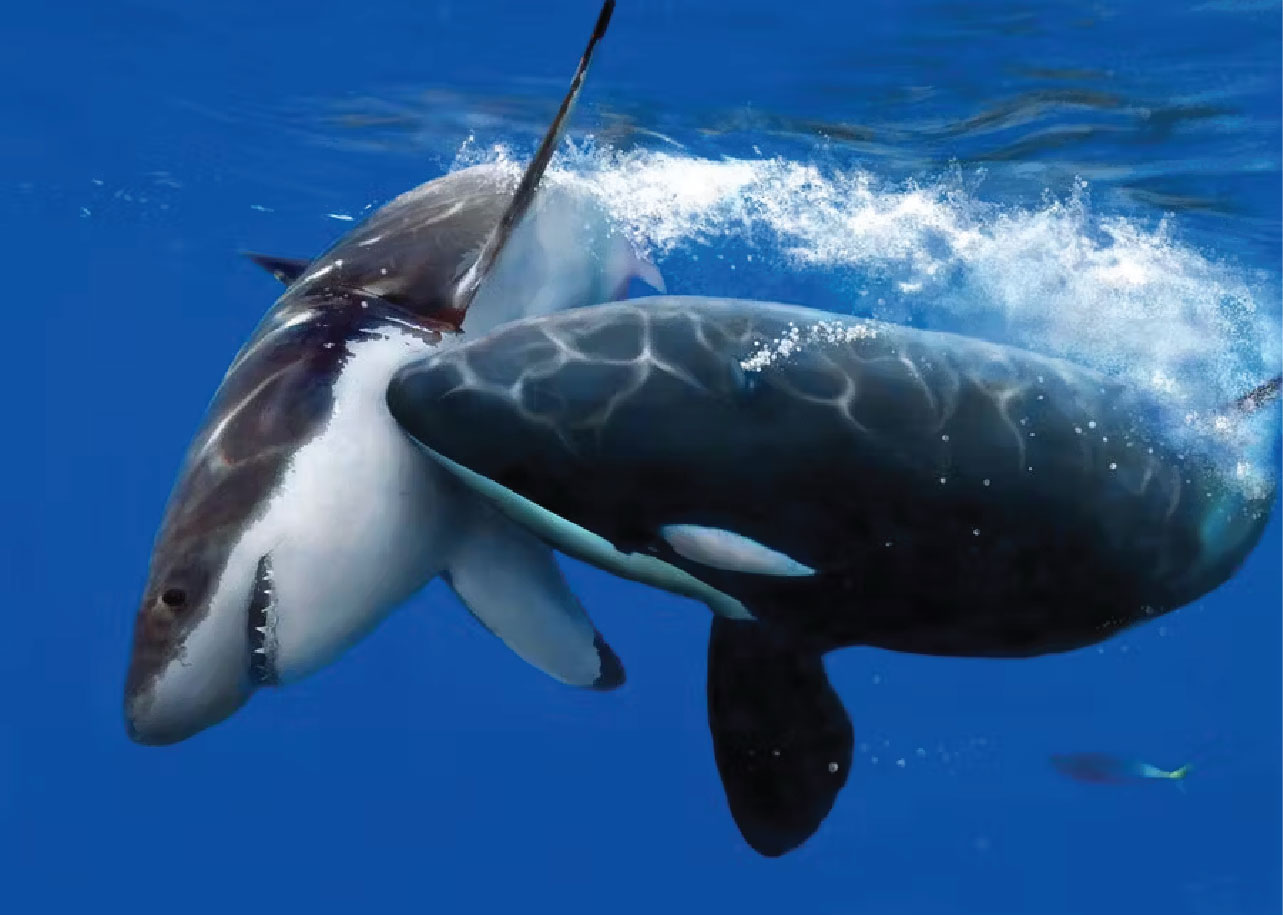
The carcass of a great white shark that washed up near Portland, Australia, in October was determined to have been killed and consumed by orcas, according to researchers who examined the remains.
The 16-foot shark exhibited a notable absence of its midriff, a characteristic indication that orcas, also known as killer whales, were likely responsible for its demise. Subsequent analysis of the shark’s carcass confirmed the involvement of orcas in the incident. This type of predation is noteworthy, as great white sharks are typically considered apex predators, but orcas have been known to target and feed on them in specific circumstances.
Great white sharks are some of the most fearsome predators in the world’s oceans. The sharks can grow up to 20 feet long and weigh as much as 5,000 pounds (2,268 kilograms), and have hundreds of pointy, serrated teeth for slicing into prey. But the sharks have met their match in orcas (Orcinus orca), which can grow to be over 30 feet (9.1 meters) long and weigh a staggering 22,000 pounds (9,979 kg), according to Whale & Dolphin Conservation US. a great white shark
Orcas, also known as killer whales, have demonstrated a particular predilection for great white sharks, with a specific interest in their livers. The livers of great white sharks are rich in nutrients, making them a delicacy for orcas. Since 2017, two orcas named Port and Starboard have been implicated in the deaths of at least eight great white sharks found stranded on the beaches of South Africa. Notably, seven of these sharks were discovered missing their livers. Video footage captured in May 2022 even depicts a pod of killer whales actively hunting and killing sharks.
In addition to their preference for great white shark livers, orcas also exhibit an apparent liking for penguin breast meat and sunfish intestines, according to insights from researchers cited by Scientific American. This predation behavior adds to the understanding of the diverse diet and hunting strategies employed by orcas in different regions.