

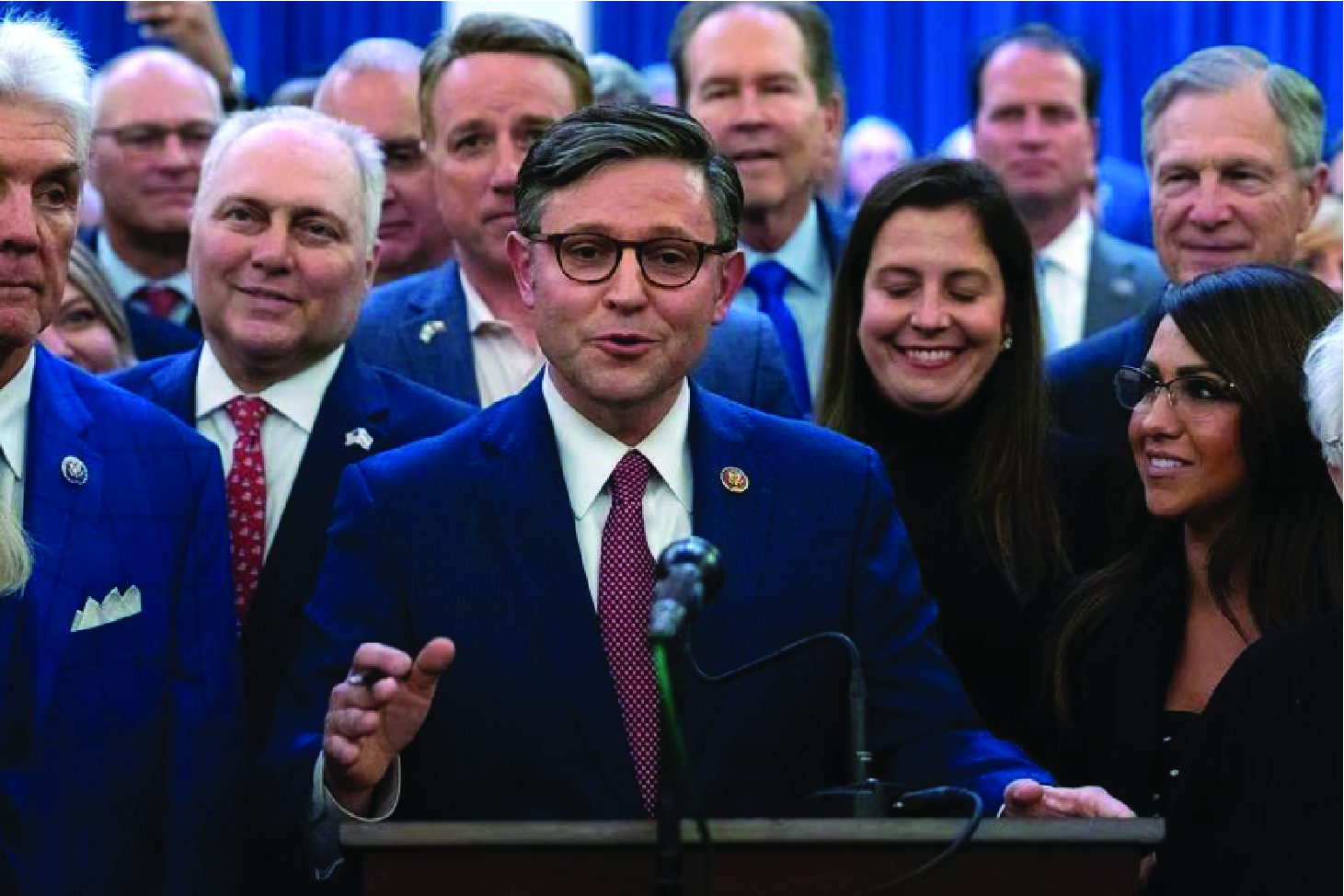
Rep. Mike Johnson, a Republican of Louisiana , won election as the new speaker of the House on Wednesday, ending three weeks of chaos since Rep. Kevin McCarthy’s historic ouster.
Johnson, a relatively unknown legislator who now occupies the second spot in the presidential succession order, garnered unanimous support from all 220 Republican members present, surpassing the requisite 215-vote threshold for victory. Meanwhile, all 209 Democrats cast their votes in favor of Rep. Hakeem Jeffries, the leader of the Democratic party in the House.
“The House of Representatives, representing the people, is now fully operational,” Johnson announced to his colleagues moments before taking the oath of office.
Johnson became the fourth nominee from the Republican party for the role of Speaker within the span of just three weeks, stepping in to replace Rep. Tom Emmer, whose candidacy had a fleeting four-hour lifespan on Tuesday. Prior to Johnson’s selection, two other candidates, Reps. Steve Scalise and Jim Jordan, had withdrawn their names from consideration during the earlier stages of the selection process due to their inability to unite the various factions within the party.
Despite Johnson’s relative lack of experience in House leadership, he had presented a strategy earlier in the week for advancing a series of government spending bills, which gained support from some members who were critical of Kevin McCarthy, his predecessor. Johnson’s broad support within the Republican conference signaled a collective desire among lawmakers to move beyond the contentious battle for the position of Speaker and focus on reopening the House for business. a Republican of Louisiana
Challenges loom ahead for Johnson, as he now grapples with various pressing issues, most notably the imminent threat of a government shutdown. The House faces a critical deadline on November 17 when current government funding is set to expire. In his plans for the upcoming months, Johnson suggested that a temporary measure to extend funding until January or April may be necessary to secure additional spending and avert a government shutdown.