

The universe, with its countless stars and galaxies, presents a mesmerizing spectacle. However, the fundamental question of how much matter truly exists in the cosmos has become a perplexing puzzle. The answer to this seemingly straightforward question has proven to be elusive, primarily because current cosmological observations are in discord regarding the distribution of matter in the universe as it stands today.
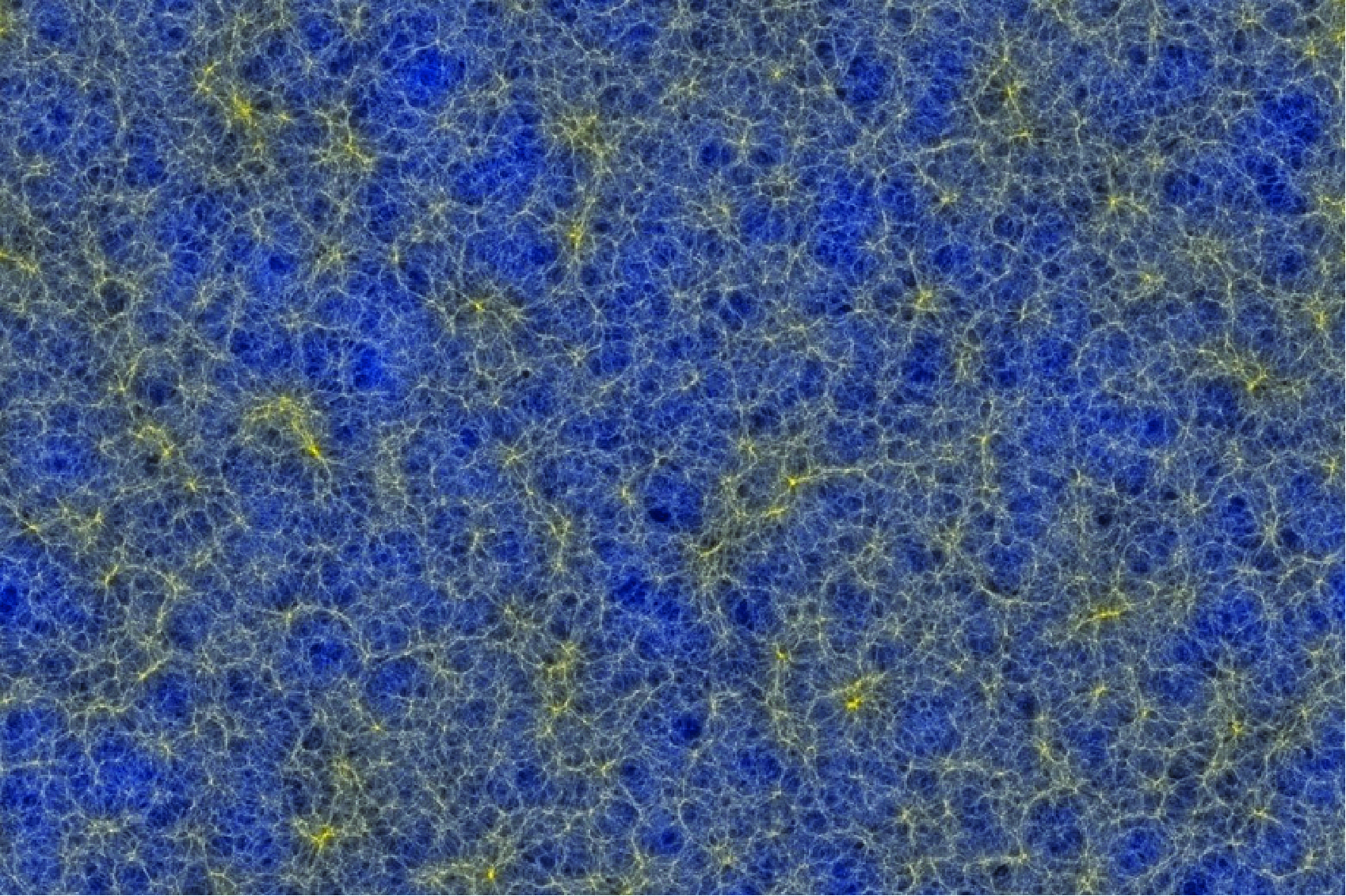
Offering a potential solution to this conundrum is a novel computer simulation that meticulously traces the evolution of all the universe’s components: ordinary matter, dark matter, and dark energy, all of which adhere to the laws of physics. This simulation presents awe-inspiring visualizations that virtually depict the emergence of galaxies and galaxy clusters within the universe. These structures are nourished by what is known as the cosmic web, the largest framework in the universe, comprised of filaments formed from both normal matter (baryonic matter) and dark matter. This intricate cosmic web plays a vital role in shaping the cosmos as we know it.
Unlike previous simulations that only considered dark matter, the new work, carried out by a project called FLAMINGO (short for Full-hydro Large-scale structure simulations with All-sky Mapping for the Interpretation of Next Generation Observations), tracks ordinary matter too. its countless stars
“Although the dark matter dominates gravity, the contribution of ordinary matter can no longer be neglected,” Joop Schaye, a professor at Leiden University in the Netherlands and a co-author of the three new studies on the FLAMINGO project, said in a statement.