

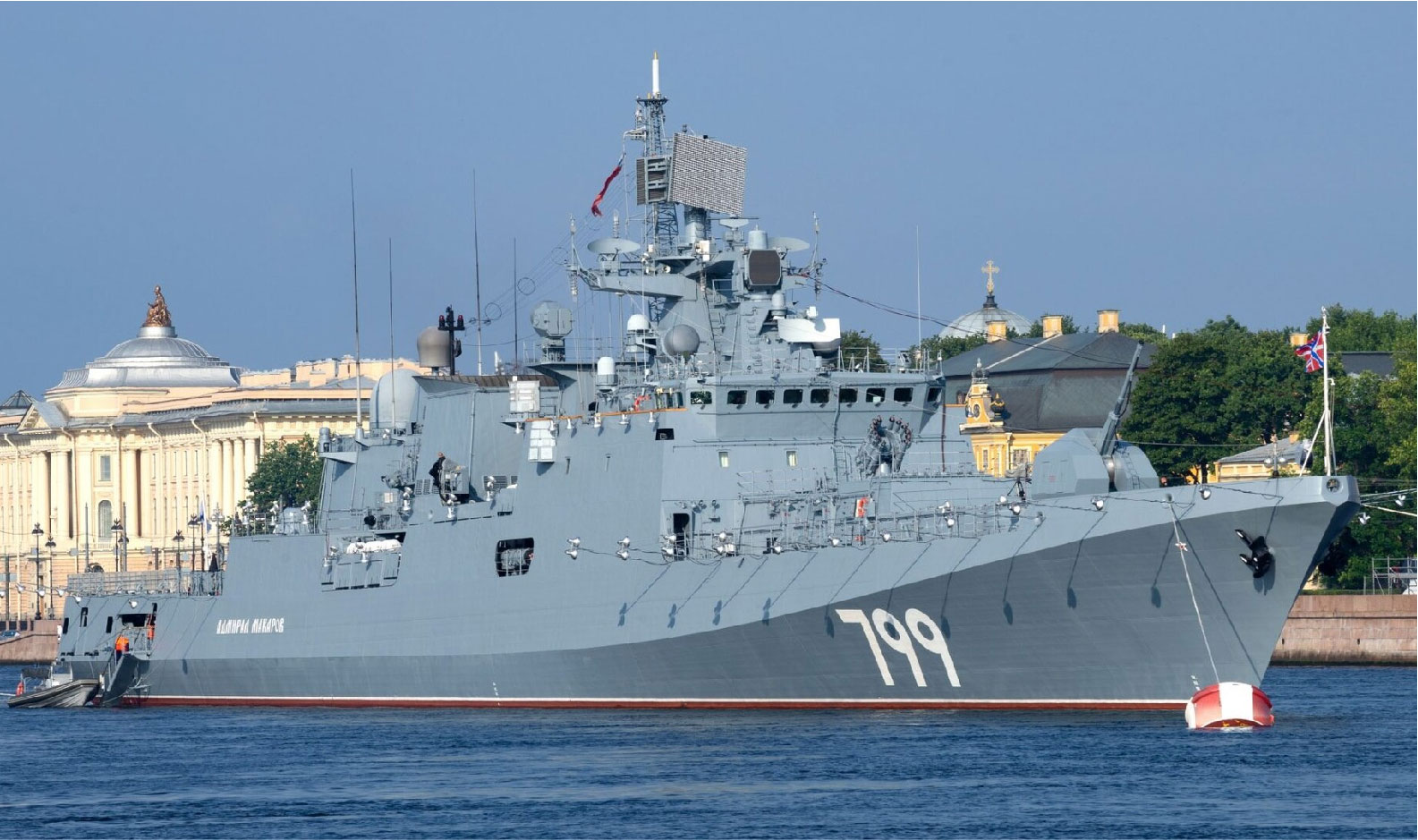
Russian warships, go yourself!” has become a symbol dating back to the early days of the Russia-Ukraine conflict. It originated as the defiant response of Ukrainian servicemen stationed on Zmiiny Island, also known as Snake Island, in the Black Sea. When a Russian warship demanded their surrender, the Ukrainian servicemen used this colorful phrase to assert their determination and refusal to give in. This response has since gained notoriety and has been widely shared, memed, and even featured on bumper stickers as a symbol of Ukrainian resilience and defiance in the face of conflict.
By early 2022, the Russian Black Sea Fleet, stationed in Crimea following its annexation, appeared to have established significant control over Ukraine’s territorial waters in both the Black Sea and the Sea of Azov. This control enabled larger Russian vessels to launch missile and drone attacks on key Ukrainian cities like Odesa and other southern urban centers, resulting in civilian casualties and extensive damage to residential buildings, military installations, and port infrastructure. Furthermore, smaller Russian navy ships began to stop. And inspect merchant vessels carrying Ukraine’s vital exports, such as grain and sunflower oil. Russia-Ukraine conflict
For a considerable period, the Russian navy operated with relative ease throughout the northern part of the Black Sea. However, after nearly 600 days of ongoing conflict, the situation has shifted.
“They miscalculated,” noted Lieutenant General Ihor Romanenko, the former deputy chief of Ukraine’s general staff of armed forces. He emphasized that Ukraine determined to prevent Russian forces from resting. And committed to the complete de-occupation of its lands. This change in dynamics signifies the resolve of Ukrainian forces to counter Russian actions in the region.
A significant portion of the Russian Black Sea Fleet relocated from its base in Sevastopol to various locations. Many of the fleet’s assets moved to the Russian port of Novorossiisk. In which is situated more than 300 kilometers (186 miles) to the east of Sevastopol. Additionally, some assets relocated to smaller bases and bays in eastern Crimea and along Russia’s Black Sea coastline.
British Defence Minister James Heappey drew a parallel between the “functional defeat of the Black Sea Fleet”. And the liberation of Kharkiv Oblast, which occurred one year prior. This comparison suggests that the strategic shifts in the Black Sea have seen as significant. And akin to a major military development on the scale of the liberation of a region.