

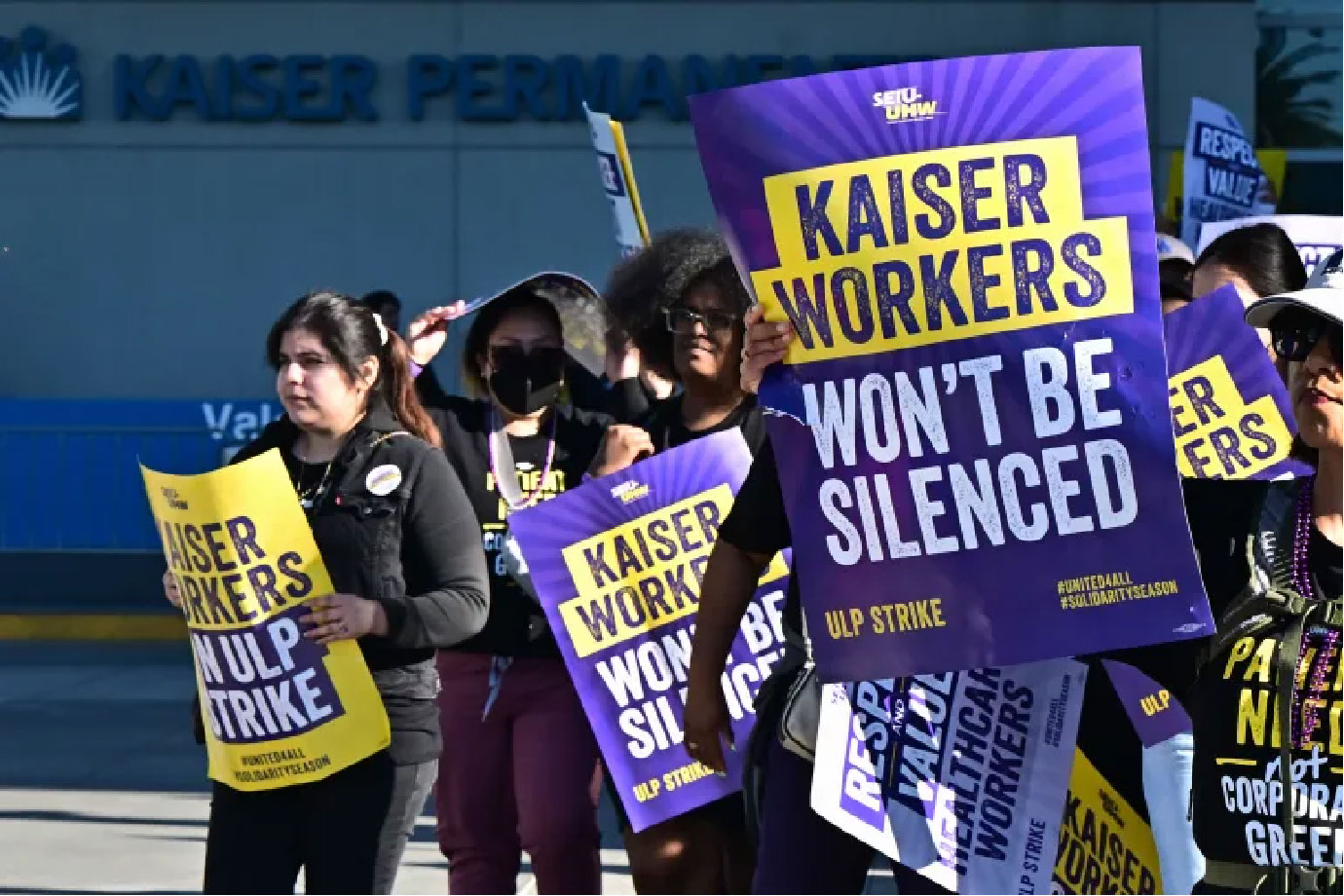
Striking Kaiser Permanente employees and the California-based hospital system approached the conclusion of a three-day walkout on Friday, marking the largest healthcare strike in U.S. history, without reaching a contract agreement.
The last round of negotiations between the two parties took place on Wednesday, with no further bargaining sessions scheduled until October 12, as confirmed by Kaiser spokesperson Hilary Costa on Friday. Despite the discussions, significant differences persisted regarding wages. Particularly the unions’ demand for a minimum wage of $25 for X-ray technicians, licensed vocational nurses. And other represented employees, as reported by the unions involved in the strike.
Employees who participated in the three-day Kaiser Permanente strike across California, Oregon, Colorado. And Washington are set to begin returning to work on Saturday morning. A smaller walkout involving a few hundred Kaiser workers in Washington, D.C., and Virginia had taken place earlier in the week. California-based hospital
The majority of Kaiser facilities are located in California, where the strike gained momentum following a summer marked by numerous strikes and worker protests. This wave of labor action has extended nationwide, with United Auto Workers also engaging in strikes at American car manufacturing companies. The healthcare industry, in particular, has been experiencing increased worker unrest due to pandemic-related burnout and staffing challenges.
The Kaiser strike occurred at a time when a health care minimum wage bill was awaiting California Governor Gavin Newsom’s approval. This proposed legislation, a compromise between healthcare employers. And unions, would ensure a $25 minimum wage for California healthcare workers by 2026. It represents one of labor’s top priorities during the state’s legislative session. However, some of the other labor-related proposals. Such as limiting autonomous truck deployments. And granting striking workers access to unemployment benefits, vetoed by the Democratic governor.
The strike began in mid-September when unions voted in favor of the action. If an agreement was not reached by September 30, while negotiations reportedly resulted. In some tentative agreements on benefit issues, other key points of contention remained. Kaiser spokesperson Hilary Costa declined to provide specific details about the negotiations.
Throughout the strike, hospitals and clinics remained open with physicians. And registered nurses continuing to work, although some services experienced slowdowns. The returning employees scheduled to begin their shifts at 6 a.m. on Saturday.