

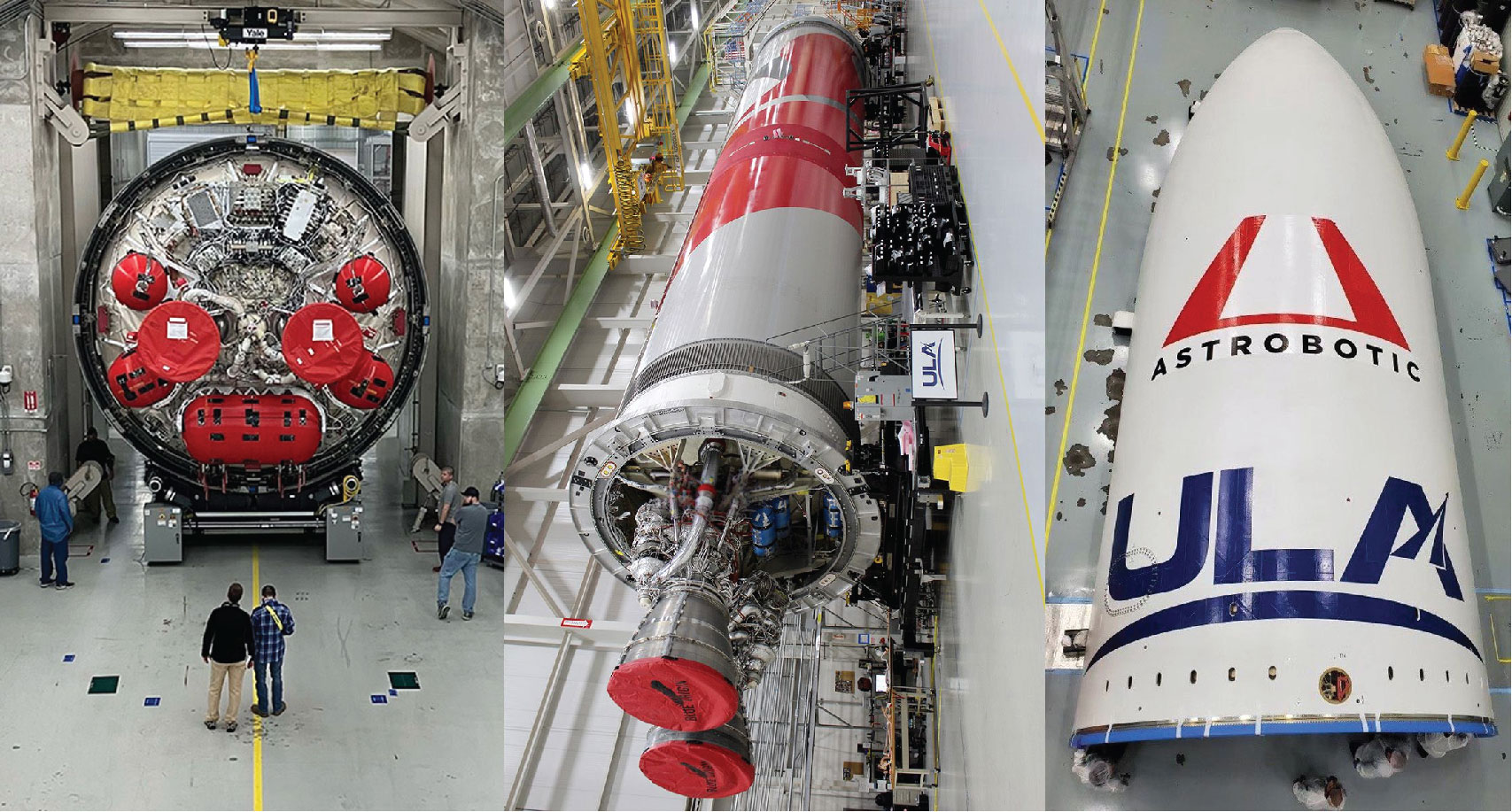
United Launch Alliance (ULA) has achieved a significant milestone with the full assembly of its first Vulcan rocket at Cape Canaveral, Florida. The technicians successfully placed the payload fairing, housing a commercial lunar lander from Astrobotic, atop the launch vehicle at ULA’s Vertical Integration Facility. This crucial step came after the early morning transfer of the payload fairing from a nearby facility, where Astrobotic’s lunar lander underwent fueling preparations for its upcoming journey to the Moon. The Vulcan rocket is now poised for its inaugural flight scheduled for next month.
United Launch Alliance (ULA) has achieved another milestone in the preparation for the first flight of its Vulcan rocket. The complete assembly, which includes the addition of the payload shroud, marks the first time ULA has fully stacked a Vulcan rocket. Standing at 202 feet (61.6 meters) tall, the fully assembled rocket is now surrounded by scaffolding and work platforms inside its assembly building.
The previous tests and rehearsals involved the rocket’s first stage and upper stage, but the addition of the payload shroud represents a significant step toward the upcoming launch. The Vulcan rocket, set to replace ULA’s Atlas V and Delta IV rockets, is now closer to its inaugural flight.
Following final checkouts and a holiday break, the Vulcan rocket will be transported to its launch pad in preparation for liftoff scheduled for 2:18 am ET (07:18 UTC) on January 8. The launch was initially planned for December 24, but ULA delayed it to address ground system issues identified during a Vulcan countdown rehearsal. United Launch Alliance
The timing of the launch is crucial, as Astrobotic’s Peregrine Mission One, the first robotic lunar lander, has specific windows for departing Earth and navigating toward the Moon. The launch and trajectory must be precisely timed to ensure proper lighting conditions for the spacecraft’s landing.