

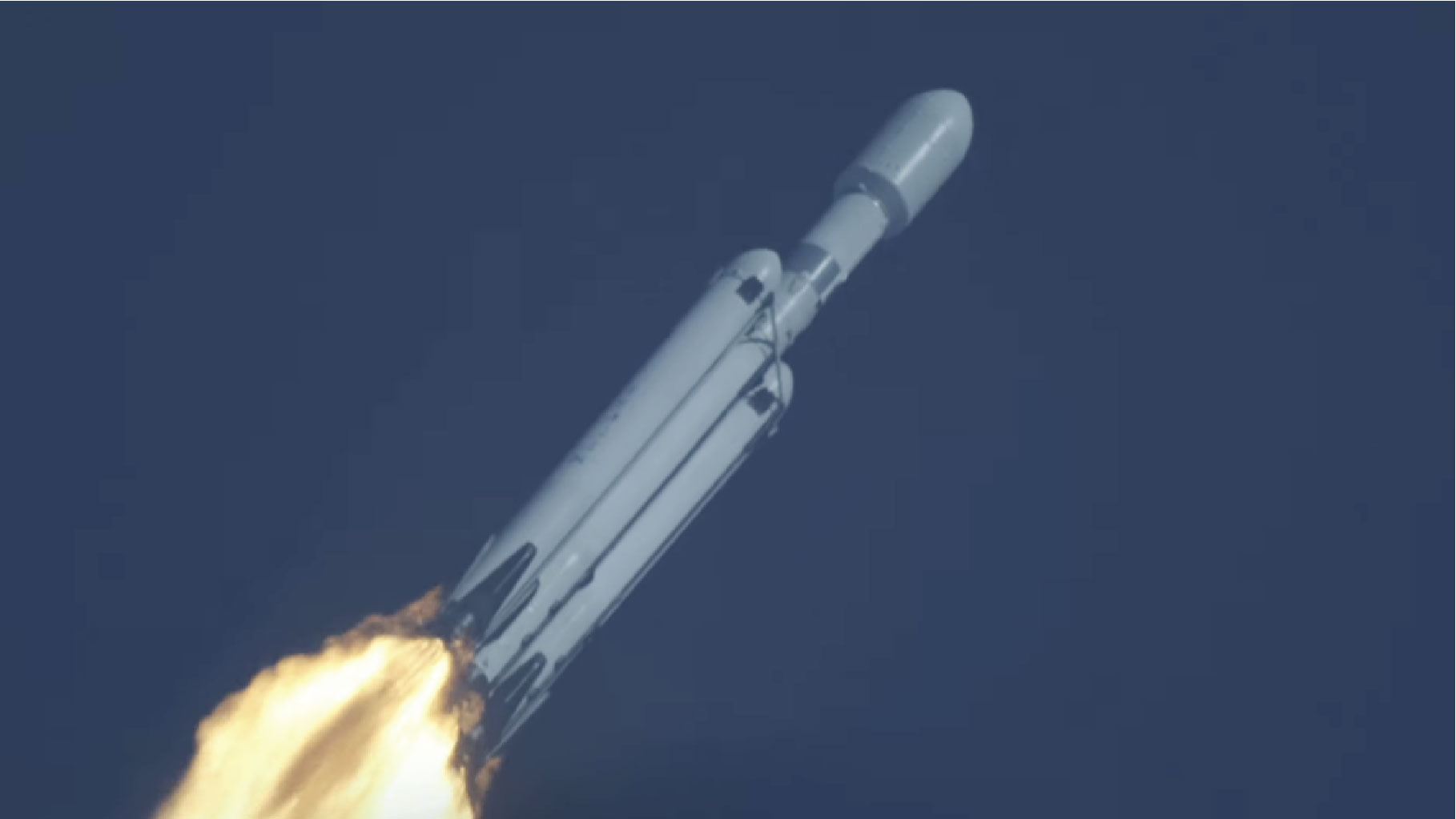
SpaceX faced a one-day weather delay and has subsequently postponed the Falcon Heavy launch of a discreet spacecraft, one-fourth the size of the space shuttle.
“Standing down from tonight’s Falcon Heavy launch due to a ground side issue; vehicle and payload remain healthy,” SpaceX announced on X less than an hour before the originally scheduled liftoff on Monday. “The team is resetting for the next launch opportunity of the USSF-52 mission.”
However, SpaceX later confirmed that the next attempt would not take place until Wednesday night, aiming for 8:13 p.m. within a 10-minute window from KSC’s Launch Pad 39-A. According to forecasts from Space Launch Delta 45’s weather squadron, there is only a 30% chance of favorable conditions, and this drops to 20% in case of a 24-hour delay. the Falcon Heavy
The Falcon Heavy, embarking on only its ninth launch, is essentially three Falcon 9 rockets combined, generating 5.1 million pounds of thrust during liftoff, making it the most powerful rocket available for routine launches.
SpaceX faced a one-day weather delay and has subsequently postponed the Falcon Heavy launch of a discreet spacecraft, one-fourth the size of the space shuttle.
“Standing down from tonight’s Falcon Heavy launch due to a ground side issue; vehicle and payload remain healthy,” SpaceX announced on X less than an hour before the originally scheduled liftoff on Monday. “The team is resetting for the next launch opportunity of the USSF-52 mission.”
However, SpaceX later confirmed that the next attempt would not take place until Wednesday night, aiming for 8:13 p.m. within a 10-minute window from KSC’s Launch Pad 39-A. According to forecasts from Space Launch Delta 45’s weather squadron, there is only a 30% chance of favorable conditions, and this drops to 20% in case of a 24-hour delay.
The Falcon Heavy, embarking on only its ninth launch, is essentially three Falcon 9 rockets combined, generating 5.1 million pounds of thrust during liftoff, making it the most powerful rocket available for routine launches.
The payload for the rocket is the clandestine X-37B Orbital Test Vehicle, constructed by Boeing. This unmanned spacecraft, bearing a resemblance to a miniature space shuttle, embarked on its maiden voyage to space in 2010 and is currently on its seventh mission. Notably, each successive mission has seen an increase in duration. The sixth mission, which concluded last November with a touchdown at the former Shuttle Landing Facility at Kennedy Space Center (KSC), spanned an impressive duration of nearly 909 days.