

NASA’s Kepler Space Telescope, in its final mission before retirement in 2018, has made a remarkable discovery. Astronomers analyzing the telescope’s data found a system of seven exoplanets that are exposed to intense radiation from their parent star.
The seven exoplanets in the Kepler-385 system are scorching hot and receive more radiation from their sun-like star than any planet in our own solar system gets from the Sun. These planets are all larger than Earth but smaller than the ice giant Neptune.
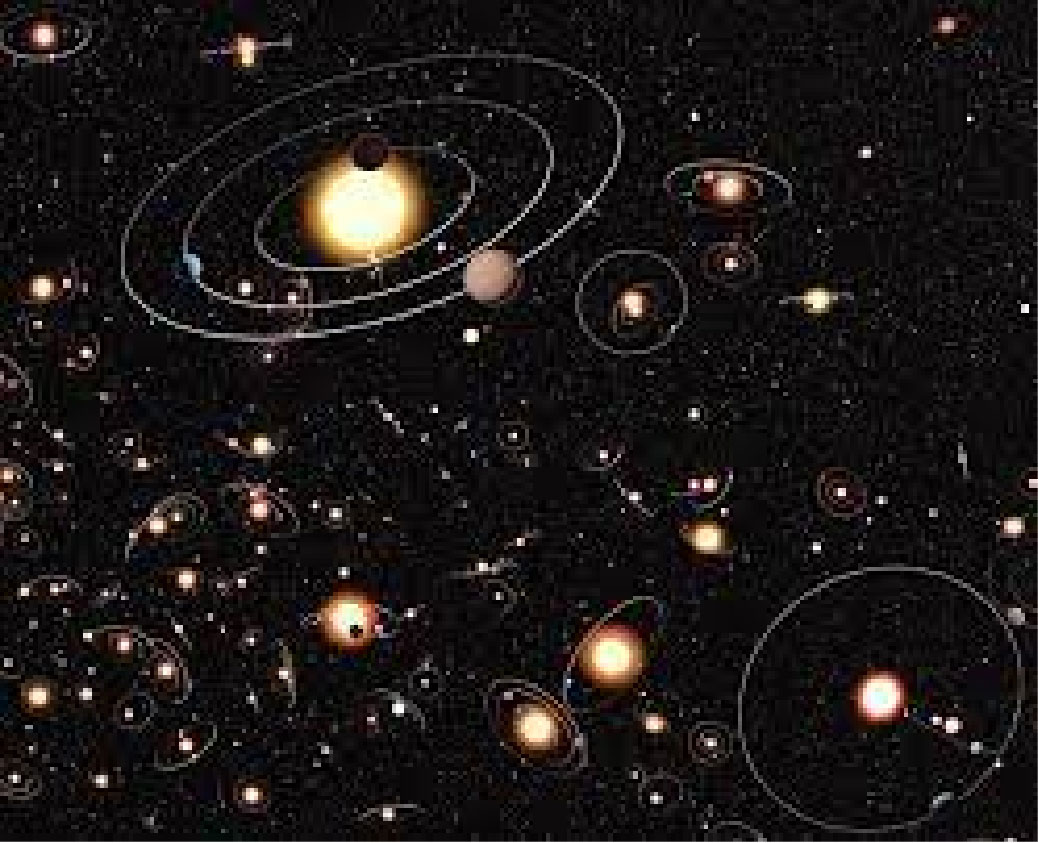
The Kepler-385 system is one of the highlights in a new catalog created by the Kepler Space Telescope, featuring approximately 4,400 exoplanet candidates and 700 multi-planet systems. Astronomers are excited about the wealth of information they can extract from this catalog.
“We’ve assembled the most accurate list of Kepler planet candidates and their properties to date,” research leader and NASA scientist Jack Lissauer said in a statement. “NASA’s Kepler mission has discovered the majority of known exoplanets, and this new catalog will enable astronomers to learn more about their characteristics.” its final mission
The Kepler-385 planetary system is located approximately 4,672 light years away from Earth and is one of the few systems known to contain more than six planets. One of the most famous examples of such systems is the TRAPPIST-1 system, which also has seven Earth-like planets.
At the center of the Kepler-385 system is a star that is about 1.1 times larger and 5% hotter than our Sun. The innermost planet, Kepler-385 b, is significantly larger than Earth, with a mass approximately 12.8 times that of Earth and a width 2.7 times greater than our planet. It orbits its star at around 10% of the distance between Earth and the Sun and completes an orbit in approximately 10 Earth days.
The next planet in the system, Kepler-385 c, is slightly larger than Kepler-385 b and has a mass of about 13.2 times that of Earth. It follows a nearly circular orbit, covering about 13% of the distance between Earth and the Sun, and completes an orbit in just over 15 Earth days.
Both Kepler-385 b and Kepler-385 c are believed to be rocky planets with thin atmospheres. The other five planets in the system are situated farther from their star and are estimated to be approximately twice the size of Earth, with thick atmospheres surrounding them.