

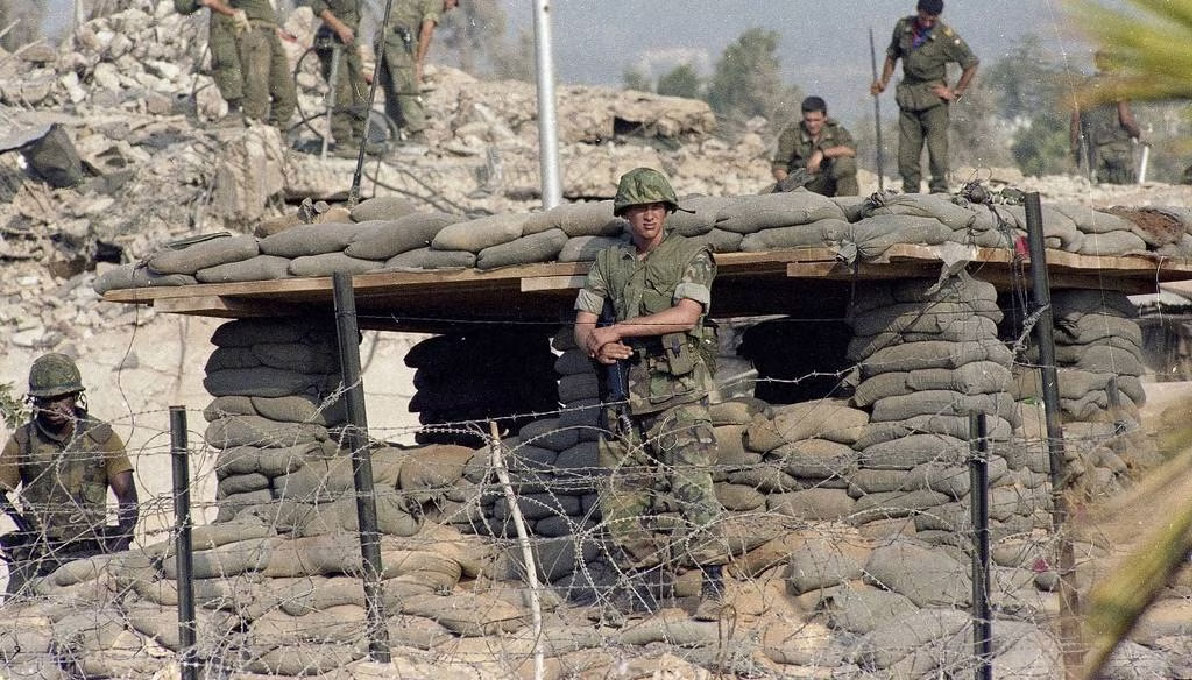
Four decades after one of the most devastating assaults on U.S. troops in the Middle East , concerns are being raised about the potential for Washington to become embroiled in a fresh conflict within the region.
On October 23, 1983, a suicide bomber targeted an American military barracks situated at Beirut International Airport, resulting in the tragic loss of 241 U.S. service members, with the majority of them being Marines. This remains the deadliest attack on Marines since the World War II Battle of Iwo Jima. Simultaneously, a separate attack on French forces claimed the lives of 58 paratroopers.
The responsibility for these bombings has been attributed by Washington to the Lebanese militant group Hezbollah, an accusation that Hezbollah, backed by Iran, vehemently denies. The U.S. and French forces had been stationed in Beirut as part of a multinational force deployed following Israel’s invasion of Lebanon in 1982. Their mission was to oversee the withdrawal of Palestinian fighters from Beirut and provide support to the Western-backed government of that era. However, the devastating bombing incident led to the U.S. making the decision to withdraw its forces from Lebanon.
The United States is now deploying forces again in the region in connection to a war between Israel and its enemies.The aircraft carrier USS Gerald R. Ford has been positioned in the eastern Mediterranean along with other American warships – with a second carrier on the way – in what is widely seen as a message to Iran and Hezbollah not to open new fronts as Israel fights Hamas.
Longtime tensions between the U.S. and Iran have been hiked by the two-week-old war between Israel and Hamas, in which the Palestinian militant group’s Oct. 7 surprise attack on southern Israeli towns brought devastating Israeli bombardment of the Gaza Strip. the Middle East
The war risks spiraling into a wider regional conflict. The biggest worry is over the Lebanon-Israel border, where Israel and Hezbollah exchange fire on a daily basis.