

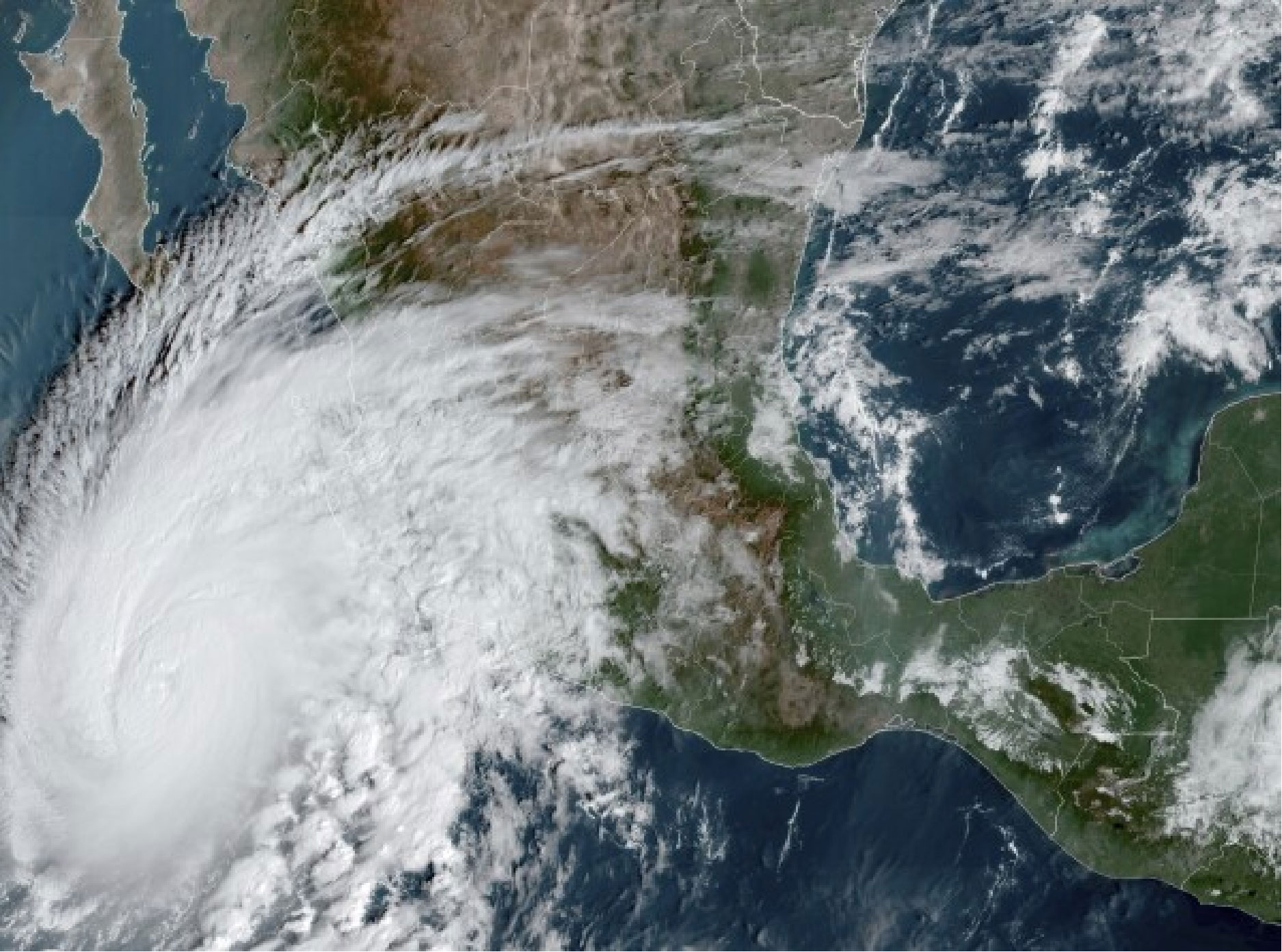
Tropical Storm Norma is currently advancing towards mainland Mexico while Hurricane Tammy has made landfall on the Caribbean island of Barbuda. On Sunday morning, the National Hurricane Center issued warnings of flash flooding and substantial rainfall in mainland Mexico as the tropical storm moves north-northeastward across the Gulf of California.
The NHC forecasts that the center of Norma will come close to the west coast of mainland Mexico on Sunday and then proceed inland on Monday. This situation continues to be monitored closely.
As of Sunday night, Tropical Storm Norma maintained maximum sustained winds of 65 mph, with tropical storm-force winds extending outward up to 155 miles from the storm’s center, as reported by the National Hurricane Center. Norma was positioned approximately 105 miles west of Culican, Mexico, and 65 miles south-southwest of Mochi, Mexico, moving northeast at a slow pace of 3 mph.
The NHC’s latest update indicated that there is not expected to be a significant change in Norma’s strength on that day, and it is projected to approach the west coast of mainland Mexico as a tropical storm.
Hours after Norma made landfall near the resort city of Los Cabos, located at the southern tip of Mexico’s Baja California, Hurricane Tammy also made landfall on the Caribbean island of Barbuda. Both storms were Category 1 hurricanes at the time of their landfalls.
Tammy came ashore on Saturday night with 85 mph winds. By Sunday night, the storm had maintained its strength, with its center situated 120 miles north of Anguilla, and it was moving northwest at a speed of 9 mph. All watches and warnings had been lifted at that time.
Tropical Storm Norma was progressing towards mainland Mexico on Sunday, while Hurricane Tammy had already made landfall on the Caribbean island of Barbuda. The National Hurricane Center issued warnings of flash flooding and heavy rainfall in mainland Mexico as Norma continued its north-northeastward movement across the Gulf of California. Tropical Storm Norma
As of Sunday night, Norma had maximum sustained winds of 65 mph, with tropical storm-force winds extending up to 155 miles from its center. Norma was positioned approximately 105 miles west of Culican, Mexico, and 65 miles south-southwest of Mochi, Mexico, moving at a slow pace of 3 mph. The NHC anticipated little change in strength that day, with Norma expected to approach the west coast of mainland Mexico as a tropical storm.
After Norma made landfall near Los Cabos at the southern tip of Mexico’s Baja California, Hurricane Tammy followed suit by making landfall on the Caribbean island of Barbuda. Both storms were Category 1 hurricanes at the time of landfall.
Tammy made landfall with 85 mph winds on Saturday night. By Sunday night, the storm maintained its strength and was located 120 miles north of Anguilla, moving northwest at 9 mph, with all watches and warnings discontinued.
Norma, previously a Category 4 hurricane, made landfall with 80 mph winds near el Pozo de Cota, west-northwest of Cabo San Lucas, Mexico. It later weakened to a tropical storm with 70 mph winds as it crossed the Baja California Peninsula.
While preparations were made in the area as Norma regained strength and became a major storm, there were no reported casualties. The slow pace of Norma raised concerns about severe flooding, with expectations of six to 12 inches of rain, and up to 18 inches in some areas across southern Baja California and much of Sinaloa state.
Baja California Sur Gov. Victor Castro expressed concerns about potential damages due to Norma’s slow movement. However, initial reports indicated little damage with some downed trees and power poles but no injuries.
Tammy’s landfall followed closely on the heels of Tropical Storm Phillippe, which had swept by Antigua and Barbuda, bringing substantial rainfall and causing power outages. With the ground still saturated from previous storms, the potential for flooding was elevated, as stated by Prime Minister Gaston Browne.
Residents made preparations in anticipation of the storm, with government offices, banks, and most non-retail businesses closing early to allow staff to prepare. The nation opened approximately 40 shelters in various communities.