

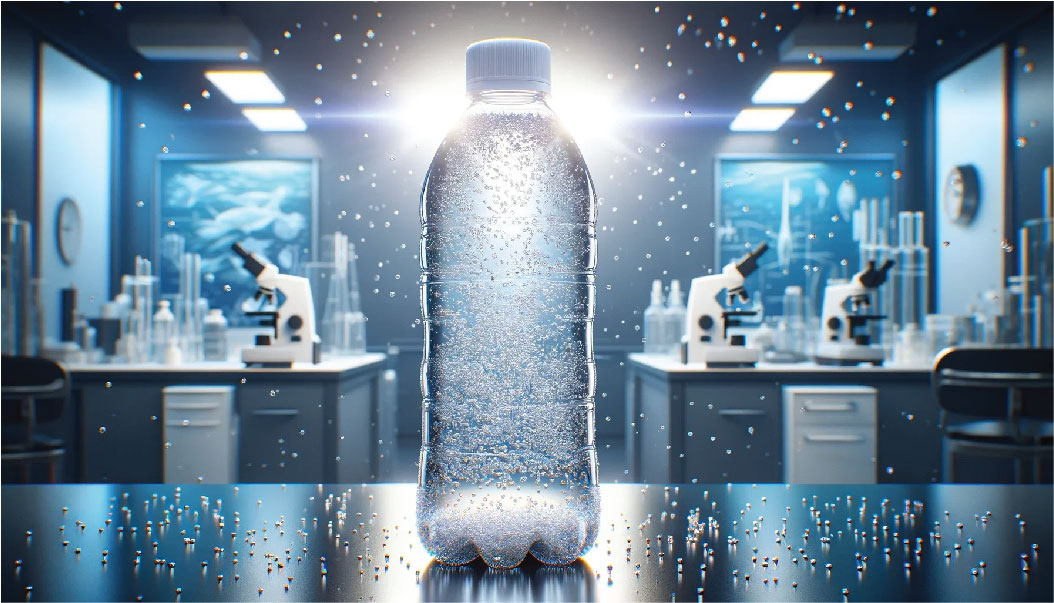
For the first time, scientists using a microscope equipped with dual lasers have detected and categorized nearly a quarter million invisible pieces of nanoplastics in the average liter of bottled water.
While scientists had long suspected the presence of numerous microscopic plastic particles, it wasn’t until researchers at Columbia and Rutgers universities conducted their analysis that the quantity and types became known. The study, published in Monday’s Proceedings of the National Academy of Sciences, examined five samples each from three popular bottled water brands. The findings revealed particle levels ranging from 110,000 to 400,000 per liter, with an average of around 240,000 nanoplastics per liter.
These are particles that are less than a micron in size. There are 25,400 microns — also called micrometers because it is a millionth of a meter — in an inch. A human hair is about 83 microns wide.
Previous studies focused on slightly larger microplastics, ranging from the visible 5 millimeters (less than a quarter of an inch) to one micron. The recent study found that there are about 10 to 100 times more nanoplastics than microplastics in bottled water.
The primary sources of these nanoplastics appear to be the bottle itself and the reverse osmosis membrane filter used to exclude other contaminants, according to Naixin Qian, the lead author of the study and a Columbia physical chemist. While she did not disclose the specific brands studied, she mentioned that they were common brands purchased at Walmart. The researchers aim to collect more samples before identifying specific brands and plan to expand their study to include a broader range of bottled water brands. a microscope equipped
The average liter of bottled water has been found to contain nearly a quarter million invisible nanoplastic particles, a discovery made for the first time by scientists using a microscope with dual lasers. Columbia and Rutgers universities researchers studied five samples each from three common bottled water brands, revealing particle levels ranging from 110,000 to 400,000 per liter, with an average of around 240,000. These nanoplastics, which are less than a micron in size, outnumber microplastics (slightly larger particles) by 10 to 100 times. The source appears to be the bottle and the reverse osmosis membrane filter, with brands purchased at Walmart showing notable levels. The health implications of these nanoplastic particles remain under review, with ongoing research focused on their impact on mammalian tissues, including humans. The International Bottled Water Association emphasizes the lack of standardized measuring methods and scientific consensus on the potential health impacts, while environmental concerns about plastic pollution persist globally.