

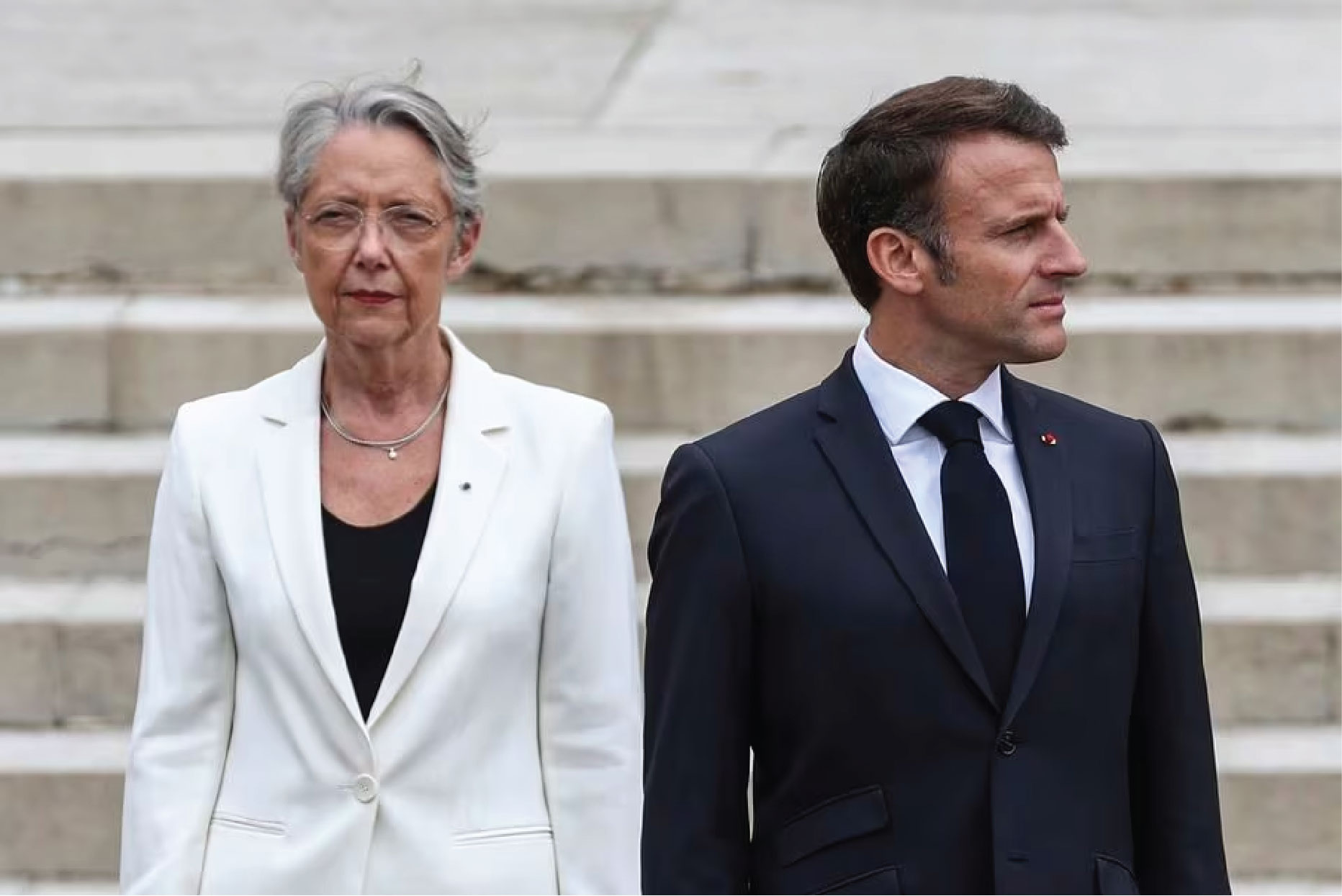
French Prime Minister Elisabeth Borne resigned Monday following recent political turmoil over a new immigration law, paving the way for President Emmanuel Macron to seek fresh momentum by appointing a new government in coming days.
The recent upheaval was widely interpreted as a strategic move by the 46-year-old centrist, Emmanuel Macron, to preemptively avoid entering a period of diminished influence. Macron’s current presidential term is scheduled to conclude in 2027, and according to the French Constitution, he is ineligible to seek reelection.
In her letter of resignation, Elisabeth Borne indicated that she stepped down at the behest of Macron, highlighting the president’s expressed “will” to “appoint a new prime minister.” a new immigration
Borne’s resignation came on the heels of the recent approval of controversial immigration legislation supported by Macron, designed to enhance the government’s capacity to expel certain foreign individuals, among other provisions.
The passage of this legislation required Macron’s centrist alliance to broker an agreement with the conservative Republicans party, signaling a perceived shift to the right for the government. The challenging negotiations and impassioned debates in parliament cast doubt on the ability of Borne’s administration to successfully navigate future significant legislative proposals.
Political analysts posit that Macron, a fervent advocate of European integration, may be positioning his new government to prepare for the upcoming European Union elections in June.