

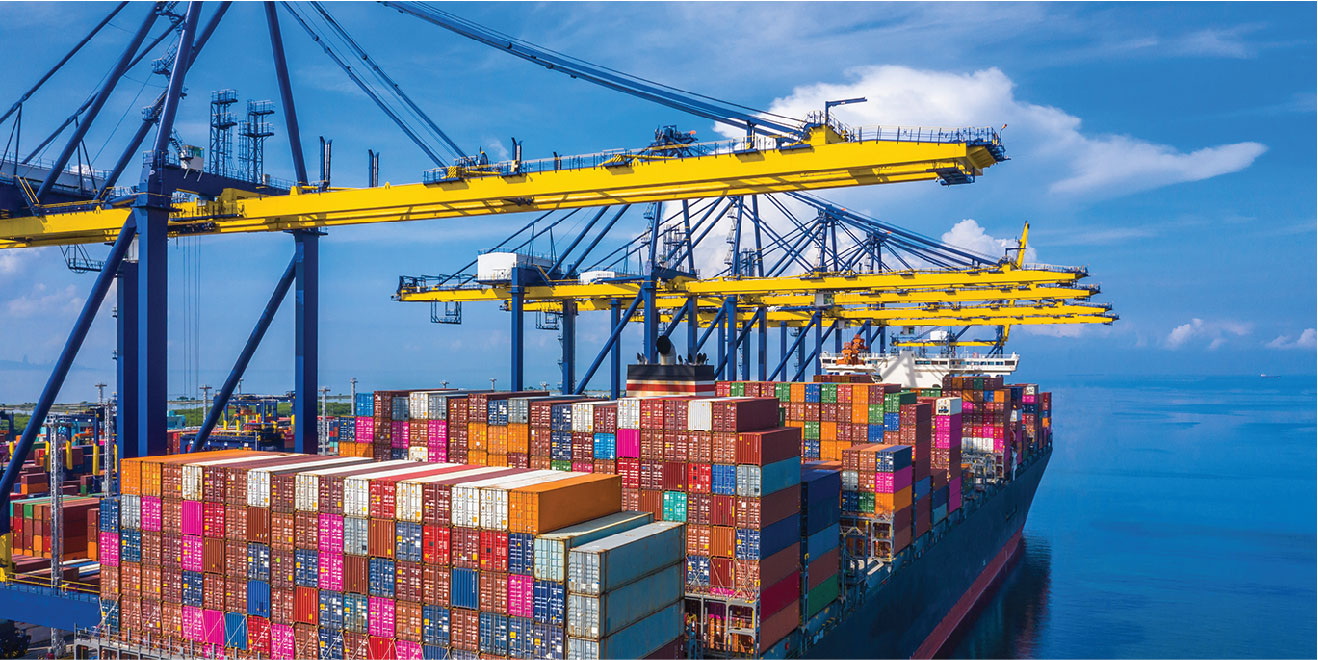
The strong December jobs report released Friday capped off a year of economic wins for the Biden administration. Now, global shipping delays caused by attacks on cargo vessels in the Red Sea are threatening to blunt the momentum.
In December, the Labor Department reported an addition of 216,000 jobs, surpassing economists’ expectations by more than 40,000 jobs, while the unemployment rate held steady at 3.7%. However, Danish shipping giant Maersk declared its decision to continue diverting its fleet from the Red Sea indefinitely due to ongoing attacks by Houthi rebels in the region. Maersk, along with other shipping companies, redirected over $200 billion in trade away from the Suez Canal in December.
White House officials are cognizant of the potential risks, considering the impact of shipping disruptions on the U.S. supply chain, which has only recently recovered from the effects of COVID-19. Jared Bernstein, Chair of the White House Council of Economic Advisers, expressed sensitivity to supply chain and logistical challenges, recalling the disruptions during the pandemic that prevented around $24 billion worth of goods from entering the U.S. market.
While acknowledging the minimal impact on energy costs so far, Lael Brainard, Director of the National Economic Council, criticized Maersk’s actions as “unacceptable.” She did not explicitly mention the potential global ramifications on manufacturing and consumer goods if the Red Sea remains perilous for major shipping lines. The existing delays have already affected companies selling products in the U.S., such as Ikea and Electrolux. The strong December jobs
President Biden’s national security team is actively engaged, collaborating with a broad coalition of partners and maintaining close contact with shippers to address the challenges posed by the situation in the Red Sea, according to Brainard.