

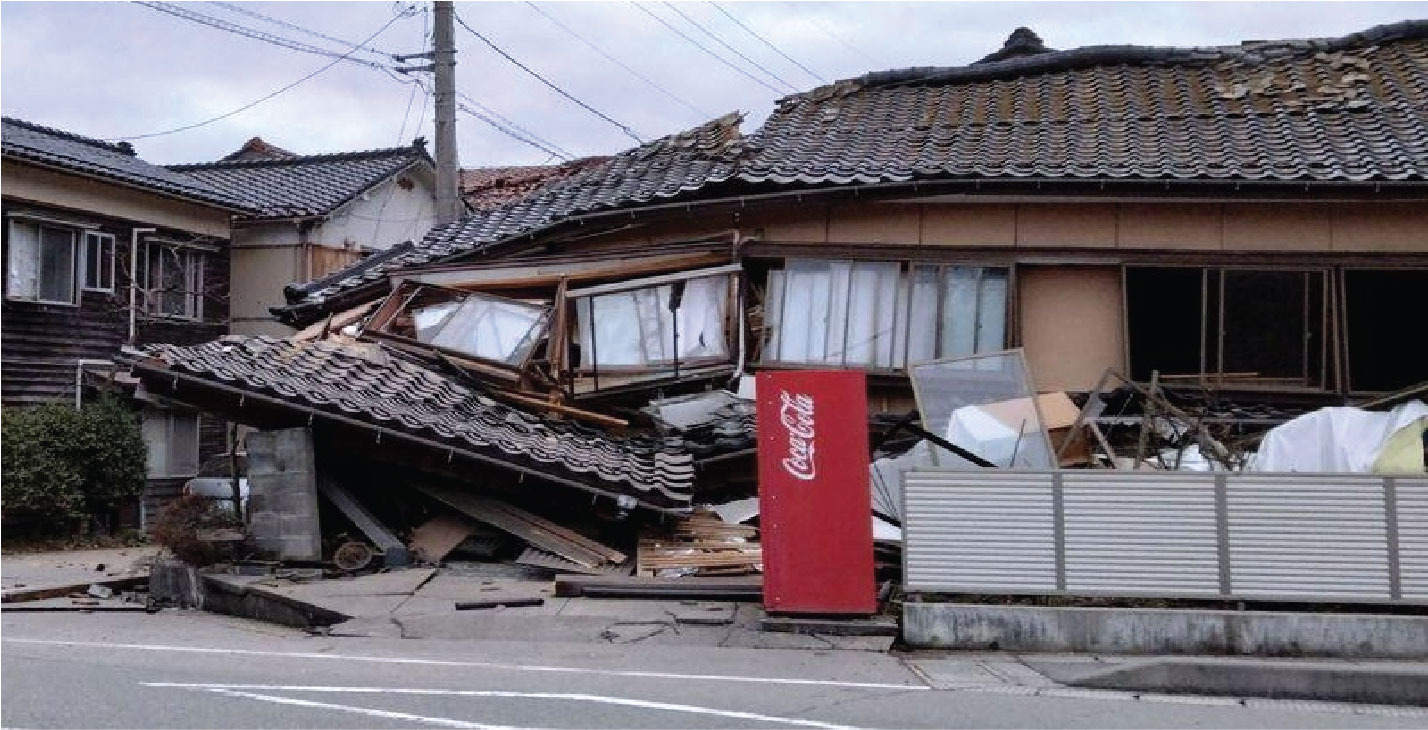
Due to damaged roads hindering travel, some doctors in Suzu city, Ishikawa prefecture, are unable to attend to patients injured in Monday’s earthquake, as reported by health officials. In western Japan, extensive road cracks have disrupted transportation and caused significant damage to infrastructure.
The earthquake, registering a magnitude of 7.5, occurred at 4:10 p.m. local time on Monday, according to the United States Geological Survey and the Japan Meteorological Agency. In Suzu city, hospital operations are reliant on a backup generator due to a power outage, as per Japanese public broadcaster NHK.
Furthermore, medical personnel in Wajima city have resorted to treating patients in a parking lot, as revealed by NHK. The aftermath of the earthquake has posed logistical challenges for healthcare providers, impacting their ability to reach and attend to those in need.
Japanese Prime Minister Fumio Kishida has stated that authorities are actively working to evaluate any damage caused by the 7.5 earthquake that occurred in western Japan on Monday.
In a message posted on X, formerly known as Twitter, the prime minister emphasized the immediate establishment of the Prime Minister’s Office of Response – Disaster Counter Measure HQ in reaction to the earthquake in the Noto region of Ishikawa prefecture. Kishida underscored the prioritization of human lives and conveyed that every possible effort is being made to assess damages, with a strong commitment to disaster response. Due to damaged roads
He urged residents in affected areas to stay vigilant, stay updated on the latest information, and prioritize personal safety in the wake of the earthquake.
Authorities in western and coastal regions of Japan have warned residents of tsunami waves after a powerful 7.5 magnitude earthquake rocked the East Asian country on Monday afternoon local time.
The earthquake, originating approximately 42 kilometers (26 miles) northeast of Anamizu in Ishikawa prefecture, caused numerous aftershocks, as reported by the United States Geological Survey.
Tsunami waves have been observed in various locations, and authorities caution that additional waves are anticipated. Residents in affected areas have been advised to evacuate to higher ground.
In adherence to Japan’s tsunami warning system, waves predicted to be less than 1 meter are categorized as a “tsunami advisory,” those anticipated to exceed 3 meters are labeled a “tsunami warning,” and waves exceeding 5 meters fall under a “major tsunami warning.” It underscores the severity of the situation and helps guide appropriate evacuation measures based on the expected wave heights.