

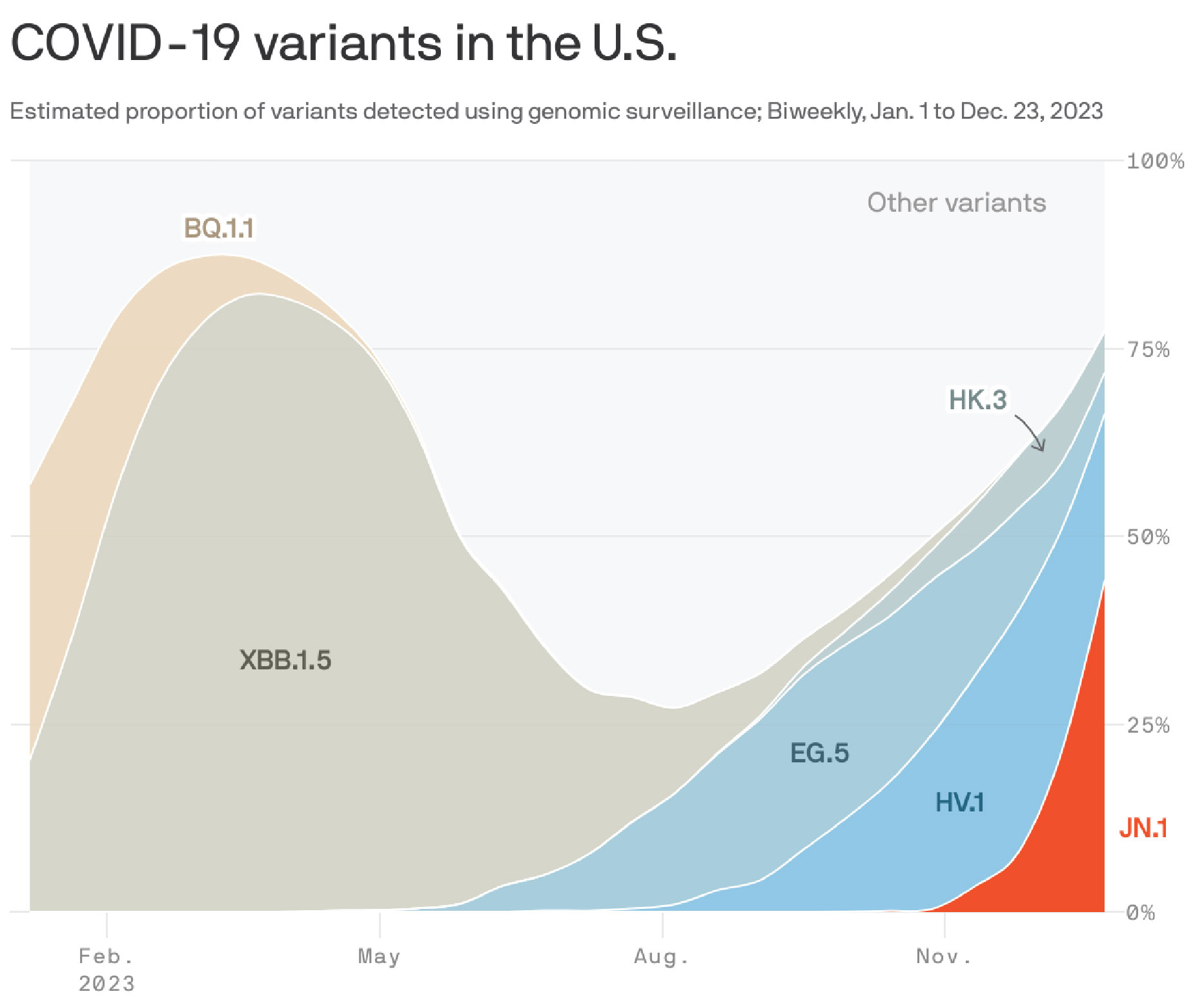
The highly transmissible COVID-19 variant known as JN.1 has become the predominant strain in the United States, comprising over 44% of reported cases. This surge raises concerns about its potential for increased transmissibility or immune system evasion compared to other circulating strains, according to the Centers for Disease Control and Prevention (CDC). However, the extent of its impact on infection rates and hospitalizations during the winter remains uncertain.
Recent CDC data reveals a significant rise in JN.1 estimates, increasing from 21.3% to 44.2% over the two weeks ending on December 23. The variant is notably prevalent in the Northeast, constituting 56.9% of cases in the Department of Health and Human Services’ Region 2, encompassing New York, New Jersey, and U.S. territories in the Caribbean. The CDC notes an uptick in JN.1 cases among travelers and in wastewater surveillance.
The CDC reassures that updated vaccines, existing tests, and treatments remain effective against JN.1, and as it does not seem to pose additional risks, current recommendations, including vaccination and testing for respiratory symptoms, remain unchanged. The highly transmissible
Despite the variant’s classification by the World Health Organization as a variant of interest, it is considered to have a low additional public health risk. Nevertheless, the confluence of increased holiday travel, waning immunity from previous infections and vaccinations, and the potential for a surge in other respiratory viruses poses a substantial challenge to health systems. COVID-19 hospitalizations have risen by 10.4%, and flu activity was classified as “very high” in ten states for the week ending December 16.
Eric Topol, executive vice president of Scripps Research, notes that while JN.1 may not lead to a spike in hospitalizations, it is contributing significantly to infections and the subsequent risk of long COVID.
In 2024, the AI industry is anticipated to shift its focus towards delivering tangible results across various sectors, signaling a departure from the hype that surrounded notable successes such as ChatGPT and chipmaker Nvidia. The significance of this shift lies in the heightened expectations and skepticism that have emerged following the surges of both enthusiasm and fear in 2023, prompting stakeholders across industries to seek concrete evidence that AI is genuinely improving their lives and work. The coming year is poised to be a critical period for the AI industry, where the emphasis will be on substantiating the real-world impact of artificial intelligence beyond the initial waves of excitement and apprehension.