

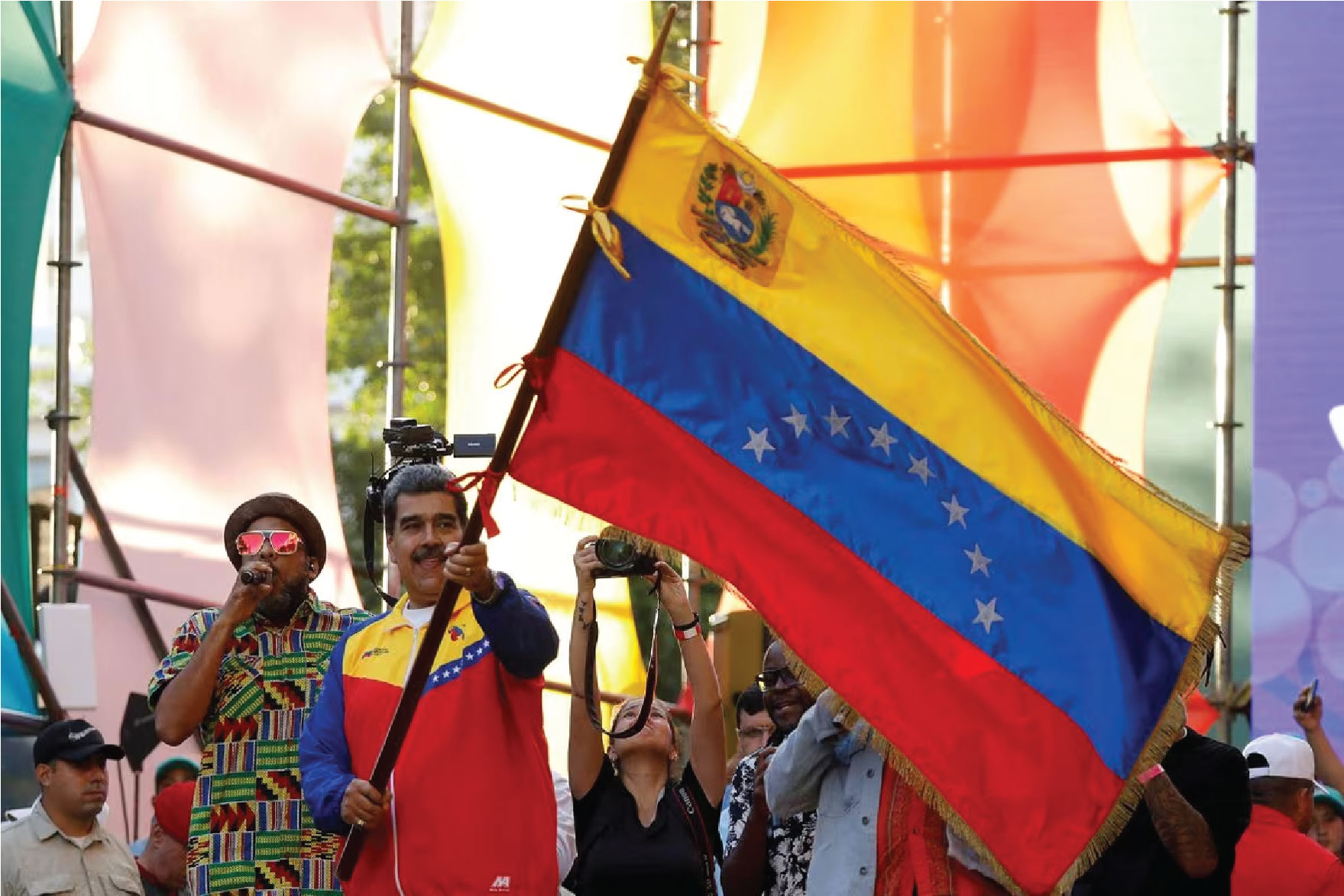
Venezuela president ordered the creation of a new state called Guayana Esequiba on Tuesday, following a controversial Sunday referendum which saw Venezuelan voters approving the annexation of land from neighboring Guyana.
The disputed region in focus is the densely forested and oil-rich Essequibo region, constituting approximately two-thirds of Guyana’s national territory. Venezuela has persistently asserted its claim over this land, rejecting a 1899 ruling by international arbitrators that established the existing boundaries.
Guyana has characterized Venezuela’s actions as a significant stride toward annexation, deeming it an “existential threat.” The ongoing territorial dispute, exacerbated by the resource-rich nature of the Essequibo region, remains a source of tension between the two nations.
During a discussion with legislators on Tuesday, President Nicolás Maduro unveiled a “new map” of Venezuela, incorporating the disputed territory, and announced that all residents in the area would be given Venezuelan nationality. He emphasized that this map would be distributed across all schools and public buildings throughout the country. new state called Guayana
In addition to unveiling the map, Maduro signed a “presidential decree” establishing the “High Commission for the Defense of Guayana Esequiba.” This move further underscores Venezuela’s assertive stance in defending its claims over the contentious Guayana Esequiba region, intensifying the ongoing geopolitical tensions surrounding the territorial dispute.
The measures announced include the approval of oil, gas and mining exploration licences. Maduro ordered the state oil company PDVSA to create a special department, “PDVSA-Esequibo,” to manage the activities in the region which are to start immediately.
The president also asked legislators to draw up a law banning the hiring of any companies that have worked with Guyana in areas of disputed water, and giving companies currently in the region three months to leave the area.
The measures also include a census among residents of that territory in order to facilitate the attribution of the Venezuelan nationality.
In an interview Wednesday with CNN’s Isa Soares, Guyanese President Irfaan Ali called the Venezuelan moves “an imminent threat” and a “desperate attempt.”