

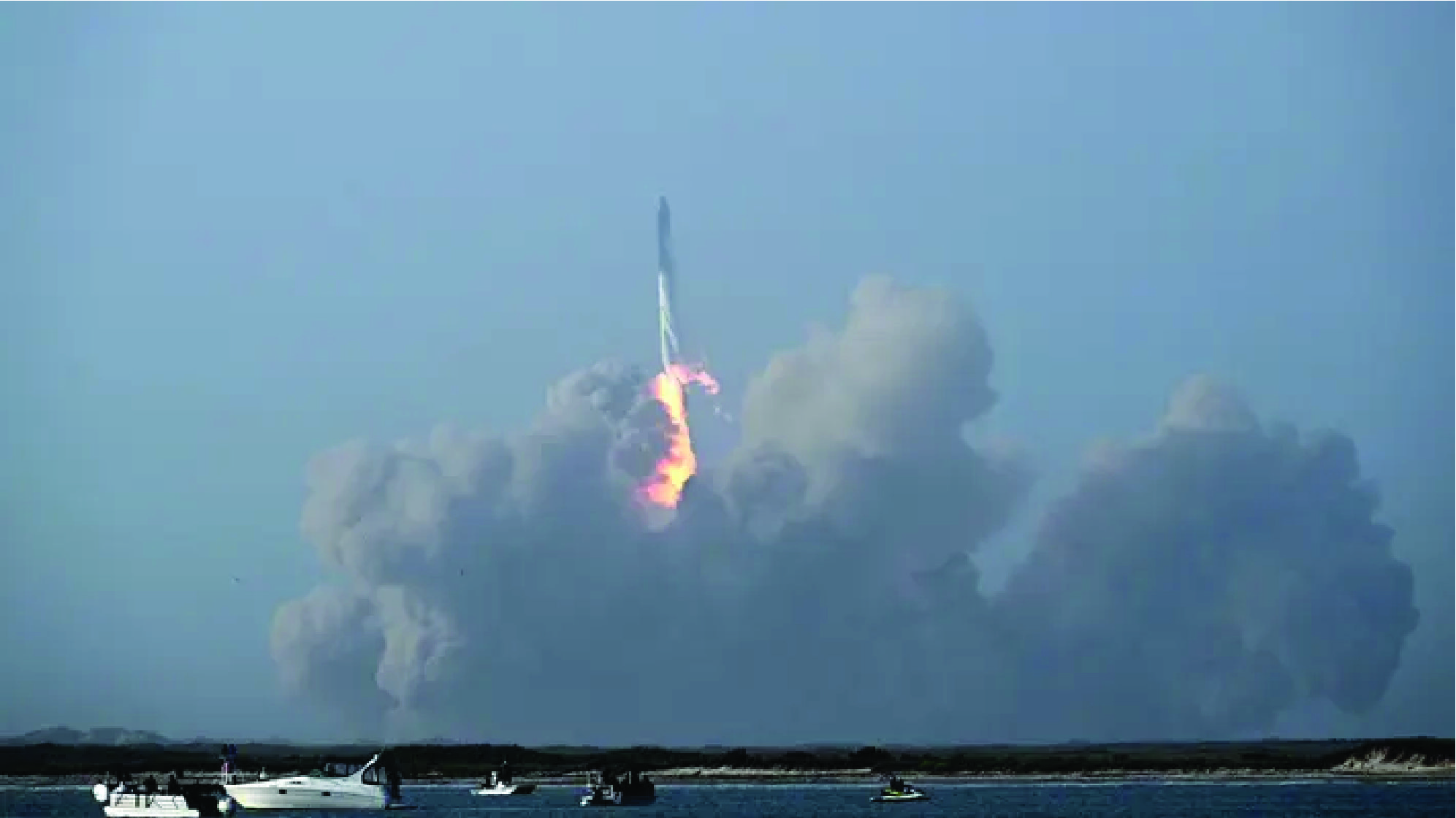
NASA managers are currently in South Texas as SpaceX gears up for the launch of its second full-sized Starship rocket. The successful flight of this rocket would pave the way for additional tests in the coming year, demonstrating SpaceX’s capability to transfer significant quantities of super-chilled methane and liquid oxygen between two spacecraft in orbit.
This capability is a crucial component of SpaceX’s overarching architecture for conducting Starship missions beyond low-Earth orbit. Having secured two NASA fixed-price contracts totaling over $4 billion, SpaceX is committed to the development and launch of two human-rated lunar landers based on the Starship design. The success of these initial missions is pivotal, as it may lead to the undertaking of numerous additional missions under the same framework.
Opinions vary, but some experts suggest that SpaceX might need to launch a dozen or more refueling tankers to replenish the methane and liquid oxygen tanks on the Starship lunar lander. After its launch atop a Super Heavy booster, the Starship lunar lander will exhaust its tanks just to reach low-Earth orbit. Subsequently, this fuel will be utilized to propel the lander out of low-Earth orbit towards the Moon. Once there, it will descend to the lunar surface with astronauts and then ascend back into space to rendezvous with their Earth return vehicle—an Orion spacecraft. NASA managers are currently
However, the immediate challenge for SpaceX is to successfully launch the Starship into space. This objective is the focus of Saturday’s second test flight involving the full-scale Super Heavy rocket and the Starship upper stage. If the mission unfolds as planned, the Starship will achieve a velocity of nearly 17,000 mph, just below the threshold required for a stable Earth orbit. This trajectory will naturally guide the vehicle to re-enter the atmosphere, leading to a targeted splashdown near Hawaii after a journey that takes it most of the way around the world.