

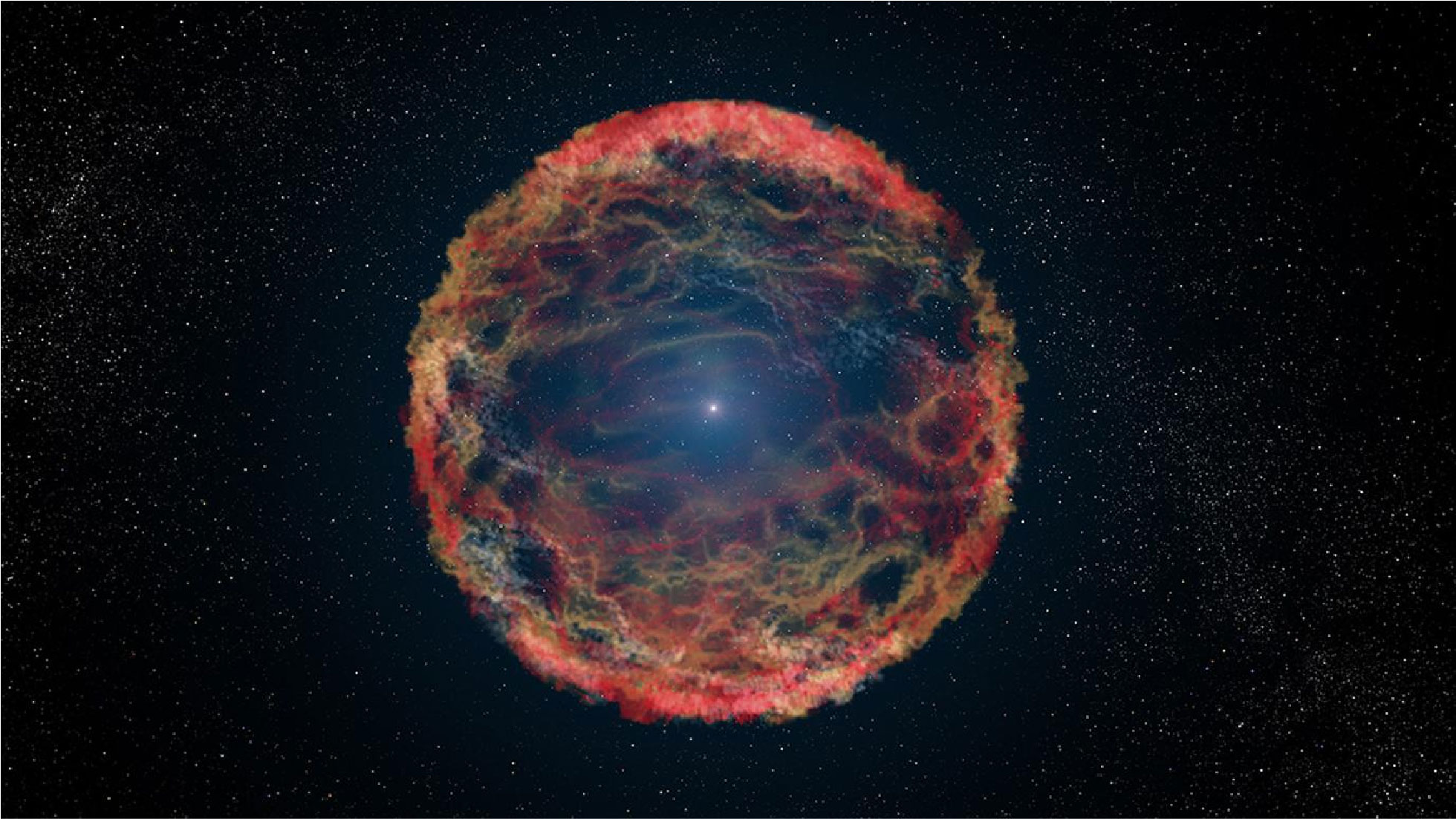
More than 100 observed galaxies are being disrupted and stripped of their outer layers, transforming them into fossil-dense, ultra-compact dwarf galaxies.
Astronomers have identified the fading remnants of approximately 100 dwarf galaxies, subjected to forceful stripping of their outer layers of stars by larger galaxies. This revelation unveils a crucial link in the evolutionary chain of a perplexing galaxy category known as ultra-compact dwarf galaxies (UCDs).
These disrupted galaxies serve as the “missing link” in understanding UCDs, renowned for being among the universe’s most densely packed stellar collections. The findings indicate that UCDs are essentially the preserved remnants of ordinary dwarf galaxies that have met their demise through tumultuous gravitational interactions with larger galactic counterparts.
The enigma surrounding UCDs surfaced over two decades ago when astronomers first encountered these ultra-dense galaxies. Their smaller size compared to regular dwarf galaxies and increased density compared to star clusters left scientists puzzled. The prevailing theory proposed that UCDs were the aftermath of obliterated dwarf galaxies, yet conclusive evidence and an intermediate galaxy in this transformation were lacking. stripped of their outer
To bridge this gap, astronomers utilized the Gemini North telescope atop Mauna Kea in Hawai’i to explore the Virgo Cluster—a constellation of approximately 2,000 galaxies situated about 65 million light-years away from Earth. The telescope successfully identified dozens of dwarf galaxies undergoing the transformative process, shedding light on this cosmic evolution.
“Our results provide the most complete picture of the origin of this mysterious class of galaxy that was discovered nearly 25 years ago,” Eric Peng, a NOIRLab astronomer at the Kavli Institute for Astronomy and Astrophysics at Peking University, said in a statement. “Here we show that 106 small galaxies in the Virgo cluster have sizes between normal dwarf galaxies and UCDs, revealing a continuum that fills the ‘size gap’ between star clusters and galaxies.”