

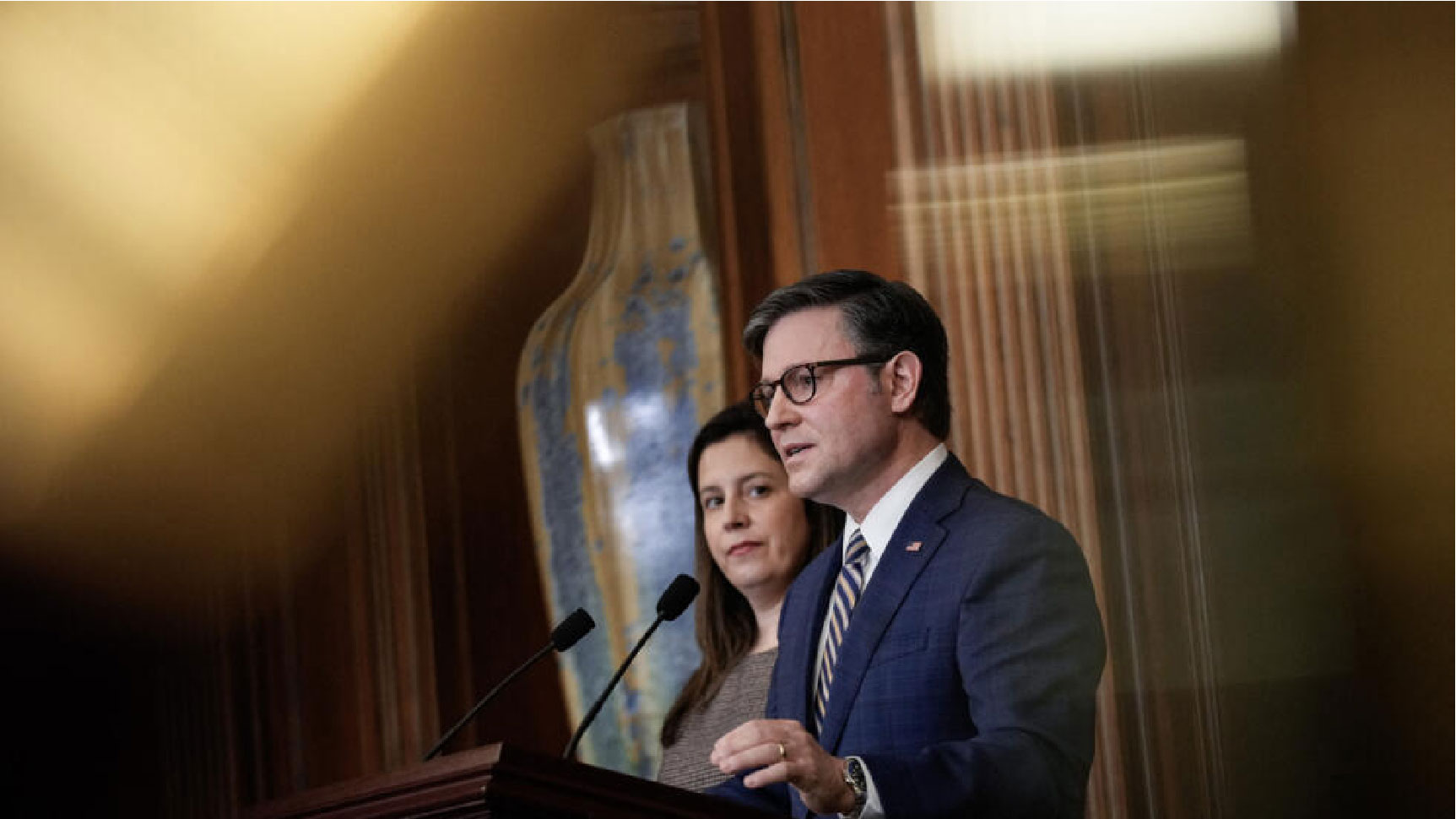
House Speaker Mike Johnson unveiled his proposal on Saturday to avoid a partial government shutdown by extending government funding for some agencies and programs until Jan. 19, and continuing funding for others until Feb. 2.
Senator Johnson has taken an unconventional approach to a stopgap spending bill, opting for a two-step continuing resolution to address concerns from GOP lawmakers. This approach aims to avoid presenting a massive spending bill just before the holidays. Johnson believes this strategy will position House Republicans to advocate for conservative victories.
The bill, designed to prevent the tradition of holiday-season omnibus bills, excludes funding requested by President Biden for Israel, Ukraine, and the U.S. border with Mexico. Johnson contends that separating Biden’s emergency supplemental bill request from the temporary measure allows the GOP to better fight for fiscal responsibility, oversight over Ukraine aid, and policy changes at the Southern border.
While hardline conservatives, typically hesitant to support temporary spending measures, expressed a willingness to grant leeway for this continuing resolution, some, like Rep. Chip Roy, criticized the clean CR, citing concerns about funding Pelosi-level spending and policies for 75 days based on future promises.
The federal government currently operates under funding levels approved last year by a Democratic-led House and Senate. The previous 47-day continuing resolution that funded the government through November 17 faced severe fallout, leading to Rep. Kevin McCarthy’s removal from the speakership. The proposed two-step resolution extends funding for various spending bills until January 19 and February 2, addressing a budget mess inherited by Speaker Johnson. House Speaker Mike
The proposal has faced criticism, with the White House press secretary characterizing it as a recipe for more Republican chaos and shutdowns. The credit rating agency Moody’s Investors Service lowered its outlook on the U.S. government’s debt to “negative” from “stable,” citing rising interest rates and political polarization in Congress as contributing factors.