

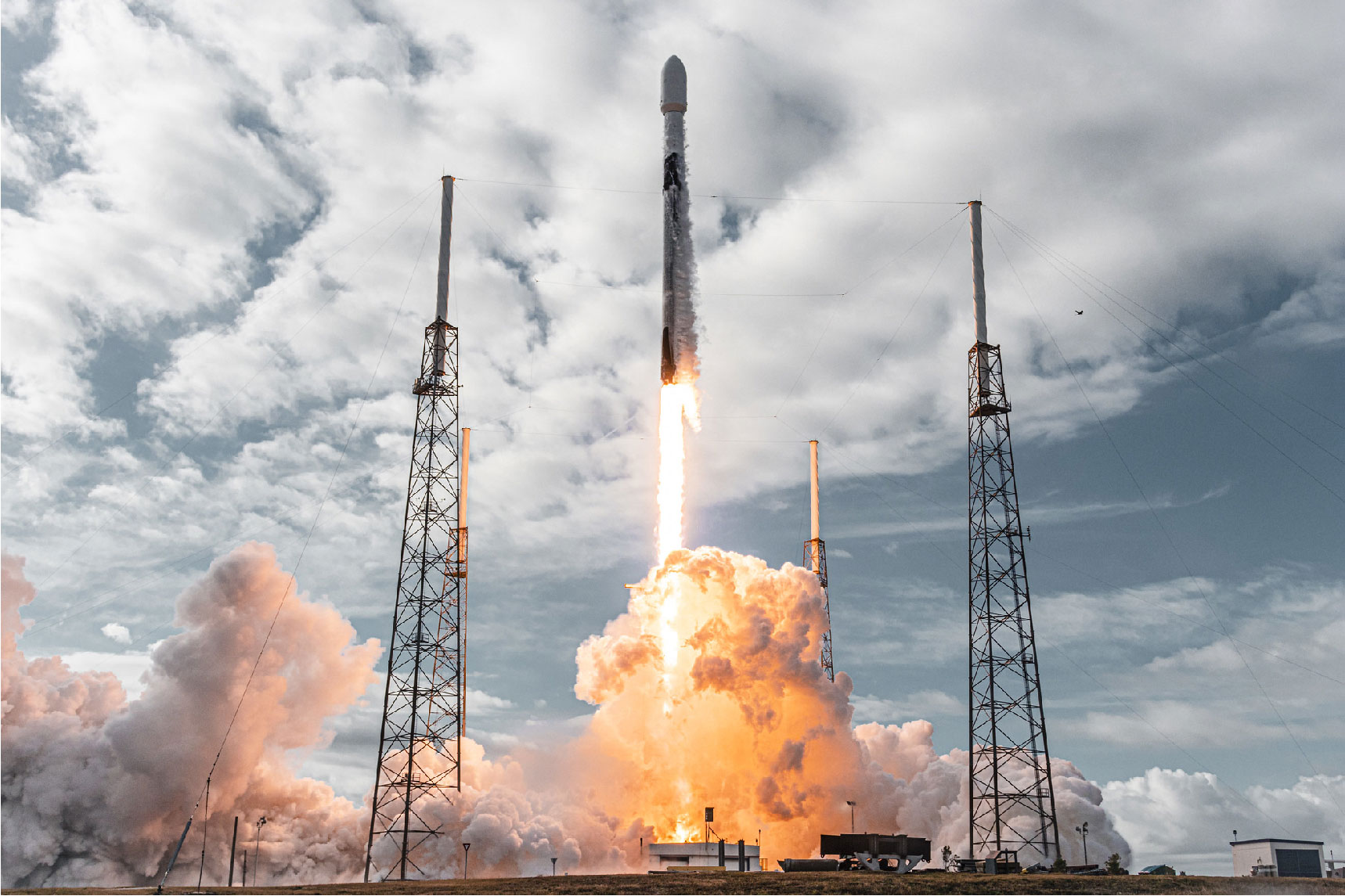
In 2023, SpaceX is gearing up for its fourth smallsat rideshare mission to low Earth orbit with the Transporter-9 mission. The launch is scheduled within a 55-minute window starting at 10:49 a.m. PST (18:49 UTC) from Vandenberg Space Force Base in California.
The upcoming mission is expected to carry a total of 113 payloads, with 90 of them set to be deployed directly from the Falcon 9 rocket during the launch. Additionally, 23 satellites will be deployed at a later time from orbital transfer vehicles.
This initiative underscores SpaceX’s commitment to providing cost-effective access to space for a diverse array of payloads, reinforcing their role in facilitating the deployment of numerous small satellites into low Earth orbit. SpaceX is gearing up
The majority of payloads on the Transporter-9 mission are provided by the Earth observation company, Planet Labs PBC. Based in San Francisco, the company is set to launch 36 additional SuperDove satellites, augmenting their existing constellation of over 500 satellites in orbit. Notably, the mission includes a technology demonstration satellite called “Pelican-1,” designed to host Planet’s next generation imaging sensors for deployment in the Pelican and Tanager constellations.
This launch follows a week during which SpaceX conducted missions such as deploying a batch of Starlink satellites and a cargo resupply mission to the International Space Station. Additionally, a day after the Transporter-9 mission, SpaceX is poised to launch two more satellites on behalf of SES, a Luxembourg-based satellite company.
The liftoff for the Transporter-9 mission is scheduled from Space Launch Complex 4 East (SLC-4E). Following the launch, the first stage booster, identified as B1071, will return to Vandenberg Space Force Base for a controlled touchdown at Landing Zone 4 (LZ-4). This marks the 12th mission for B1071, previously involved in flights such as Transporter-8, missions for the National Reconnaissance Office (NROL-87 and NROL-85), the German radar-imaging satellite SARah-1, the NASA-French ocean research satellite SWOT, and six Starlink delivery flights.