

It’s beneficial to examine the internal components of USB-C cables, even those that cost as little as $10, $5, or $4.
When Apple transitioned to USB-C, they did so with their signature approach, which included the introduction of a $130 Thunderbolt 4 (USB-C) Pro cable. For the extended 3-meter version, the price rises to $160. The question that arises is whether a cable, a seemingly unremarkable object responsible for transferring power and data, could justify such a price tag.
Lumafield, a manufacturer of industrial CT scanners, decided to investigate this question from various angles. They conducted scans of Apple’s high-end cable, a $10 Amazon Basics model, and USB-C cables priced at $5.59 and $3.89. In the end, Lumafield’s analysis didn’t offer a definitive answer but emphasized that consumers generally choose cables that meet their specific needs. Furthermore, the scans revealed that there is significant room for innovative engineering and efficient manufacturing within the standardized USB-C specifications.
However, if your objective is to purchase a single cable that can endure rigorous use, deliver current power and data speeds while being future-proof, and eliminate cables as a potential source of connectivity issues, the images from Lumafield’s scans illustrate why Apple’s premium cable might be a justifiable investment.
Lumafield’s examination revealed that the Apple Thunderbolt 4 Pro USB-C cable consists of 24 pins and a 9-layer circuit board, with components made from stainless steel. They employed the Neptune Industrial X-Ray CT Scanner, a 6-foot-wide machine that costs $75,000 per year under a standard contract, including advanced imaging and diagnostic software and support. This scanner allowed them to explore the inner workings of Apple’s cable in meticulous detail, and these scans are available for public viewing through Lumafield’s Voyager software on the web. the internal components
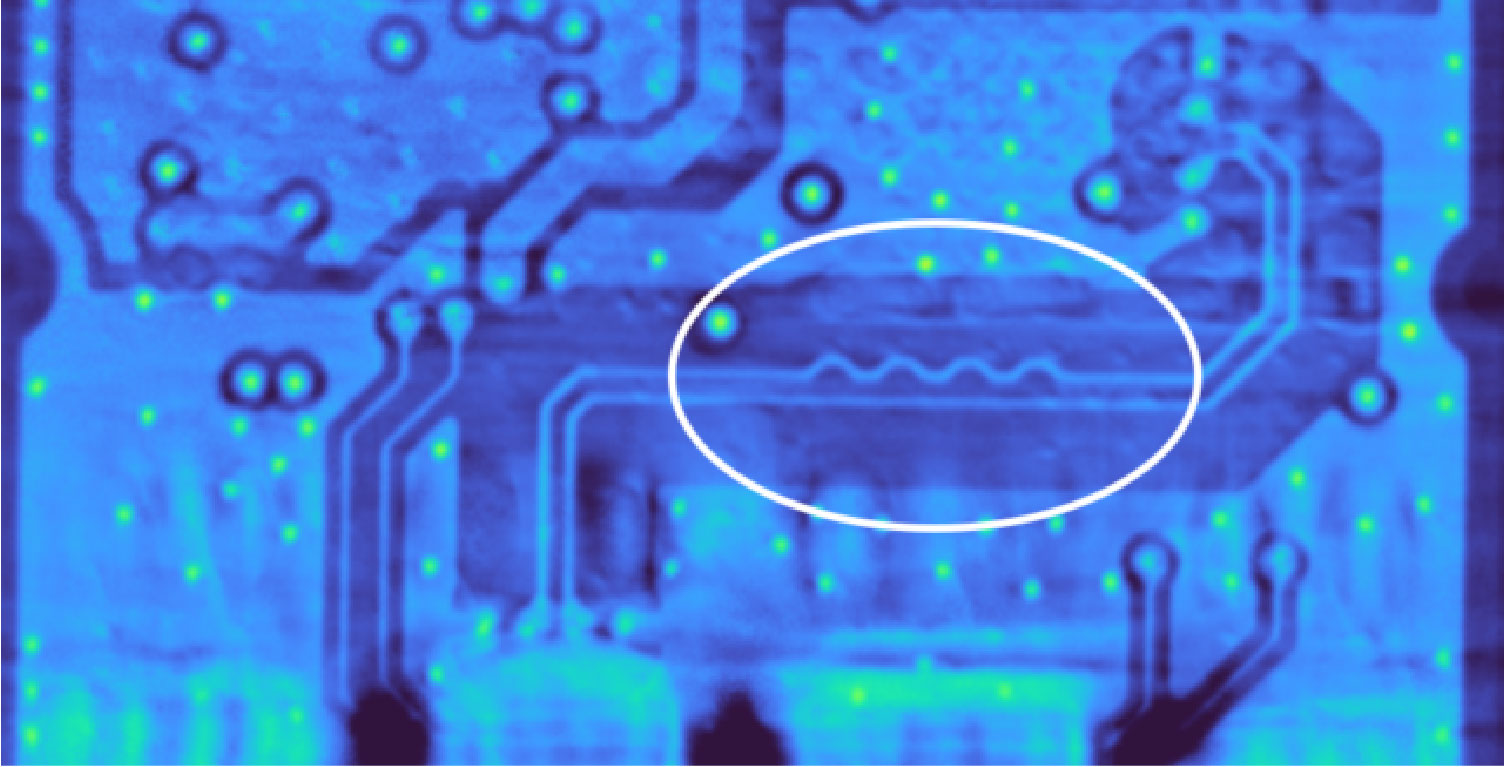
Radiation and computed tomography imaging techniques have provided insight into the inner structure of Apple’s cable. The scans reveal that this cable is equipped with 24 pins, each individually mounted to a printed circuit board assembly. These pins are connected through a network of “blind and buried vias,” which are essentially pathways that link different components, some of which run within the inner layers (blind) and others that are entirely concealed within them (buried). This careful design and construction are necessary to ensure reliable data transmission at the cable’s rated speed of 40Gb/s. To maintain this high-speed performance, parallel traces are arranged in a series of “wiggles” to even out the distances for the traces on the inner track, optimizing data flow.