

Jeff Bezos, the visionary behind the e-commerce behemoth Amazon, is expanding his venture into the space industry. On a recent Friday, he successfully launched two prototype satellites , part of his ambitious broadband mega-constellation endeavor known as Project Kuiper.
Bezos has grand plans to deploy over 3,200 spacecraft in the coming years, aiming to provide internet connectivity across the entire globe. This venture places him in direct competition with Elon Musk’s Starlink, which already offers satellite-based internet services in numerous countries.
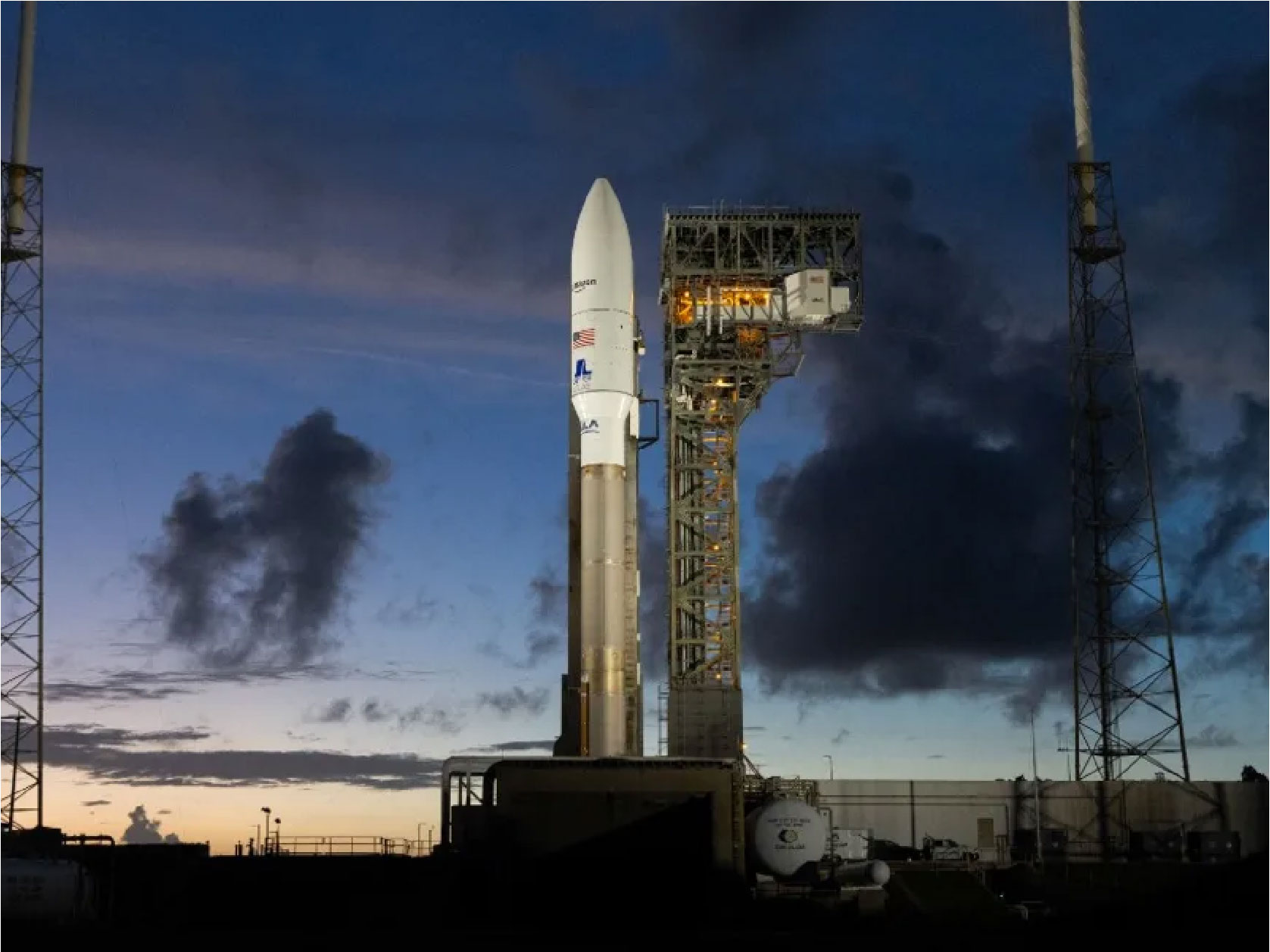
The maiden voyage of this ambitious project saw the launch of two small satellites, named KuiperSat-1 and KuiperSat-2. These prototypes will test and validate the essential technology required for the broader constellation. They hitched a ride aboard an Atlas-5 rocket and were placed into a 500km-high orbit, originating from the Cape Canaveral Space Force Station in Florida. The launch occurred at 14:00 EDT (18:00 GMT).
Amazon commenced research and development for Project Kuiper, which carries a hefty price tag of $10 billion (£8 billion), in 2018. The ultimate goal is to tap into the rapidly growing market for high-bandwidth, low-latency internet connections that traverse the skies, rather than relying on ground-based fiber connections.
Elon Musk’s SpaceX currently leads this sector, boasting over 4,800 operational spacecraft in orbit. Meanwhile, UK-based Eutelsat-OneWeb has also established a network of 620 satellites. However, numerous contenders are emerging in this competitive field, with similar projects announced in Canada, the European Union, China, and several proposals from other US-based companies.
Mr. Bezos is on an accelerated timeline to deploy his satellite network. Amazon holds a crucial license from the US Federal Communications Commission (FCC), granting them the necessary radio frequencies for their project. However, the terms of this license stipulate that at least half of the Kuiper system must be in orbit by July 2026, with full deployment required by July 2029. two prototype satellites
Meeting these deadlines will necessitate an intense and rapid launch campaign, and Amazon has already secured agreements with rocket companies for nearly 100 flights. However, a potential challenge lies in the fact that the majority of these missions are reserved on vehicles that have not yet entered into service. It’s not uncommon for new rocket systems to experience failures during their initial missions.
Should such failures occur, it could significantly impede Amazon’s ability to expedite the deployment of the Kuiper satellite network, potentially causing delays in the project’s timeline.