

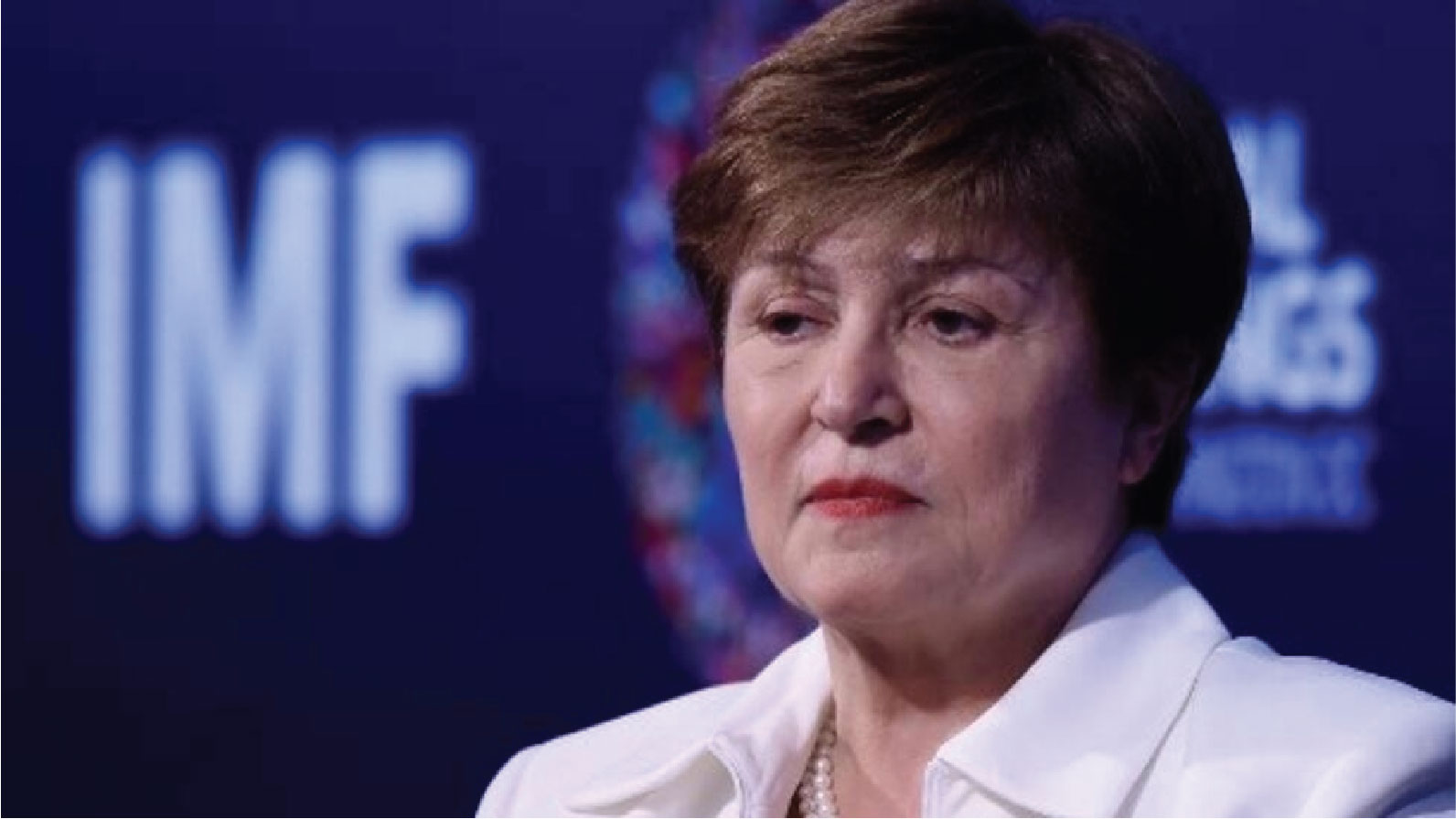
The Managing Director of the International Monetary Fund (IMF), Kristalina Georgieva, has highlighted the dual nature of artificial intelligence, stating that while it poses risks to job security worldwide, it also presents a “tremendous opportunity” to enhance declining productivity levels and stimulate global economic growth. In an interview in Washington just before heading to the annual World Economic Forum in Davos, Switzerland, Georgieva noted that AI is anticipated to impact 60% of jobs in advanced economies.
According to a recent IMF report, the influence of AI is expected to be less significant in developing countries, where approximately “40 percent of jobs globally are likely to be impacted.” Georgieva’s remarks underscore the nuanced impact of AI on employment, acknowledging both the challenges it poses to job security and the potential it holds to drive productivity improvements and contribute to global economic expansion.
And the more you have higher skilled jobs, the higher the impact,” she added.
However, the IMF report published Sunday evening notes that only half of the jobs impacted by AI will be negatively affected; the rest may actually benefit from enhanced productivity gains due to AI.
“Your job may disappear altogether — not good — or artificial intelligence may enhance your job, so you actually will be more productive and your income level may go up,” Georgieva said.
The recent IMF report anticipates a lesser initial impact of artificial intelligence (AI) on labor markets in emerging and developing economies. However, it also notes that these regions are less likely to experience the enhanced productivity resulting from the integration of AI in workplaces. IMF Managing Director Kristalina Georgieva emphasized the importance of supporting low-income countries to seize the opportunities presented by AI, highlighting the dual nature of AI as both a potential source of concern and a significant opportunity for everyone. The Managing Director
Georgieva stated that AI, while somewhat intimidating, presents a tremendous opportunity, particularly for low-income countries. The IMF is set to release updated economic forecasts later this month, indicating that the global economy is generally on track to meet previous projections. Georgieva mentioned that the global economy is approaching a “soft landing,” with monetary policy effectively managing inflation. However, she noted the delicate balance required in monetary policy, highlighting the need to neither ease too quickly nor too slowly.
The IMF chief emphasized the potential for AI-related productivity growth to benefit the global economy, which is projected to continue growing at historically subdued rates over the medium term. Acknowledging the challenges ahead, Georgieva commented on the tough fiscal year expected in 2024, as nations address debt accumulated during the COVID-19 pandemic and navigate election pressures. She expressed concern about governments overspending and potentially undermining progress made in controlling inflation.
Looking ahead, Georgieva refrained from commenting on her potential candidacy for a second term as the head of the IMF, emphasizing her current focus on the responsibilities at hand. She acknowledged the privilege of leading the IMF during turbulent times and expressed pride in how the institution managed challenges.