

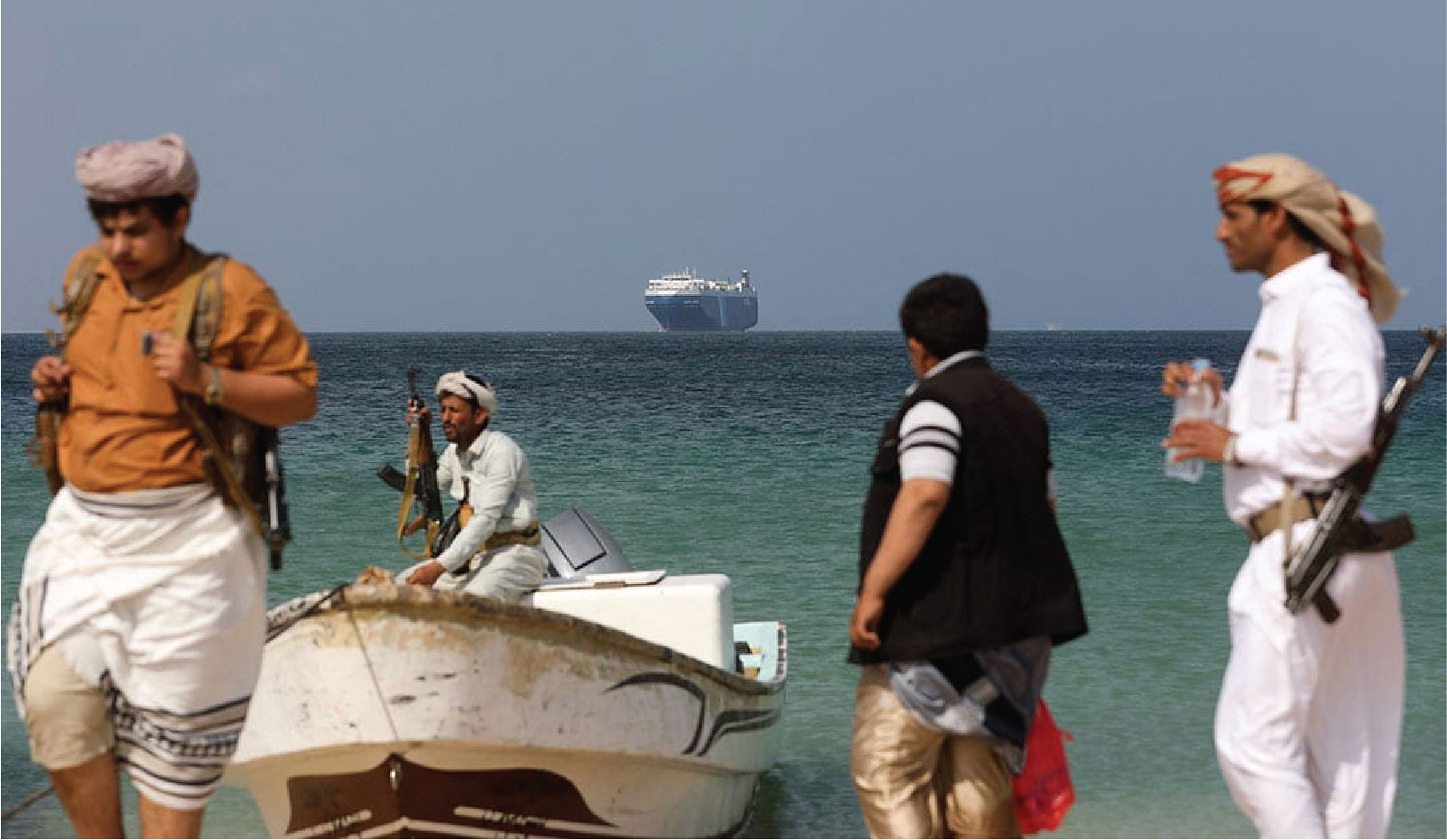
In the tumultuous and disorderly waters of the Arabian Peninsula , where lawlessness and violence prevail, Iran seems to operate with relative impunity, evading U.S. sanctions, sustaining oil revenue, and channeling funds to proxies such as the Houthis.
The recent seizure of the oil tanker St. Nikolas on Thursday stands out as a unique instance of direct involvement by the Iranian military. This act is widely perceived as a retaliatory move in response to the U.S. seizure of the same vessel a few months ago. The incident underscores the complex dynamics and retaliatory nature of actions in this region, amplifying concerns about the ongoing geopolitical tensions and their impact on maritime security.
The tanker, previously known as the Suez Rajan, underwent a notable transformation in April when the United States assumed control of it, leading to the offloading of one million barrels of Iranian crude oil. This incident is just one example among hundreds of tankers that experts assert are actively subverting U.S. sanctions, engaging in the illicit smuggling of Iranian oil. The situation highlights the persistent challenges faced in enforcing sanctions and preventing unauthorized oil trade in the region.
The fleet, aptly named the “dark fleet” by Lloyd’s List Intelligence and referred to as the “ghost armada” by a group of U.S. congressional representatives, comprises an estimated 300 to 560 ships. Characterized by anonymous or challenging-to-track ownership, these vessels typically have an older profile compared to legitimate trade tankers.
A significant practice they engage in is turning off electronic location equipment or intentionally obscuring their location, especially during the loading or unloading of sanctioned oil. Crucially, these ships employ a strategy known as “flag hopping,” actively seeking registration in nations with lax regulations that permit them to fly their flag for a fee. the Arabian Peninsula
Michelle Wiese Bockmann, Principal Analyst with Lloyd’s List Intelligence, notes, “It’s these vessels that are operating and trading outside Western jurisdiction and primarily shipping sanctioned oil.” Nations such as Cameroon, Gabon, and the Cook Islands are cited as countries selling the use of flags for these ships. Notably, Panama features prominently, contributing about half of the flags within this “ghost armada.” Bockmann emphasizes that Panama lacks the resources to effectively manage the multitude of vessels under its flag, contributing to the challenge of regulating these operations.