

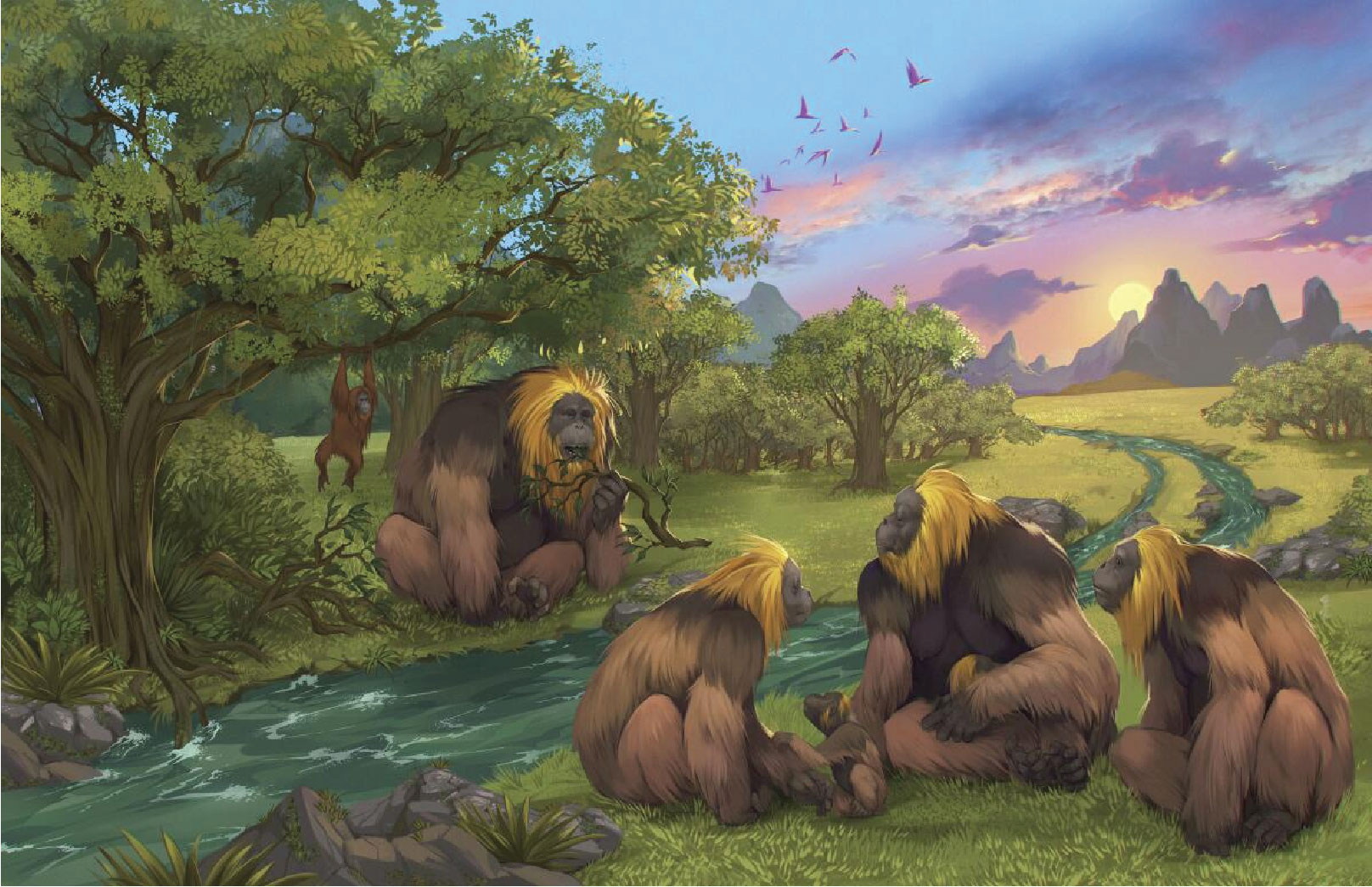
Scientists reported on Wednesday that an ancient species of great ape, Gigantopithecus blacki, likely faced extinction hundreds of thousands of years ago due to climate change. The apes, once inhabitants of southern China, were adversely affected when climate variations made their preferred fruits inaccessible during dry seasons.
Gigantopithecus blacki holds the distinction of being the largest great ape known to scientists, towering at 10 feet (3 meters) and weighing up to 650 pounds (295 kilograms). However, the impressive size of these apes might have been a vulnerability, contributing to their eventual extinction.
“It’s just a massive animal – just really, really big,” said Renaud Joannes-Boyau, a researcher at Australia’s Southern Cross University and co-author of the study published in the journal Nature. “When food starts to be scarce, it’s so big it can’t climb trees to explore new food sources.”
The enormous apes, believed to have had similarities to contemporary orangutans, managed to endure for approximately 2 million years in the forested plains of China’s Guangxi region. Their diet primarily consisted of vegetation, as they consumed fruits and flowers in the lush tropical forests, sustaining their population until environmental shifts began to take place. that an ancient species
By scrutinizing pollen and sediment samples preserved in caves in Guangxi, along with the examination of fossilized teeth, researchers unraveled the environmental changes that led to the decline of Gigantopithecus blacki. Around 600,000 years ago, the forests in the region began producing fewer fruits due to an increase in dry seasons.
The extinction of these giant apes was not an abrupt event but is believed to have occurred gradually, with the species likely disappearing sometime between 215,000 and 295,000 years ago. In contrast to smaller apes that could adapt by climbing trees in search of alternative food sources, the research indicates that the giant apes resorted to consuming more tree bark, reeds, and other non-nutritious vegetation, possibly contributing to their demise.