

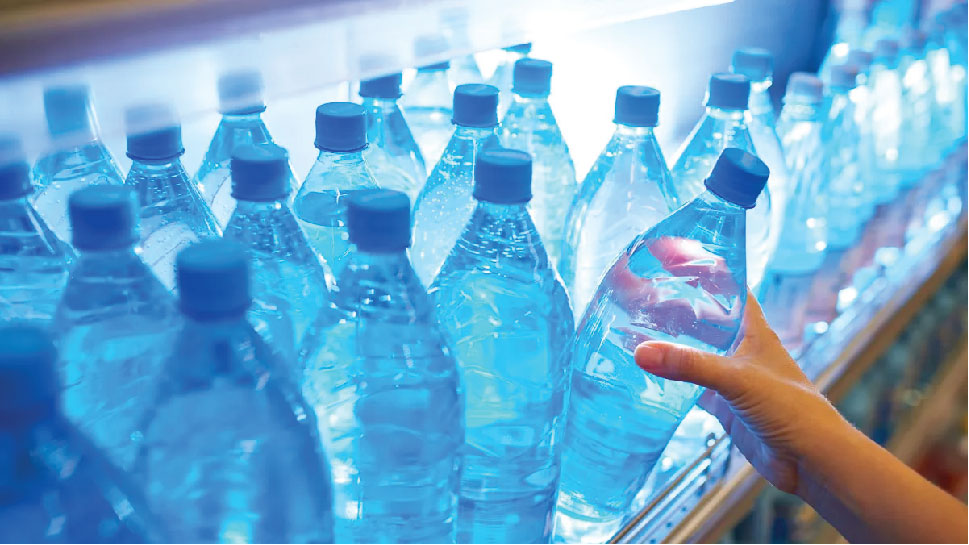
Scientists have found that bottled water contains up to 100 times more pieces of plastic than previously estimated.
According to a study published in the Proceedings of the National Academy of Sciences, the average liter of bottled water contains around 240,000 detectable plastic fragments. Researchers used lasers tuned to make specific molecules resonate to identify microscopic pieces of plastic, known as nanoplastics.
The findings highlight the pervasive presence of plastic in everyday products and emphasize the need for further research on the potential health implications of consuming microplastics in food and beverages.
Scientists have known for years that there’s plastic in water. A 2018 study detected an average of around 300 particles of plastic per liter of water.
In the previous study, researchers measured microplastics, which are small plastic pieces less than five millimeters long. In the latest study, the focus shifted to nanoplastics, which are particles less than 1 micrometer in size. For comparison, the diameter of a human hair is about 70 micrometers. With the enhanced capability to study nanoplastics, scientists discovered that the quantity of plastic fragments in bottled water is approximately 10 to 100 times more than previously estimated. This emphasizes the significance of understanding and addressing the presence of microplastics and nanoplastics in everyday consumables. that bottled water contains
Researchers at Columbia University and Rutgers University conducted tests on three popular brands of bottled water sold in the U.S., although the specific brands were not disclosed in the study. Using a laser method invented by study co-author Wei Min, a biophysicist at Columbia, the researchers probed the samples for seven common types of plastics and used a data-driven algorithm to interpret the results. The study revealed that each liter of bottled water contained 110,000 to 370,000 particles, with about 90% being nanoplastics and the remaining 10% microplastics. The International Bottled Water Association responded to the study, emphasizing the lack of standardized measuring methods and scientific consensus on the potential health impacts of nanoplastics and microplastic particles.