

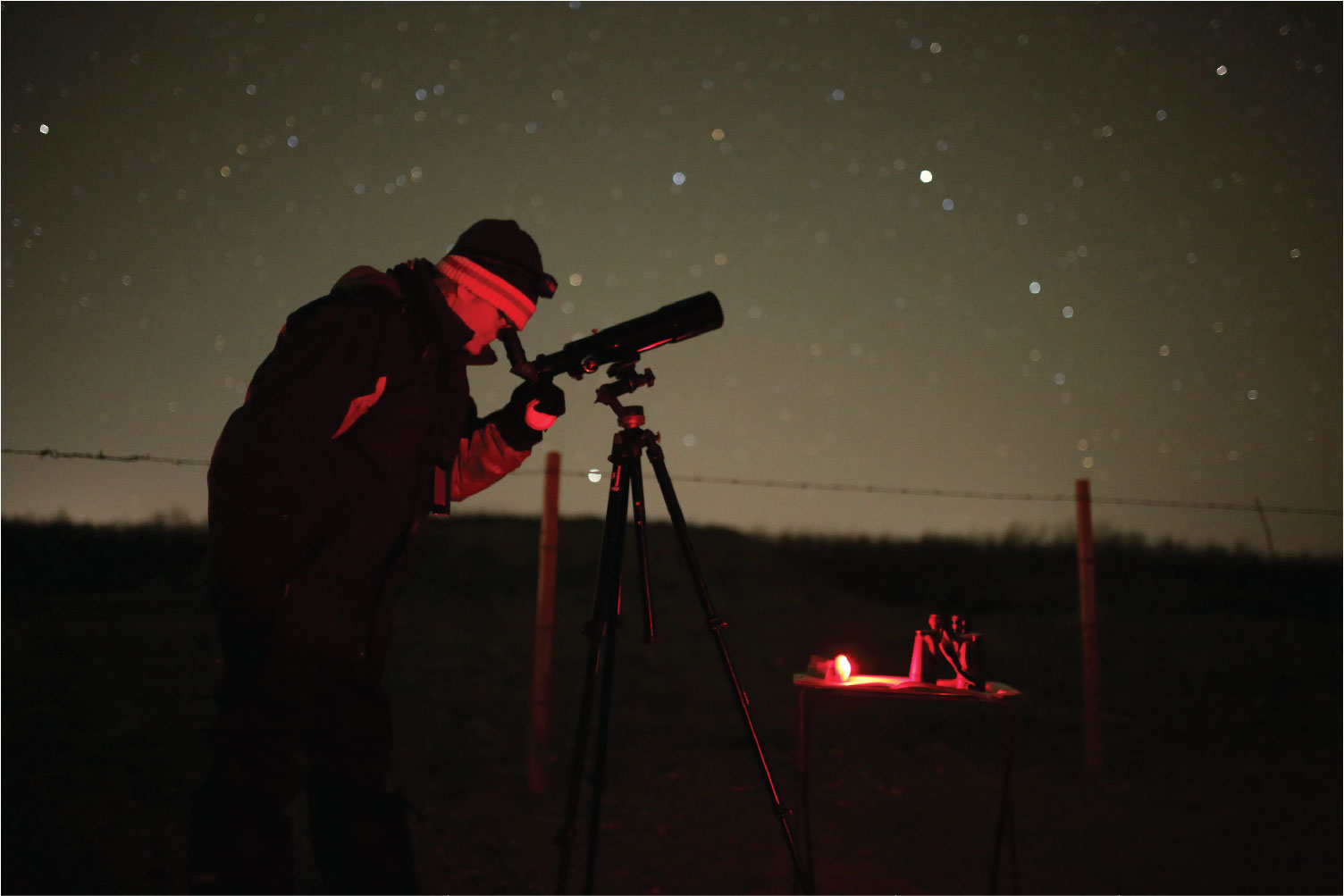
Unistellar’s latest telescope, the Odyssey, offers a compact and lightweight alternative for astronomy enthusiasts with limited space, especially those residing in small apartments. Compared to the company’s 2023 release, the Odyssey is half the size and less than half the weight, making it a more accessible option for individuals facing spatial constraints.
This telescope, designed for amateur astronomers, boasts a user-friendly interface that allows individuals to easily zoom in on planets, stars, nebulas, or distant galaxies with just a few taps on their phones. Unistellar’s previous model, the eQuinox 2, also featured a single long telescope connected to users’ phones, emphasizing its light pollution filters to enhance visibility in suburban or semi-urban environments. However, the Odyssey is being promoted as an improvement, specifically designed to enhance the stargazing experience for beginners in astronomy. a compact and lightweight
You see, where the company’s previous telescope was a digital reflector telescope, the $2,500 Odyssey is using mirror optics co-developed with lense-maker Nikon that still uses the company’s same automatic adjustment capabilities to find planets and stars by typing in the desired celestial object into the Unistellar app. Mirror telescopes normally require readjustment after use. However, Unistellar co-founder and CEO Laurent Marfisi told Gizmodo the Odyssey changes it up by containing sealed mirrors that don’t lose their optimization.
According to Marfisi, the eQuinox telescope was intentionally designed to bring distant objects like galaxies or nebulae into clear focus, while closer bodies such as planets appeared slightly more out of focus. With the Odyssey, Unistellar aimed to address this by ensuring both distant and closer objects would be captured with the same degree of clarity. This improvement is attributed to the implementation of the company’s “Multi-Depth Technology,” which automatically adjusts light sensitivity and pixel resolution settings based on the specific object being observed.
Referred to as autofocus, this feature aims to provide a hands-off experience for users, automatically optimizing focus settings whether the telescope is pointed at Mars or the Dumbell Nebula. The goal is to make stargazing and observing various celestial objects a more user-friendly and enjoyable experience for amateur astronomers.