

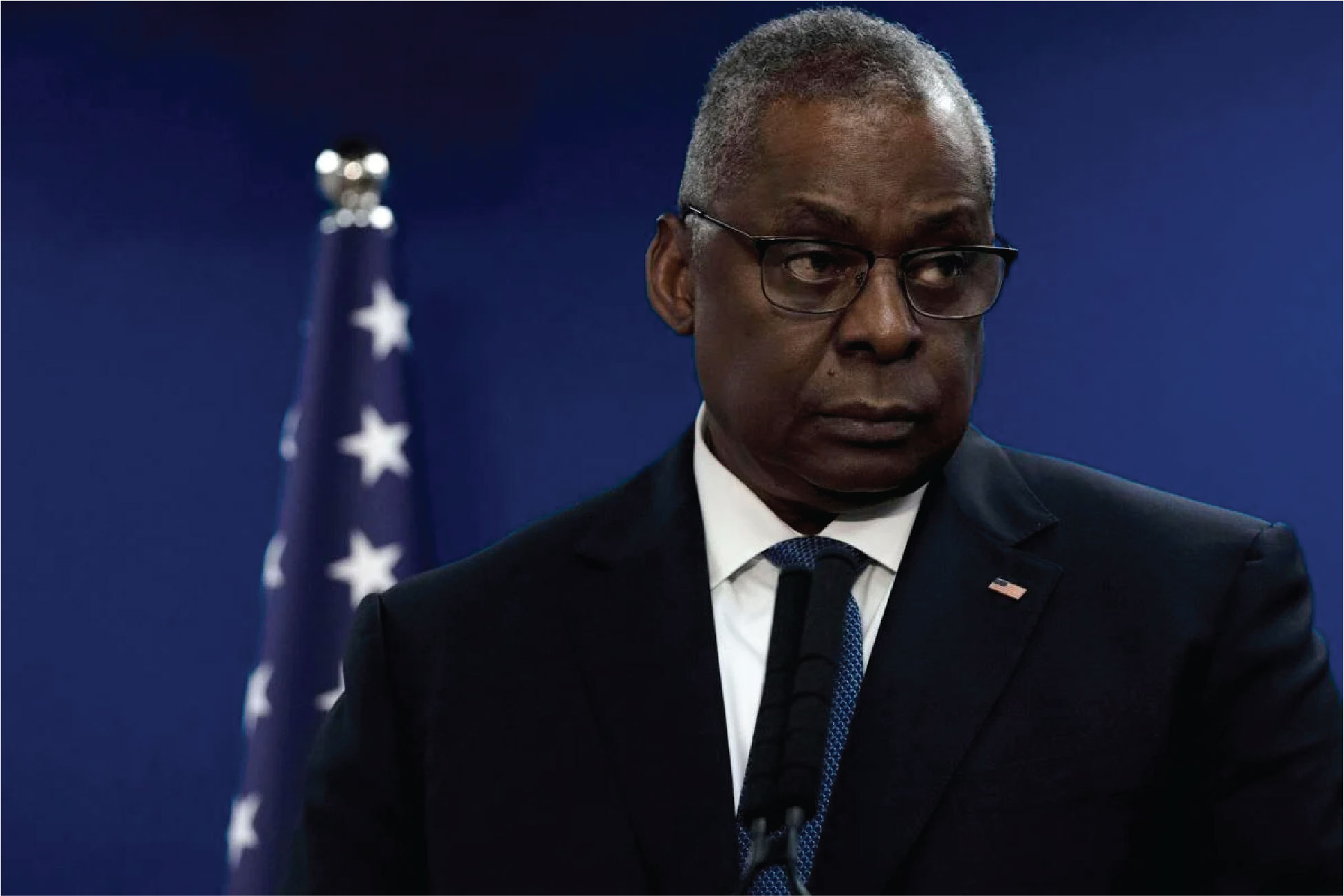
Defense Secretary Lloyd Austin was admitted to Walter Reed National Military Medical Center on New Year’s Day for complications from an elective medical procedure, the Pentagon said Friday.
The hospitalization of Secretary of Defense Lloyd Austin was disclosed by the Pentagon four days after his initial admission. Major General Pat Ryder, the Pentagon press secretary, did not mention Austin’s hospitalization during a news briefing on Thursday.
The brief statement did not provide details about the nature of the procedure or any complications but assured that Austin is “recovering well.” As of Friday afternoon, Austin remained in the hospital, with expectations of resuming his full duties later in the day. However, the exact release date from the hospital remains unclear.
When questioned about the delayed public notification, Ryder explained, “This has been an evolving situation in which we had to consider a number of other factors,” citing medical and privacy issues. The Pentagon did not disclose whether Austin was unconscious at any point during his hospitalization or if he was ever in critical condition.
As the Secretary of Defense, Austin holds a crucial role in the Biden administration’s Cabinet, serving as the civilian leader of the military, particularly significant amid rising tensions in the Middle East.
Deputy Defense Secretary Kathleen Hicks was prepared to assume Austin’s responsibilities if necessary, according to Ryder. Austin’s hospitalization occurred amidst various overseas national security concerns, including attacks on U.S. troops in the Middle East, interceptions of Houthi launches from Yemen, and conflicts in Ukraine and Gaza.
Despite Austin’s hospitalization, the U.S. conducted a strike in Baghdad against the commander of a pro-Iran militia, with Ryder noting that Austin had authorized the strike before being hospitalized.
The failure to publicly announce Austin’s hospitalization marks a departure from past precedent.