

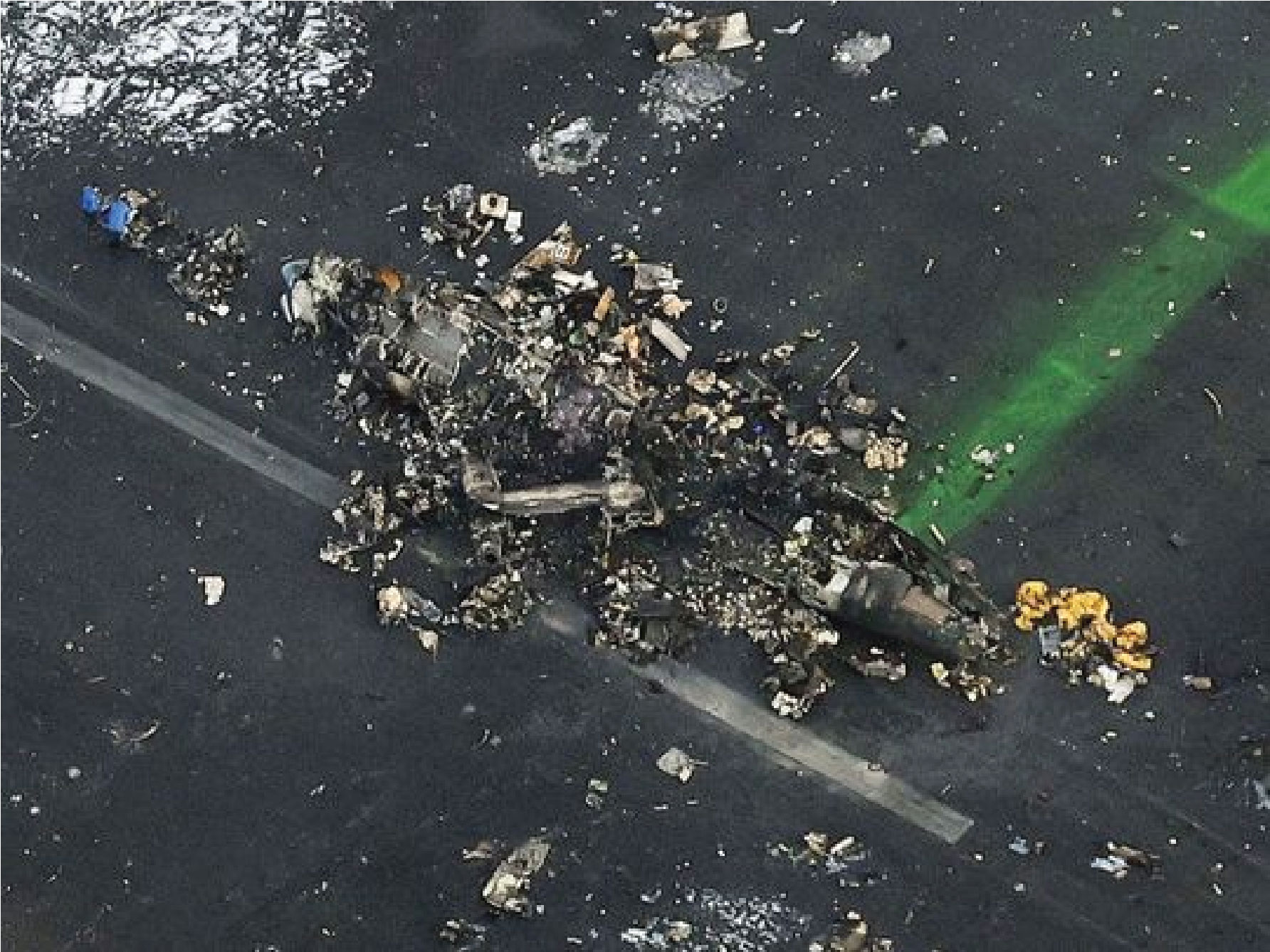
Japanese authorities reported on Wednesday that the passenger jet, a Japan Airlines (JAL) Airbus A350, which collided with a Coast Guard turboprop at a Tokyo airport, had received clearance to land. However, transcripts from the control tower indicated that the smaller De Havilland Dash-8 Coast Guard turboprop had not been authorized for take-off.
Despite the severity of the incident, all 379 individuals on board the JAL Airbus A350 were able to evacuate safely. The collision, which occurred shortly after the passenger jet landed at Haneda airport on Tuesday, resulted in a fire that engulfed the aircraft. The situation unfolded, but the passengers and crew managed to escape unharmed.
But five died among the six Coast Guard crew who were due to depart on a flight responding to a major earthquake on Japan’s west coast, while the captain, who escaped the wreckage, was badly injured.
Authorities have only just begun their investigations and there remains uncertainty over the circumstances surrounding the crash, including how the two aircraft ended up on the same runway. Experts stress it usually takes the failure of multiple safety guardrails for an airplane accident to happen.
Contrary to earlier reports, transcripts of traffic control instructions, released by authorities, now seem to confirm that the Japan Airlines jet had indeed received clearance to land. In contrast, the Coast Guard aircraft had been instructed to taxi to a holding point near the runway, with no indication in the transcripts that it had been granted permission to take off. Japanese authorities reported
An official from Japan’s civil aviation bureau emphasized to reporters that the transcripts did not reflect any authorization for the Coast Guard aircraft to initiate takeoff procedures. This information sheds light on the sequence of events leading up to the collision between the two aircraft at the Tokyo airport.