

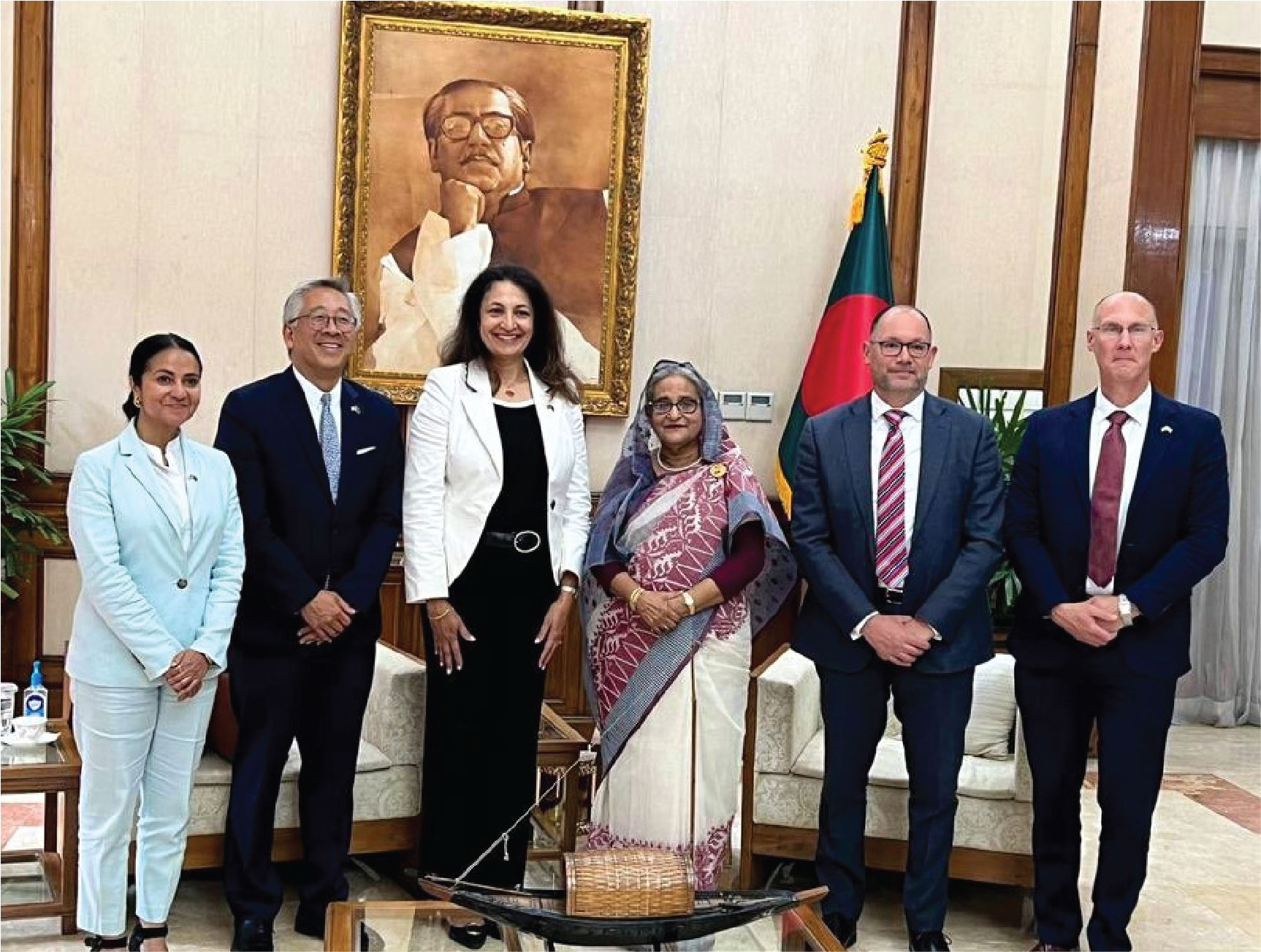
Prime Minister Sheikh Hasina was Bangladesh opposition leader in 2007, when hundreds of troops raided her home and took her to a court in the capital of Dhaka, where she was arrested on extortion charges.
Having previously served as the prime minister from 1996 to 2001, Hasina vehemently denounced the charges against her as a conspiracy aimed at preventing her participation in the upcoming elections. During a period of political turmoil in Bangladesh, marked by a state of emergency under a military-backed interim government, she asserted that she was fighting for the rights of her people.
In the face of adversity, Hasina confronted a critical choice: to either leave the country or face imprisonment. A close associate revealed that she chose to remain in custody. After enduring 11 months of detention, she was eventually released. Remarkably, in 2008, she reclaimed the position of prime minister through re-election. Bangladesh opposition leader
At present, she stands as the longest-serving leader in the history of Bangladesh, a country with a population exceeding 160 million, strategically positioned between India and Myanmar. As the nation braces for Sunday’s general election, Hasina is poised to further solidify her hold on power. This electoral event comes on the heels of her 15-year rule, during which she underwent a transformation from a leader championing democracy to, as critics argue, one of its most significant challenges.
The Bangladesh Nationalist Party, Hasina’s primary rival, has opted to boycott the January 7 polls, asserting that her government cannot guarantee a fair and impartial vote. This decision paves the way for the 76-year-old premier to potentially secure her fourth consecutive term and fifth overall term in office.