

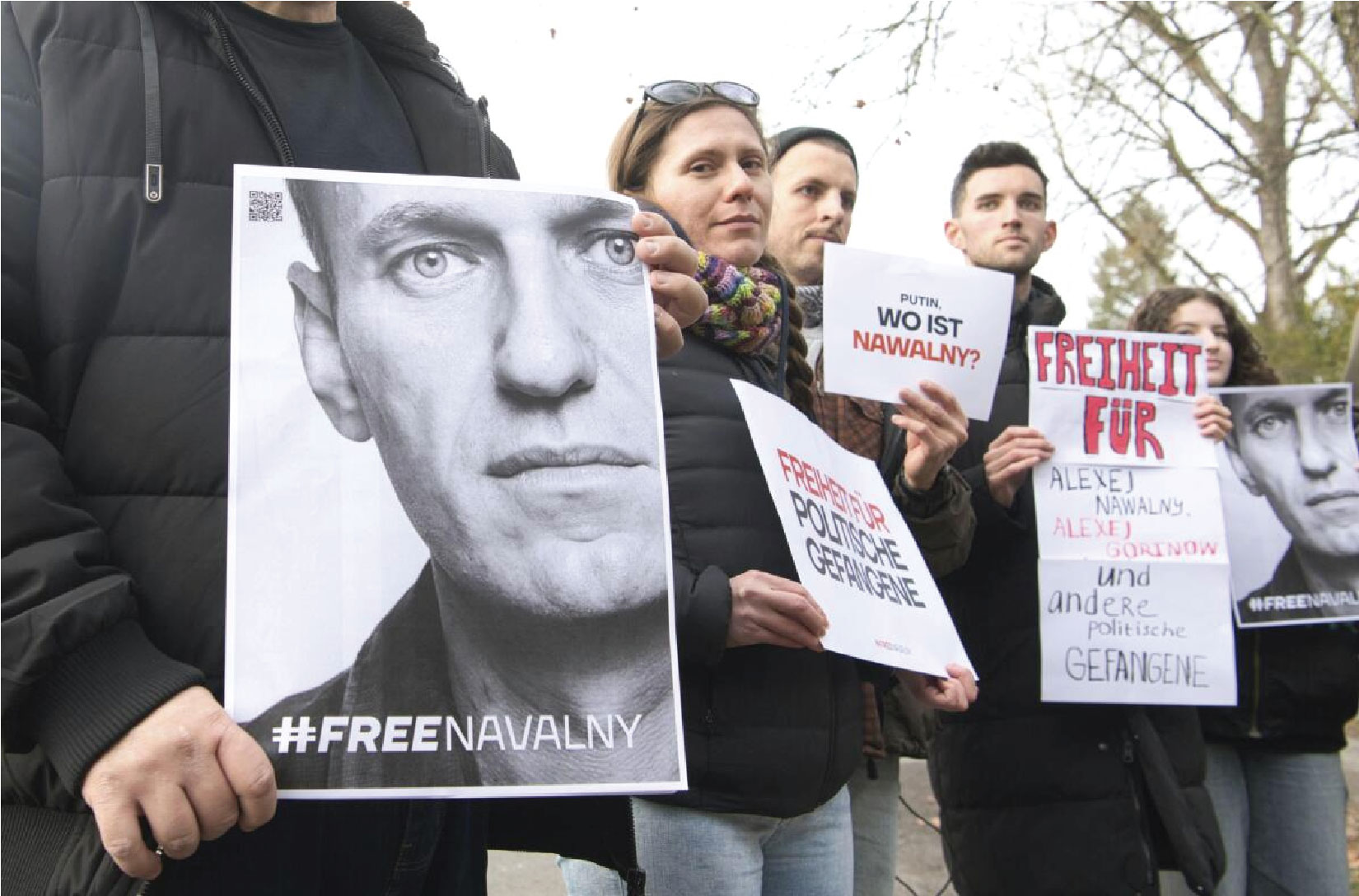
Allies of the jailed Russian opposition leader Alexei Navalny expressed relief on reading a message the Kremlin critic posted on Tuesday reassuring them that he was “fine”. But their relief was tempered by grave concern about the harsh conditions he faces in the Arctic prison known as “Polar Wolf”.
Navalny’s whereabouts had remained unknown for nearly three weeks until his allies revealed on Monday that he was located in a remote penal colony in Russia’s far north.
In a message shared on Tuesday after arriving at the IK-3 penal colony in Kharp in the Yamalo-Nenets region, approximately 1,200 miles northeast of Moscow, Navalny wrote, “Don’t worry about me. I’m fine. I’m totally relieved that I’ve finally made it.” His comments, conveyed through his associates on his social media profiles, carried a notable touch of irony and humor, characteristic of the opposition leader’s communication style.
His long-time aide, Ruslan Shaveddinov, conveyed to the Guardian, “Like millions of other Navalny supporters, I was so happy to hear he is doing OK. The letter was written in typical Navalny fashion. It was a clear signal to the world that he remains in good spirits, that he is not a broken man, despite his circumstances.” the jailed Russian opposition
However, the relief over Navalny’s well-being quickly turned to concern about the harsh conditions within the new colony. The Kharp high-security prison colony, where Navalny is held, has a notorious reputation as one of the toughest prisons in Russia. Established under Stalin as part of the Soviet Union’s gulag network, it is situated in the remote Yamalo-Nenets region, surrounded by mountains and tundra, with severe winters and brief, mosquito-infested summers.
Navalny, referring to the constant darkness outside, wrote, “I don’t say ‘Ho-ho-ho,’ but I do say ‘Oh-oh-oh’ when I look out of the window. Where I can see it’s night, then evening, then night again.”
Most inmates in this colony are convicted of serious crimes such as murder and banditry. Former prisoners have described instances of torture, with one stating that upon arrival, he was beaten “from all sides with a truncheon,” and the prison guards practiced “collective punishment” on inmates.
A significant difference from Navalny’s previous prison camp is the extended time it will take for letters to reach him. Allies suggested that his transfer could be linked to the upcoming presidential election in March, during which many Kremlin critics have been imprisoned or forced to flee.
“It is almost impossible to get to this colony; it is almost impossible to even send letters there,” noted Leonid Volkov, Navalny’s chief strategist. Lawyers would need to endure a train journey of over 40 hours to reach Kharp, marking the highest level of isolation from the world.
Shaveddinov, having experienced the harsh climate conditions himself when forcibly conscripted in 2019 to serve at an Arctic base, expressed concern about the extreme cold Navalny would face, saying, “I shivered when I thought just how cold Navalny will be there.”