

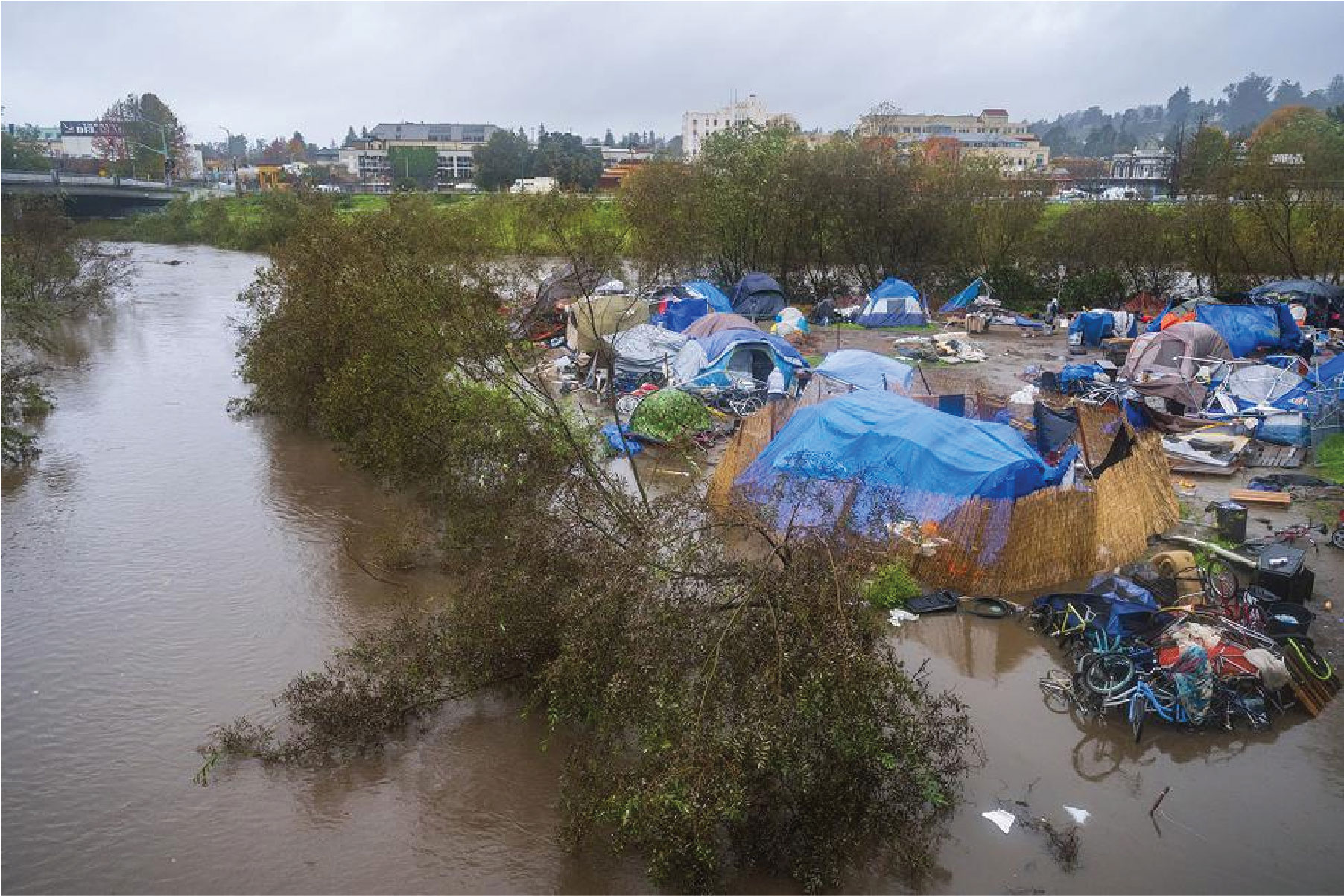
A new report reveals that the increasing risk of floods is causing the erosion of counties across the United States, resulting in abandoned pockets within urban centers.
The study, published in Nature Climate Change, indicates that these abandoned areas often align with regions characterized by historical disinvestment, and there is a notable acceleration in the exodus from these vulnerable areas. The impact of climate change, particularly the rising threat of floods, is contributing to the transformation of urban landscapes, leaving behind abandoned and depopulated zones. the increasing risk
Cities across the United States, especially in the Midwest (Indiana, Ohio, Michigan, and Minnesota), are experiencing a phenomenon termed “climate abandonment” due to increasing flood risks. This trend involves the depopulation of individual census tracts, and in some cases, this outmigration is happening swiftly. Demographers are concerned about the potential for a “doom loop,” where accelerated migration out of vulnerable areas perpetuates until only those who cannot afford to leave remain in regions highly threatened by climate change.
The study suggests that without substantial investments to enhance the resilience of these areas against environmental hazards, there could be a massive migration, comparable to the Great Migration of the twentieth century, involving around 4 million people. Specific neighborhoods in rapidly growing cities like Houston, Miami, and Washington, D.C., are among those being abandoned due to rising flood risks.
While these cities are currently attracting more people than the flood risks are pushing out, the study indicates that they may be approaching a tipping point where a decline could begin. The research on the impact of flood risk on migration is conducted by the First Street Foundation, a nonprofit research group providing long-term climate risk predictions for individual properties across the U.S.