

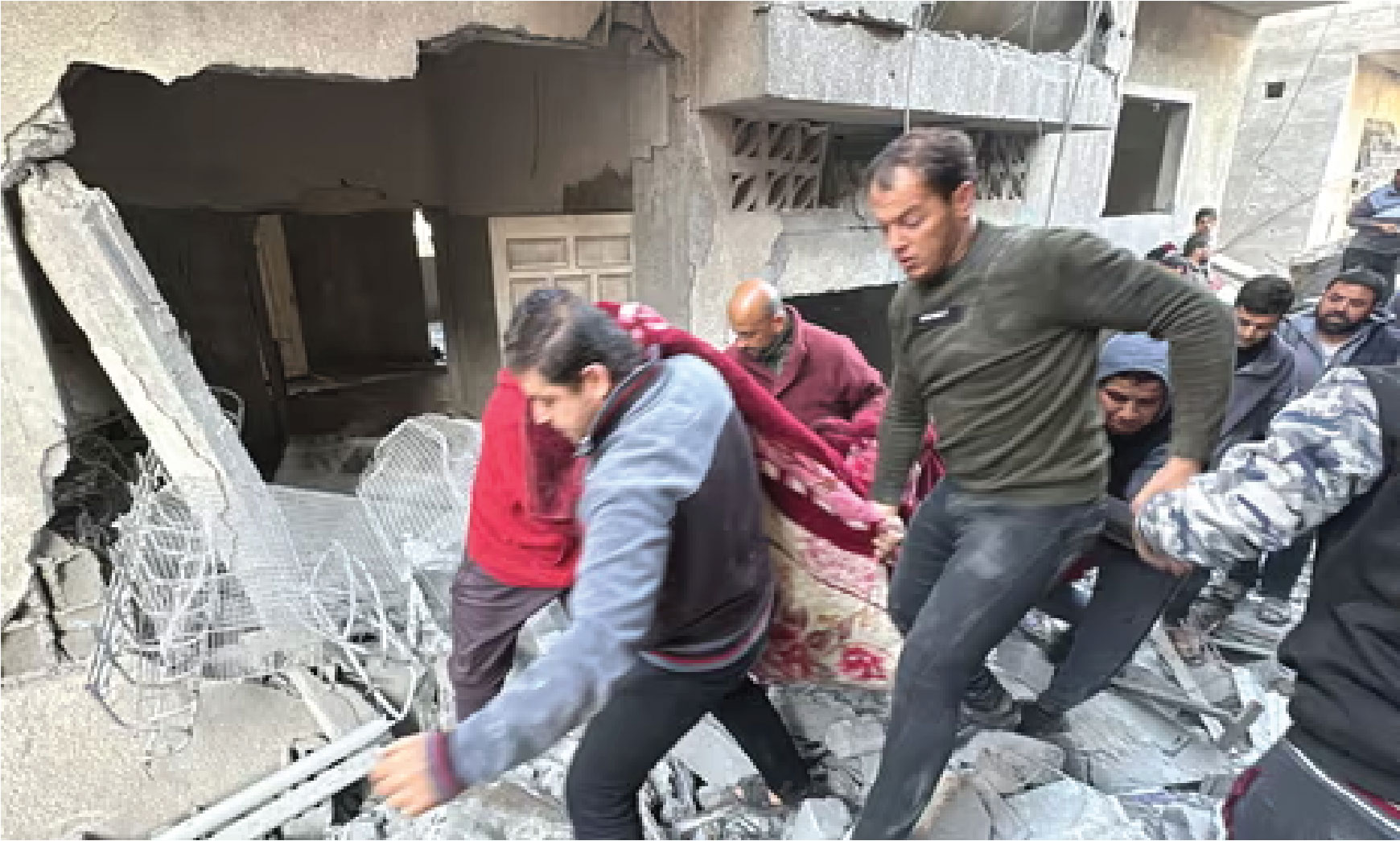
Israel military campaign has transformed a significant portion of northern Gaza into a desolate, uninhabitable landscape resembling the surface of the moon. Entire neighborhoods have been obliterated, with homes, schools, and hospitals bearing the scars of airstrikes and tank fire. While some structures still stand, most are now mere shells, battered by the relentless conflict.
The escalation of ground combat has prompted nearly 1 million Palestinians to flee the northern region, including the densely populated Gaza City. The aftermath of the war is poised to bring a grim reality as displaced families grapple with the enormity of the disaster and the uncertain prospects that lie ahead.
For those who have lost their homes, questions loom large: Where will they find shelter? Who will assume control of Gaza and undertake the arduous task of reconstruction?
Yousef Hammash, an aid worker with the Norwegian Refugee Council who escaped the ruins of the Jabaliya urban refugee camp for southern Gaza, articulates the yearning to return home, even if it means sleeping amid the rubble. However, the overarching concern persists about the viability of a future for his children in the devastated region. Israel military campaign
The Israeli military’s use of potent explosives in densely populated residential areas, justified by Israel as an inevitable consequence of Hamas using civilian sites for cover, has resulted in the death of over 13,000 Palestinians and left behind a landscape of unparalleled destruction. Hamas refutes these claims, accusing Israel of indiscriminately bombing civilian areas.
Mahmoud Jamal, a 31-year-old taxi driver from Beit Hanoun, recounted the disorienting experience of fleeing his hometown, unable to recognize the streets or intersections. The impact of Israel’s bombardment has been characterized as one of the most intense air campaigns since World War II, according to Emily Tripp, director of Airwars, a London-based conflict monitor. In the seven weeks following Hamas’ unprecedented Oct. 7 attack, Israel deployed more munitions than the United States did in any given year of its bombing campaign against the Islamic State group. The U.N. has described this onslaught as the deadliest urban campaign since World War II.
Videos and thermal footage depict the devastating consequences, with fireballs obliterating targets in Israeli airstrikes, while Hamas’ military wing showcases fighters navigating through smoke-filled streets with rocket-propelled grenades. Fortified bulldozers have cleared land for Israeli tanks, leaving the northern region of Gaza resembling a desolate ghost town, as described by Mkhaimer Abusada, a political scientist who recently fled to Egypt. An analysis of Copernicus Sentinel-1 satellite data reveals that approximately half of all buildings in northern Gaza have been damaged or destroyed. With the U.N. estimating 1.7 million people newly homeless, the daunting question remains whether Gaza can ever fully recover.