

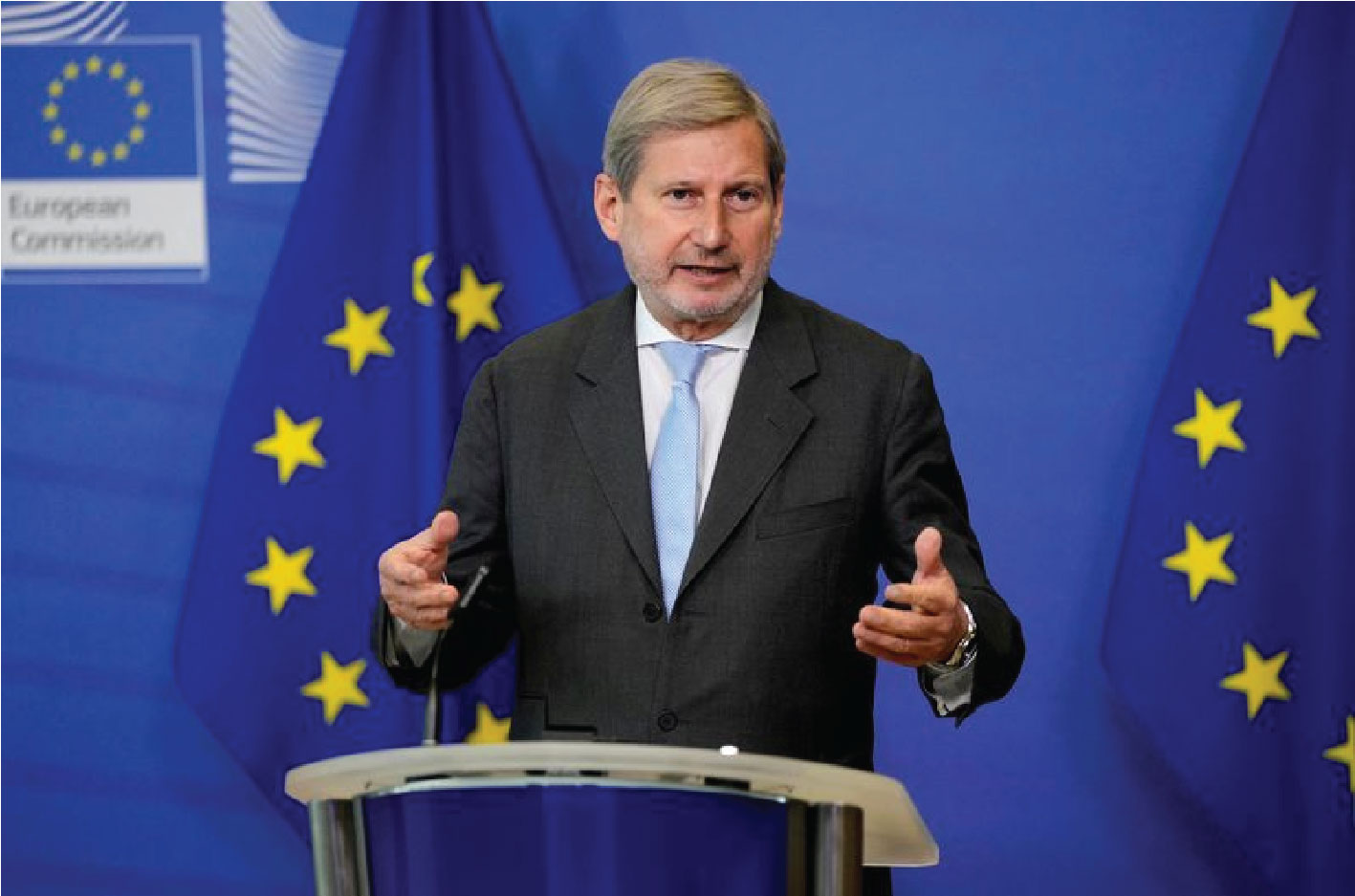
On Wednesday, the European Commission announced the release of €10 billion in cohesion funds for Hungary, marking the end of a year-long freeze due to concerns about the country’s failure to address rule-of-law issues. The decision allows the Hungarian government to submit reimbursement requests of up to €10.2 billion to fund various development projects throughout the nation.
Didier Reynders, the European Commissioner for Justice, stated, “We have received sufficient guarantees to say that independence of the judiciary will be strengthened in Hungary.” However, he emphasized that the decision doesn’t conclude the process, and the situation will continue to be closely monitored. The Commission remains prepared to respond promptly if any regression in addressing rule-of-law concerns occurs.
The green light comes in an increasingly fraught political environment, as Prime Minister Viktor Orbán ratchets up his opposition campaign to prevent the opening of accession negotiations with Ukraine, block a €50-billion special fund to sustain the war-torn nation’s budget and halt further provisions of military aid. the European Commission
The upcoming two-day summit of EU leaders is set to address three critical issues, including Hungary’s frozen funds, Viktor Orbán’s veto threat, and Ukraine’s financing. The necessity for unanimity to progress on these matters has sparked speculation about potential horse-trading to appease Budapest, a notion strongly denied by the European Commission.
On Tuesday, the prime minister’s political director suggested the possibility of a quid-pro-quo, acknowledging a potential link between Hungary’s EU funding and Ukraine’s financing. The Commission responded by emphasizing the procedural nature of its decision, citing Hungary’s judicial reform in May to enhance judicial independence and reduce political interference in the courts.
A Commission spokesperson stated, “We have responsibilities to discharge. We discharge them according to the rules that govern the budget.” They asserted that external statements do not commit or engage the Commission to anything. The judicial overhaul in Hungary aimed to meet the conditions set by the EU to unlock the frozen funds, including strengthening the National Judicial Council and reforming the Supreme Court’s functioning.