

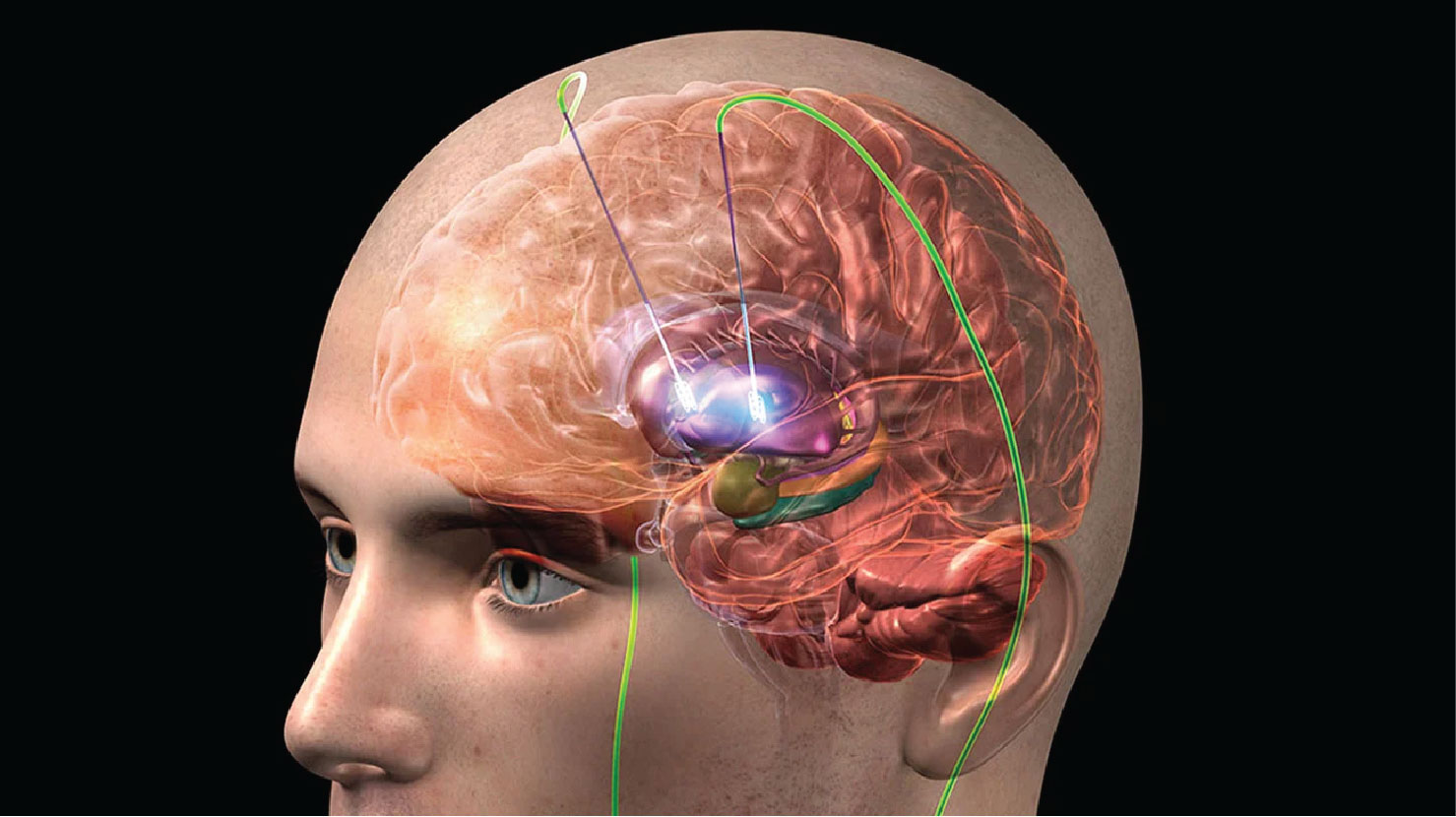
In a recent study published in the journal Nature Medicine, researchers evaluated the effectiveness and safety of deep brain stimulation (DBS) within the central lateral (CL) thalamic nuclei and the related medial dorsal tegmental (CL/DTTm) tract of individuals with moderate-severe traumatic brain injury (msTBI).
Research findings suggest that individuals with mild traumatic brain injury (msTBI) experience challenges in executive function and information-processing speed, impacting their overall quality of life and social reintegration. The CL thalamic nuclei are identified as a pivotal factor in these deficits. Unfortunately, there is presently no successful intervention for addressing these abnormalities. The ‘mesocircuit theory’ implicates underactivation of the CL thalamic nuclei as a potential contributing factor to these issues.
In the present phase 1 randomized feasibility study, researchers evaluated CL DBI efficacy and safety among humans with chronic traumatic brain injury-associated disabilities, impacting daily functioning and employability. the effectiveness and safety
The study objective was to use thalamic DBS electrodes to create a therapy for persistent cognitive impairments in msTBI patients. The lateral section of the central lateral nucleus of the thalami and its accompanying DTTm fiber bundle were selected as stimulation targets. They performed biophysical modeling to direct virtual brain stimulation electrodes in each individual’s CL/DTTm bundle depending on stimulation amplitudes and location. The researchers investigated the safety and effectiveness of thalamic DBS in treating cognitive impairments.