

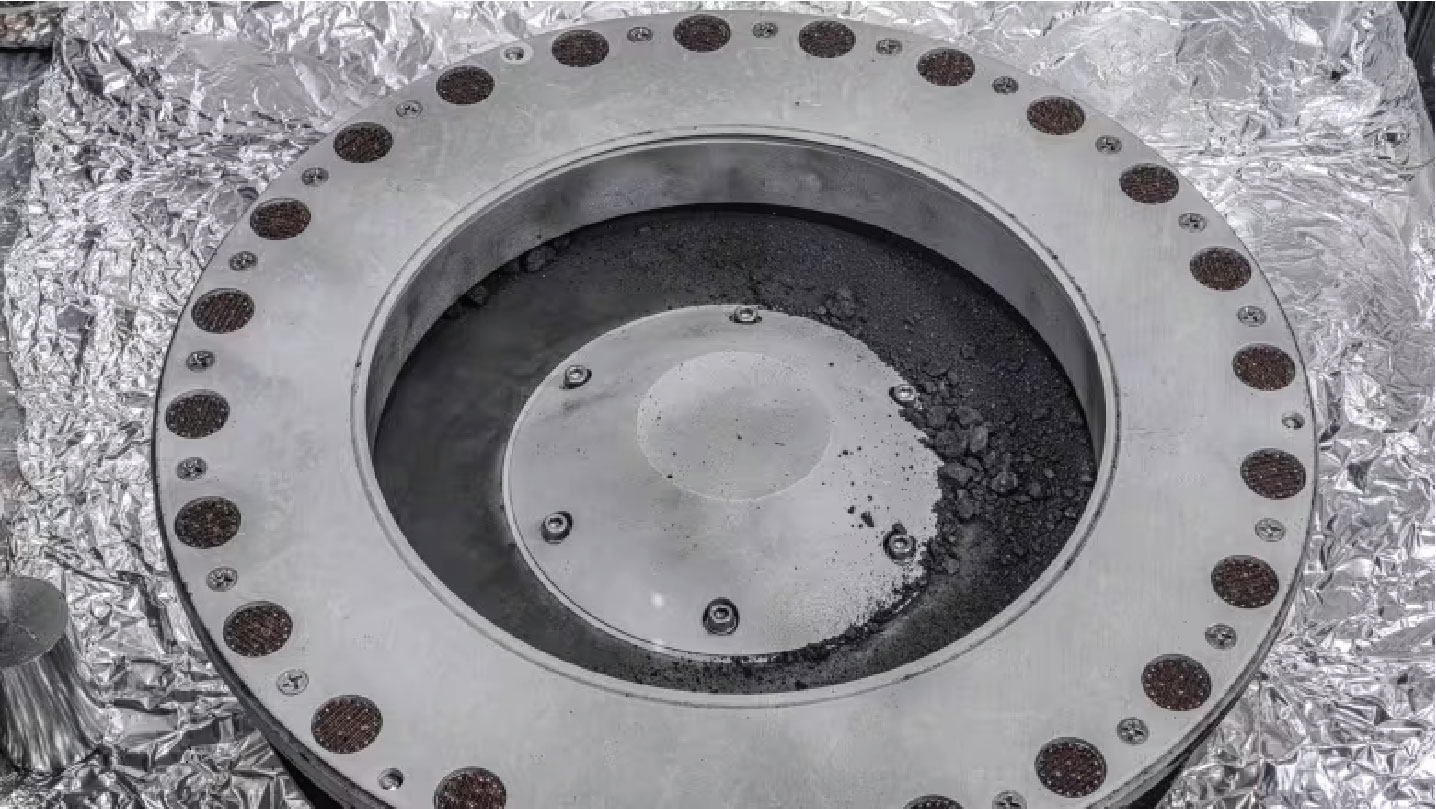
For nearly two decades, Dante Lauretta anticipated the moment that finally arrived. A compact robotic capsule was en route back to Earth, carrying precious rocks extracted from an asteroid, and Lauretta eagerly awaited the opportunity to examine these samples.
Under Lauretta’s guidance, scientists meticulously orchestrated the billion-dollar OSIRIS-REx mission, intending to retrieve fragments from a carbon-rich asteroid believed to harbor organic molecules—the fundamental components essential for the emergence of life. Launched by NASA in 2016, the mission successfully collected samples from the approximately 1,600-foot-wide (500-meter) asteroid named Bennu in 2020. Subsequently, the spacecraft charted a trajectory for its return journey to Earth.
On September 24, the OSIRIS-REx spacecraft executed a crucial maneuver, releasing the canister containing samples collected from the asteroid. The canister descended into Earth’s atmosphere, while the mothership charted a course to ensure a safe trajectory back into deep space, preparing for a subsequent mission to explore a different asteroid in the late 2020s. Dante Lauretta anticipated
Dante Lauretta, the principal investigator of OSIRIS-REx hailing from the University of Arizona, observed these pivotal moments from a US military helicopter circling the designated landing zone in the Utah desert. A robust heat shield shielded the capsule from temperatures exceeding 5,000° Fahrenheit during reentry.