

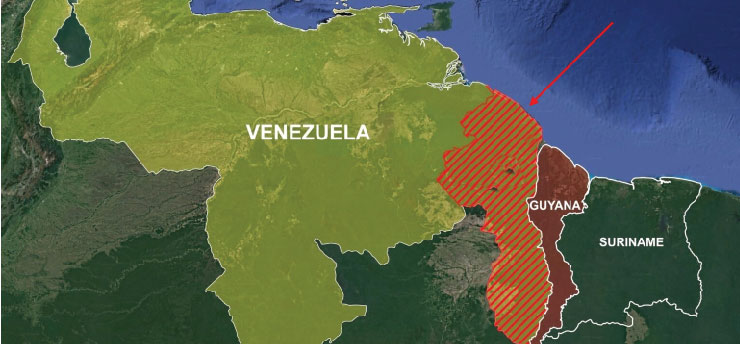
On Sunday, Venezuelans voted decisively to endorse the annexation of a resource-rich region in neighboring Guyana, marking an intensification of a longstanding territorial dispute between the two nations. The conflict has been exacerbated by the recent discovery of extensive offshore energy resources.
The disputed area, known as the Essequibo region, is a densely forested expanse that constitutes approximately two-thirds of Guyana’s national territory, roughly equivalent to the size of Florida.
The referendum held on Sunday was largely symbolic, seeking approval from voters on the establishment of a Venezuelan state within the Essequibo region. The proposed measure included granting Venezuelan citizenship to the region’s inhabitants and formally incorporating the area into the map of Venezuelan territory.
In a news conference revealing initial results from the first set of counted votes, the Venezuelan National Electoral Council announced that over 95% of voters supported the “yes” option for each of the five questions on the ballot. Venezuelans voted decisively
The specific measures Venezuela’s government might take to assert its claim remain uncertain. Venezuela has asserted historical entitlement to the land, contending that it was within its borders during the Spanish colonial era. The country rejects the 1899 ruling by international arbitrators that established the current boundaries when Guyana was a British colony. Venezuelan President Nicolas Maduro has framed the referendum in the context of anti-imperialist sentiment, expressing such views on social media.
Guyana has called the move a step towards annexation and an “existential threat.”
Last week, Guyanese President Irfaan Ali visited troops in Essequibo and dramatically hoisted a Guyanese flag on a mountain overlooking the border with Venezuela.