

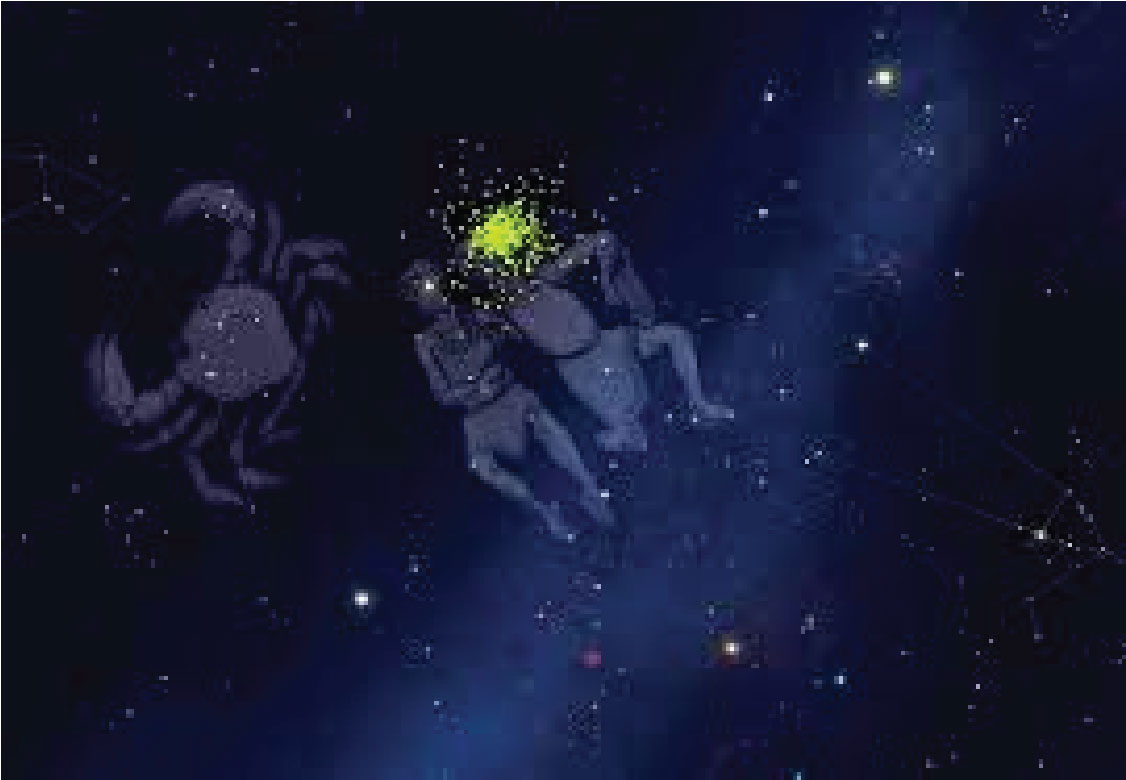
The Geminid meteor shower, renowned as one of the best meteor showers of the year, occurs in December when Earth passes through the debris left by the asteroid 3200 Phaethon. Unlike most meteor showers associated with comets, the Geminids are linked to an asteroid.
3200 Phaethon has perplexed astronomers due to its unusual characteristics. While it behaves like a comet by brightening and developing a tail when close to the Sun, a study published in April revealed that Phaethon’s tail is unique—it consists of sodium gas instead of dust, which is more typical for comets. This distinct feature raises questions about the mechanism supplying material for the Geminid meteor shower, as asteroids usually don’t form tails when approaching the Sun.
The upcoming Japanese spacecraft mission DESTINY+ is anticipated to provide valuable insights during its flyby of the asteroid. Despite its comet-like behavior, 3200 Phaethon is presently classified as an asteroid, with the possibility of being a “dead comet” or a novel object referred to as a “rock comet” by NASA. The study of this enigmatic celestial body continues to unfold. The Geminid meteor
The Geminid meteor shower happens this year from Dec. 4-17. During the peak on Dec. 13 and 14, the skies could light up with 150 meteors per hour under ideal conditions.
The name of the meteor shower comes from the Gemini constellation because the meteors appear to radiate from the constellation, but they do not originate from it.