

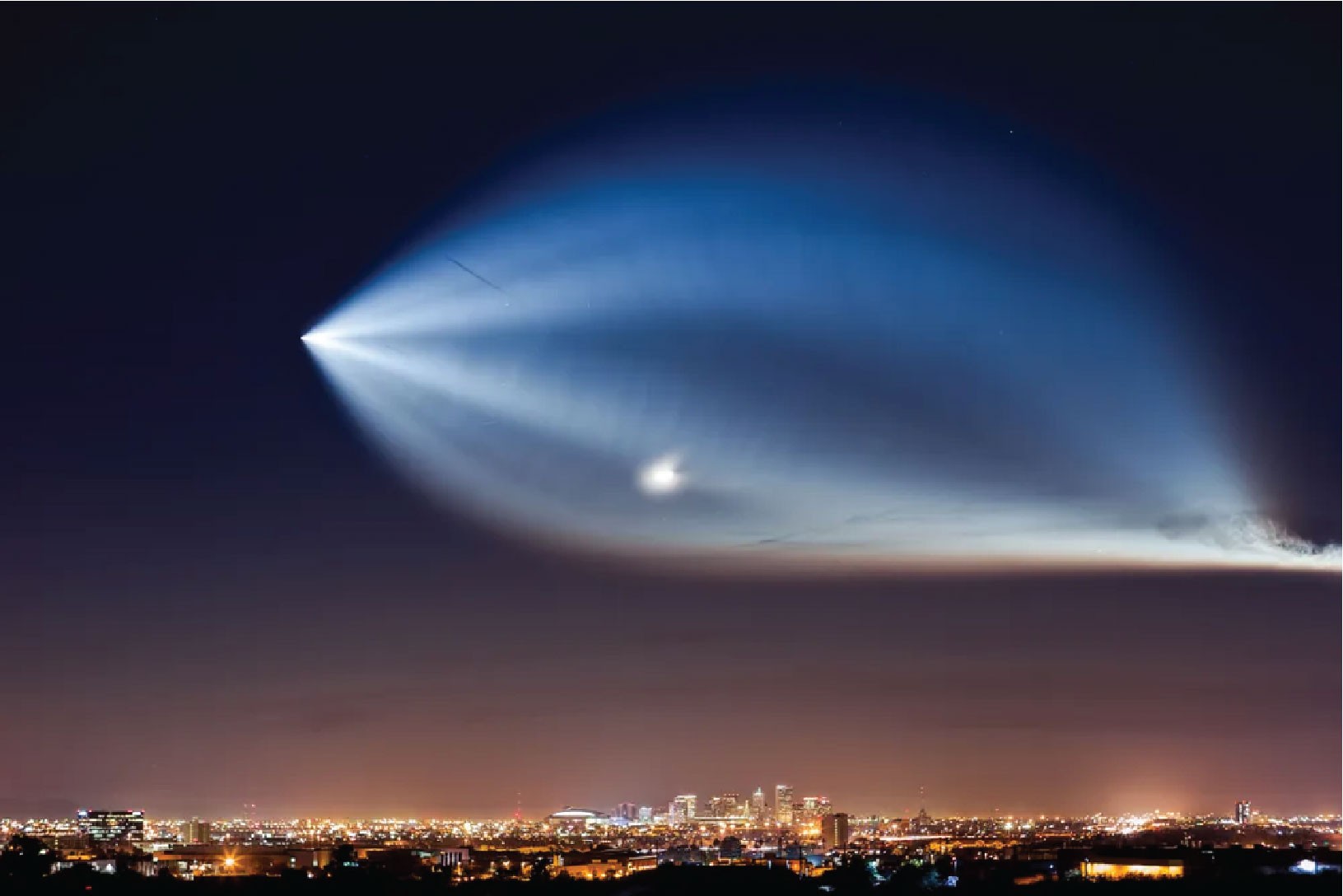
In mid-July, spectators anticipating a SpaceX rocket launch were treated to an unexpected and mesmerizing sight over Arizona. Following the rocket launch, a distinctive aurora-like phenomenon appeared, marked by a red glow captured by ground-based photographers.
While the glow itself was not unprecedented, as these disturbances in Earth’s upper atmosphere have been occurring for years, this particular event drew attention due to its striking appearance. The spherical glows are typically the result of interactions between rocket exhaust and the ionosphere—a region of the upper atmosphere, ionized and situated between 43 miles and 250 miles (69 km and 402 km) above Earth’s surface.
But now, some astronomers are saying the events are becoming more frequent. Stephen Hummel, an astronomer and specialist in reducing light pollution at the McDonald Observatory in Texas, told Spaceweather.com that “2 to 5” of the sky glows are seen per month. The glows can be visible to the naked eye and remain in the sky from just a few seconds to minutes at a time. a SpaceX rocket
When rockets are launched, they have the potential to create “punch holes” in the atmosphere, resulting in a distinctive red glow. However, the “SpaceX aurorae” phenomenon is specifically linked to the burning of the rockets’ second stages as they return to Earth’s surface. These glowing occurrences, once infrequent, are becoming more prevalent with the increasing frequency of rocket launches.
In 2017, a study published in Space Weather reported that a SpaceX Falcon 9 exhaust plume caused a hole in the ionosphere, spanning approximately 560 miles (900 km). This phenomenon had potential implications, leading to minor range errors in GPS systems (which transmit radio waves) of up to one meter, according to the researchers. The full impact of these glows on astronomical observations is still not entirely clear.