

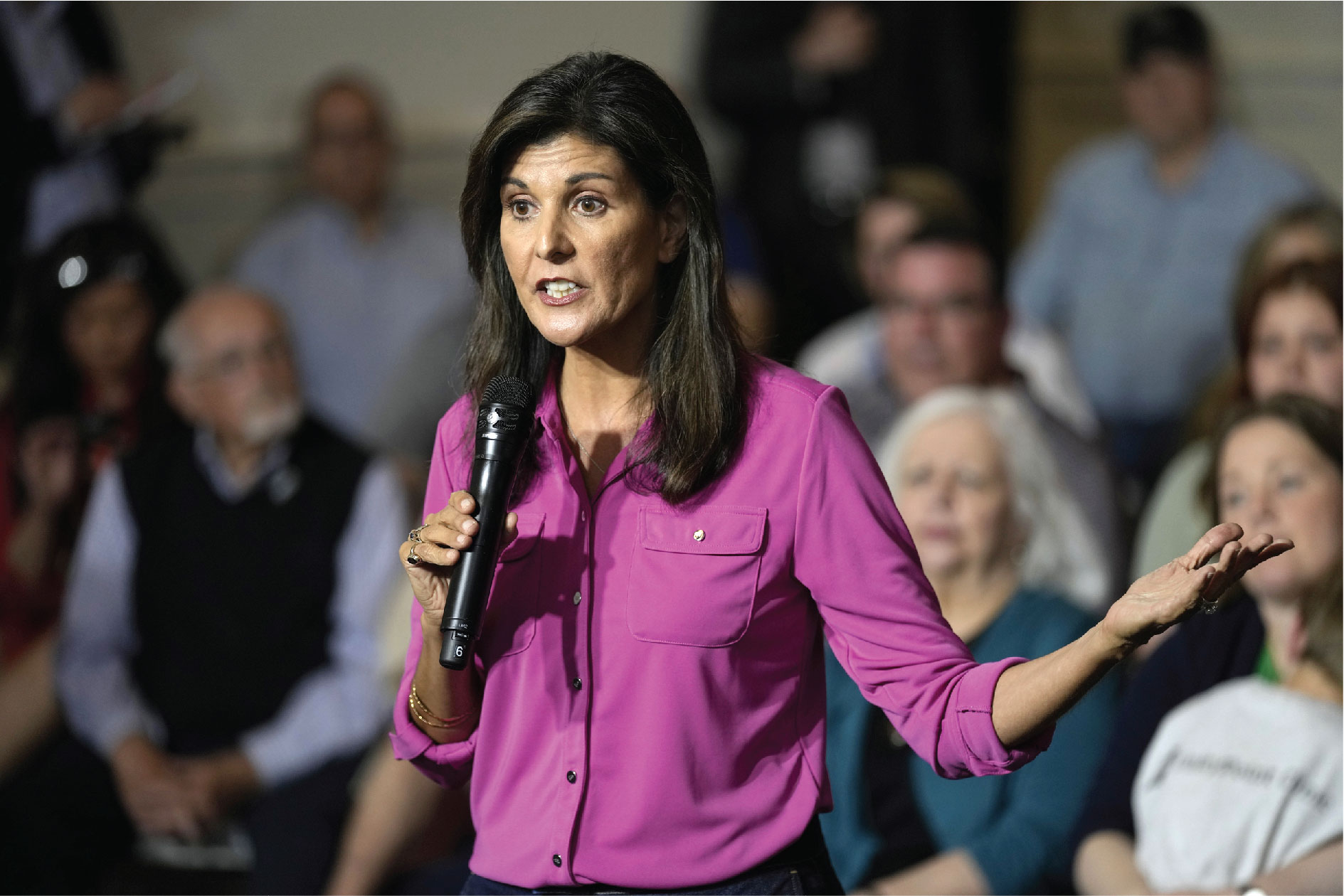
Awaiting Nikki Haley arrival inside a college gymnasium on Monday, a vibrant crowd of 2,500 filled folding chairs and bleachers. The atmosphere was energetic, with attendees dancing and enthusiastically waving signs to the tunes of “You Give Love a Bad Name” and “Crazy Train.”
Outside the venue, a lengthy line of hundreds, dressed in quarter-zip pullovers and sweater vests, extended around the building on a weekday afternoon. Unfortunately, public safety officials had to turn away those eager to attend, citing that the event had already reached its maximum capacity.
Advertised as a “town hall,” Nikki Haley’s return to South Carolina on Monday transformed into a lively rally, marking a triumphant homecoming for the former governor. Recent polling positions her ahead of Florida Gov. Ron DeSantis in the New Hampshire Republican presidential primary, with a close race in Iowa.
The event, Haley’s first in the state since Sen. Tim Scott withdrew from the race, underscores her rising prominence in the GOP primary. However, her true test lies in South Carolina, where she faces the formidable presence of GOP frontrunner Donald Trump. Despite Haley’s momentum, Trump maintains a significant lead, still enjoying a 30-point advantage in the state where he received overwhelming cheers during the recent South Carolina-Clemson Palmetto Bowl game. Awaiting Nikki Haley
Randy Wynne, a 55-year-old attendee from Bluffton, humorously remarked, “I’ll just stand outside and watch it on the screen” as he, along with others, was denied entry due to the event reaching full capacity.
While Trump holds a devoted core constituency, some Republicans, like Chad Walldorf, a South Carolina donor now supporting Haley, question whether this fervent base constitutes half of the Republican electorate. Haley’s recent surge in momentum, coupled with new donors and supporters flocking to her after Scott’s exit and DeSantis losing support, positions her as a key candidate in the primary’s undercard race. For Republicans aiming to thwart Trump’s nomination, South Carolina’s early primary may prove pivotal.