

Amid a cautious calm prevailing in the southern border area of Lebanon on Saturday, marking the second day of a four-day ceasefire between Israel and the Hamas group, there was a temporary resurgence in villages that had previously emptied of residents.
Closed shops reopened, streets saw the return of moving cars, and in one border town, a family on an outing posed for photographs against a backdrop of brightly colored block letters declaring “I (HEART) ODAISSEH,” with the tense frontier providing an unusual setting. Amid a cautious calm
Since the commencement of the Israel-Hamas war, approximately 55,500 Lebanese individuals have been
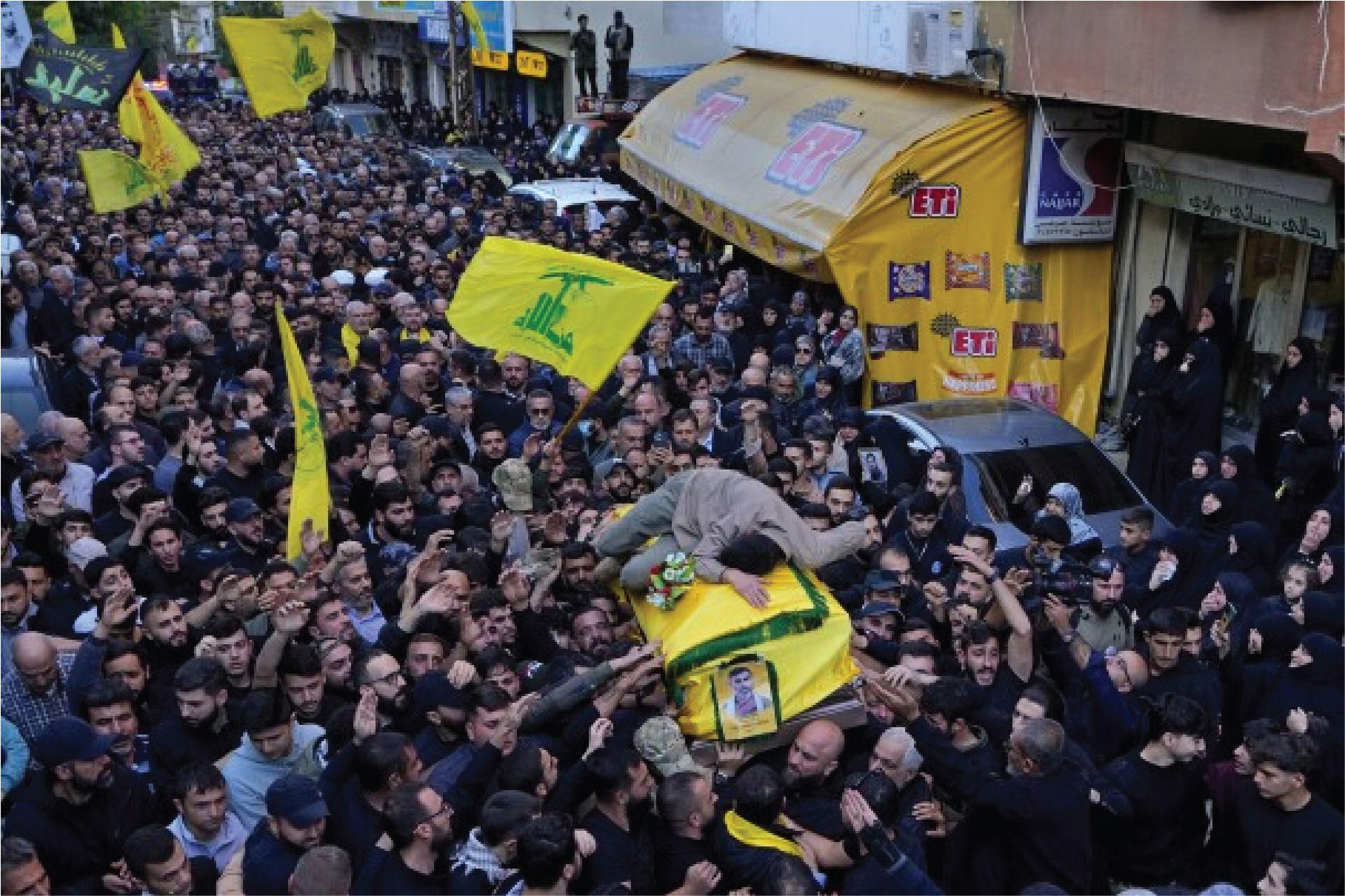
The fighting, initiated by Hezbollah, has killed more than 100 people in Lebanon, including more than a dozen civilians — three of them journalists — and 12 people on the Israeli side, including four civilians.
While Lebanon and Hezbollah weren’t officially parties to the ongoing, four-day ceasefire between Israel and Hamas, it has brought at least a temporary halt to the daily exchanges of rockets, artillery shelling and airstrikes. Some Lebanese took the opportunity to inspect their damaged houses or to pick up belongings.
Abdallah Quteish, a retired school principal, and his wife, Sabah, fled their house in the village of Houla — directly facing an Israeli military position across the border — on the second day of the clashes. They went to stay with their daughter in the north, leaving behind their olive orchard just as the harvest season was set to start.
They returned to their house on Friday and to an orchard where the unharvested olives were turning dry on the branches.
“We lost out on the season, but we’re alright … and that’s the most important thing,” Sabah said. “God willing, we’ll stay in our house if the situation remains like this.”
On the western side of the border in the village of Marwaheen, Khalil Ghanam had come on Saturday to pack up the remaining stocks from his cafe on the frontier road and take them to Beirut.
The cafe has been closed since October 13, the day that Reuters journalist Issam Abdallah was reportedly killed and six other people were wounded in an Israeli strike in nearby Alma al-Shaab. Shells also fell next to the cafe, leaving mangled remnants of what used to be its outdoor seating.
“We say God willing nothing bad will happen, but the situation now is difficult, and as I see it we’re heading into a long difficult period,” Ghanam said.