

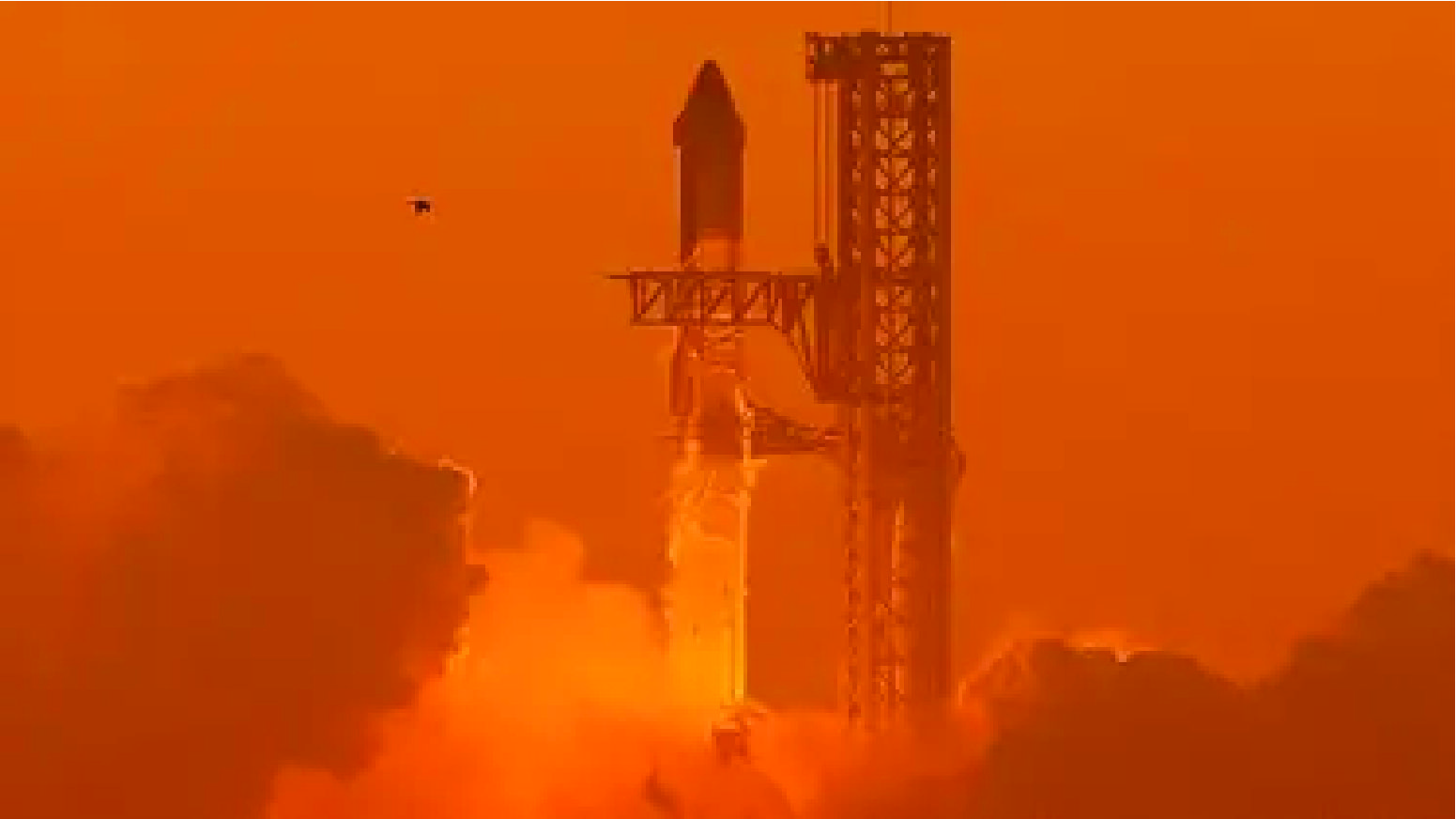
SpaceX’s gargantuan Super Heavy-Starship, the most powerful rocket ever built, blasted off on its second test flight Saturday, and while the initial stages of the mission went smoothly, the first stage broke apart moments after separation from the Starship upper stage. The Starship, in turn, blew itself up as it neared space.
The recent failure to launch the Starship upper stage into space marked the second consecutive setback for SpaceX in this endeavor. While viewed as a valuable learning experience for the company, it proved to be a source of frustration for Elon Musk’s SpaceX. The repeated failure to achieve the intended outcome may pose a significant challenge for NASA, which has placed reliance on the Starship for its Artemis program, aiming to transport astronauts to the moon’s surface in the coming years.
SpaceX and NASA have differing approaches when it comes to evaluating the success and safety of space missions. While SpaceX prioritizes a rapid launch schedule with a philosophy of learning from mistakes along the way, NASA places a higher emphasis on a prolonged series of successful missions before deeming it safe for crewed missions. the most powerful rocket
The recent setback in launching the Starship upper stage underscores the challenges, and while SpaceX is expected to address and resolve the issues, each delay poses a potential threat to NASA’s timeline for moon landings.
Despite the challenges, SpaceX, in a social media post, emphasized the value of learning from such tests, stating, “With a test like this, success comes from what we learn, and today’s test will help us improve Starship’s reliability as SpaceX seeks to make life multiplanetary.” This reflects SpaceX’s commitment to continuous improvement and the long-term goal of establishing a human presence on multiple planets.