

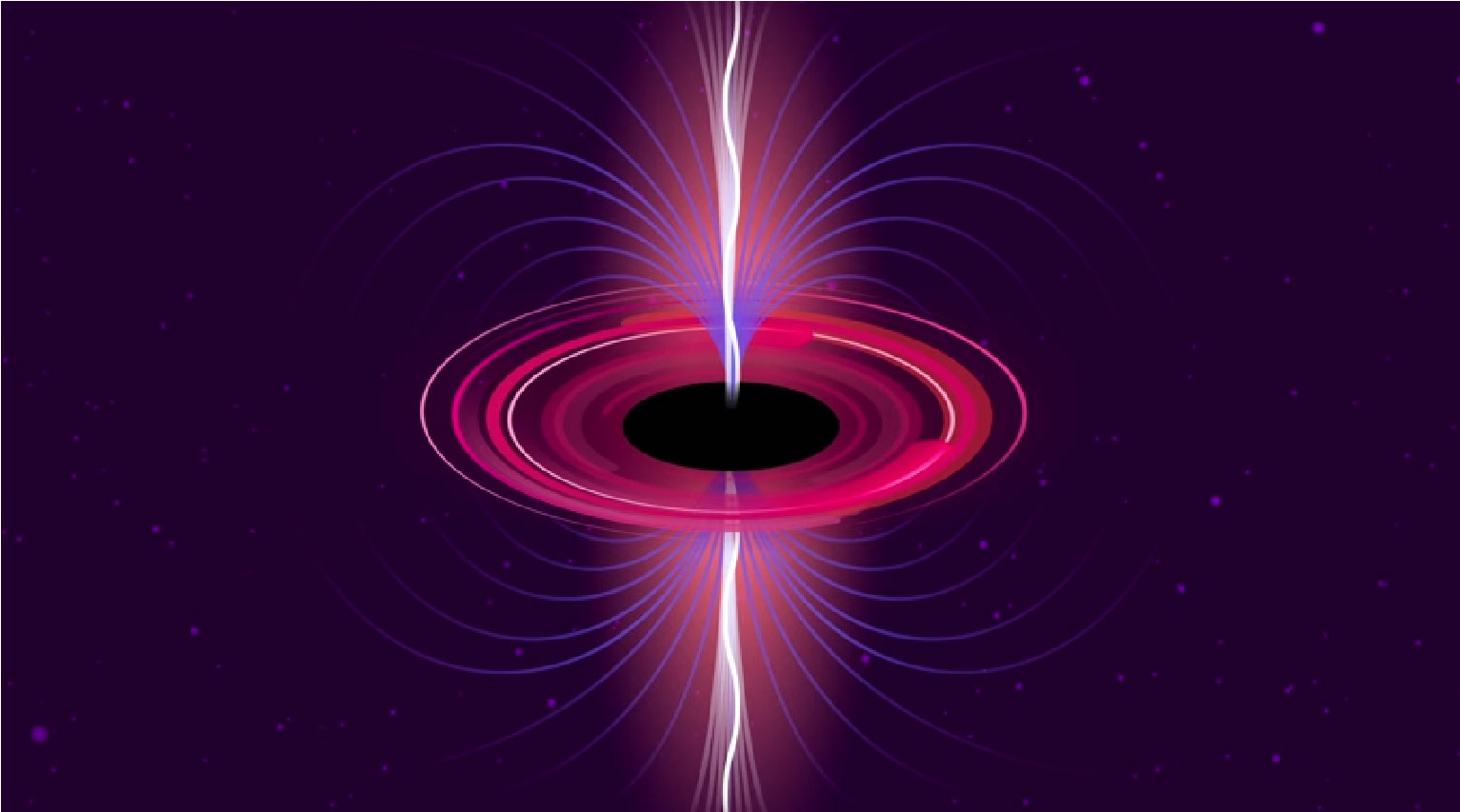
Emerging from the cosmic shadows between stars, a cascade of deep space X-rays inundated observatories, hinting at a connection to a remarkably brilliant event within our galaxy—a gamma-ray burst (GRB). Gamma-ray bursts are intense releases of highly energetic particles associated with phenomena such as star explosions and the birth of black holes. However, this particular GRB surpassed the norm in both luminosity and scale, akin to comparing a floodlight to a mere lightbulb, as one expert aptly described it.
Initially deemed the brightest GRB since the dawn of human civilization, this celestial spectacle, officially known as GRB 221009A, was playfully nicknamed BOAT, an acronym for “Brightest Of All Time.” Remarkably, it was speculated to emit photons carrying more energy than those produced by the Large Hadron Collider. Yet, the astonishment deepened when scientists realized that BOAT didn’t originate from within the Milky Way. Instead, this unparalleled brightness emanated from a galaxy situated beyond our own, underscoring the truly extraordinary nature of the event. the cosmic shadows
And now, on Tuesday (Nov. 14), researchers came out with a paper that starts answering one of the questions that’s probably running through your mind: What does this super-bright GRB mean for us?
According to the new study, it would appear the seven-minute-long burst (still detectable for 10 hours afterward) led to large “variations” in Earth‘s atmosphere. Most fascinatingly, those variations seemed to be found in our planet’s upper ionosphere, the barrier between us and outer space. If true, this would mark the first time we have seen a GRB impact this region, the team says. “We’ve been measuring gamma-ray bursts since the 1960s, and this is the strongest ever measured,” Pietro Ubertini of the National Institute for Astrophysics in Rome, a co-author of the new study, said in a statement.