

Two powerful NASA telescopes have detected the oldest and most distant black hole ever found.
Data captured via energetic X-rays by the Chandra X-ray Observatory and James Webb Space Telescope has helped astronomers spot the signature of a growing black hole within the early universe just 470 million years after the big bang, which occurred 13.8 billion years ago.
The discovery, described in a study published Monday in the journal Nature Astronomy, may help astronomers piece together how some of the first supermassive black holes formed in the cosmos.
“We relied on Webb to pinpoint this exceptionally distant galaxy and harnessed Chandra to locate its supermassive black hole,” stated Akos Bogdan, the primary researcher of the study. Bogdan, who serves as an astrophysicist at the Harvard-Smithsonian Center for Astrophysics in Cambridge, Massachusetts, also mentioned their use of a cosmic magnifying effect that enhanced the amount of light they were able to observe. Two powerful NASA
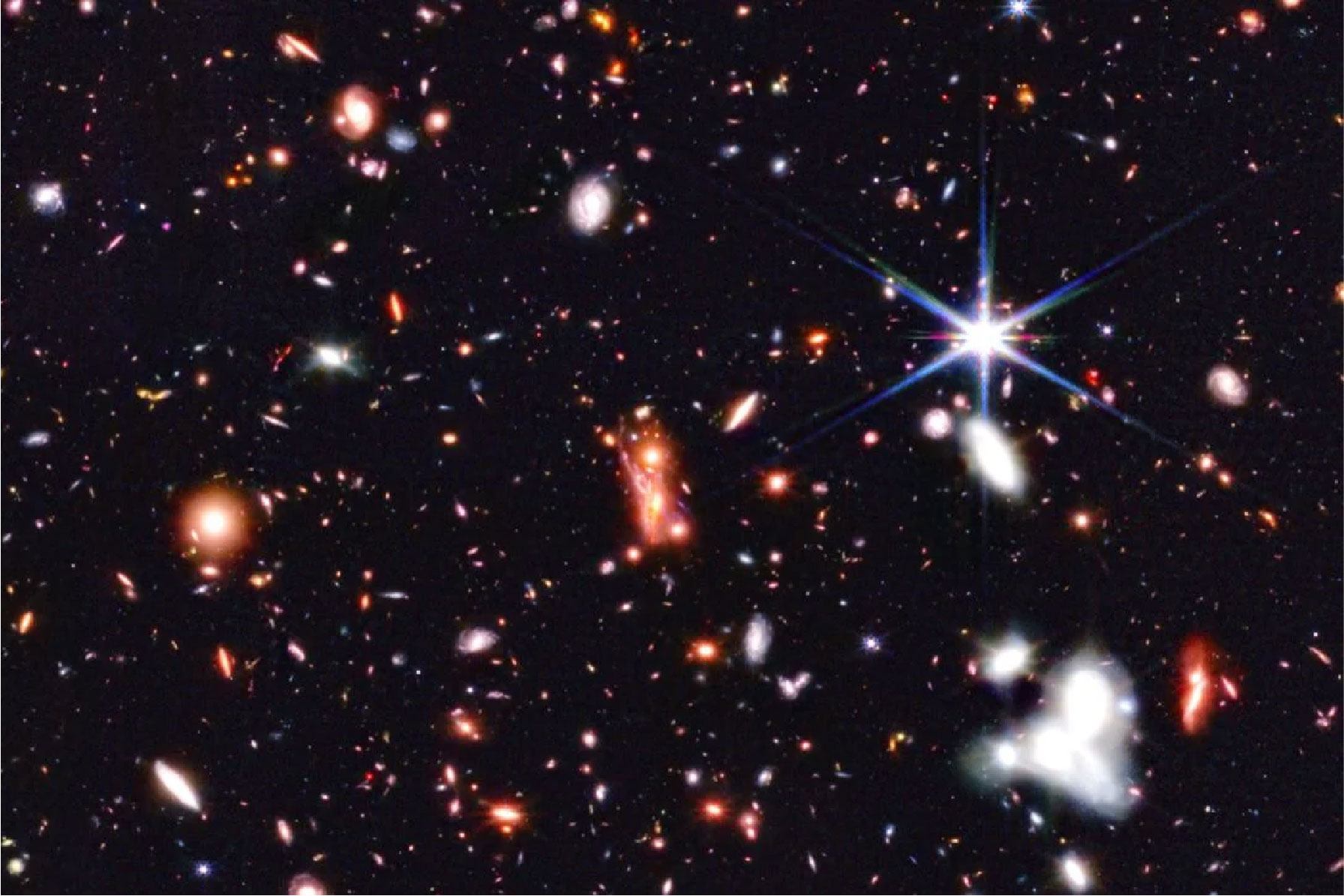
He was referring to an effect called gravitational lensing, which occurs when closer objects — in this case a galactic cluster — act like a magnifying glass for distant objects. Gravity essentially warps and amplifies the light of distant galaxies in the background of whatever is doing the magnifying, enabling observations of otherwise invisible celestial features.
Astronomers detected the black hole in a galaxy called UHZ1. At first glance, the galaxy appeared in the same direction as a cluster of galaxies known as Abell 2744, which is located about 3.5 billion light-years from Earth. But data collected by the Webb telescope showed that UHZ1 is actually much farther away and located beyond the cluster at 13.2 billion light-years from Earth.