

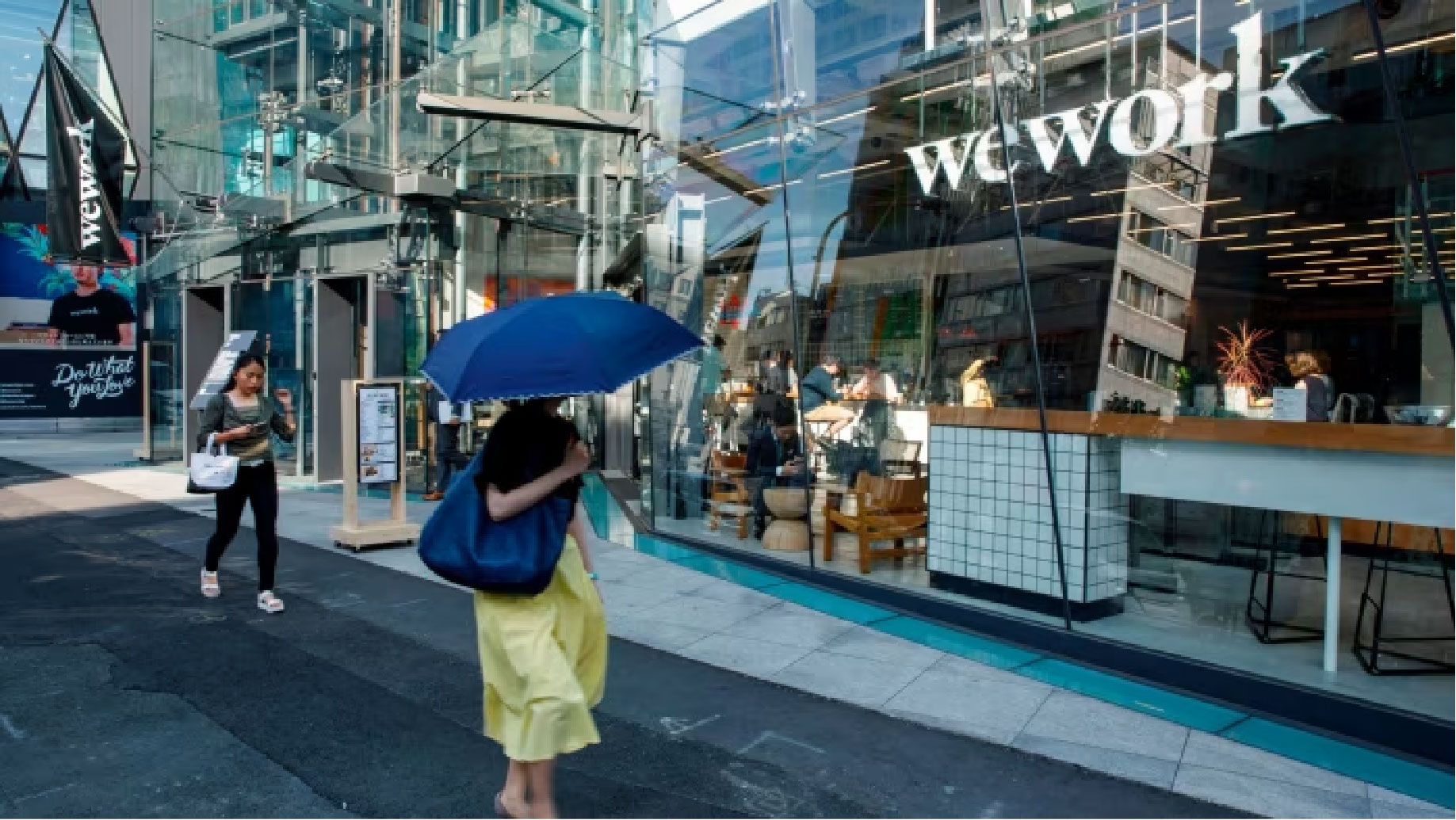
WeWork has filed for bankruptcy, a humbling fall for the once high-flying desk-renting start-up co-founded by Adam Neumann and backed by billions of dollars from Japan’s SoftBank. The company that set out to revolutionise office real estate could not escape the combined forces of pricey leases it had signed before the Covid-19 pandemic and weak occupancy rates as hybrid working gained popularity.
WeWork said late on Monday it had struck an agreement with nearly all of its creditors to convert $3bn of existing loans and bonds into equity in the reorganised company. The Chapter 11 process in the US allows WeWork to terminate leases early with little financial penalty as it seeks to restructure its more than $13bn in lease obligations.
WeWork’s Chief Executive, David Tolley, has outlined the focus of their bankruptcy process, emphasizing the need to address legacy leases and significantly improve the company’s balance sheet.
In its bankruptcy filing, WeWork has requested to relinquish 69 leases, citing the critical nature of rationalizing its office portfolio as a part of its restructuring efforts. The company has also been actively negotiating with more than 400 landlords to enhance lease terms.
WeWork has stated that its office spaces are operating as usual, and its international business outside the United States and Canada remains unaffected by the bankruptcy filing. WeWork has filed
WeWork, co-founded by Adam Neumann, once embodied the potential of charismatic entrepreneurs to revolutionize traditional sectors by infusing them with technology and attracting substantial venture capital, achieving unicorn status with a valuation of over $47 billion at its peak in early 2019. However, as losses accumulated due to a property market downturn and rising interest rates in recent years, WeWork came to symbolize the excesses of the cheap-money era.
Before the bankruptcy filing, Adam Neumann expressed his disappointment and suggested that reorganization would enable WeWork to emerge successfully.
The company had already been reviewing its leases, with plans to restructure a significant portion of them, primarily described as “largely non-operational” sites. The bankruptcy filing would provide WeWork with added leverage in ongoing negotiations with landlords regarding these leases.