

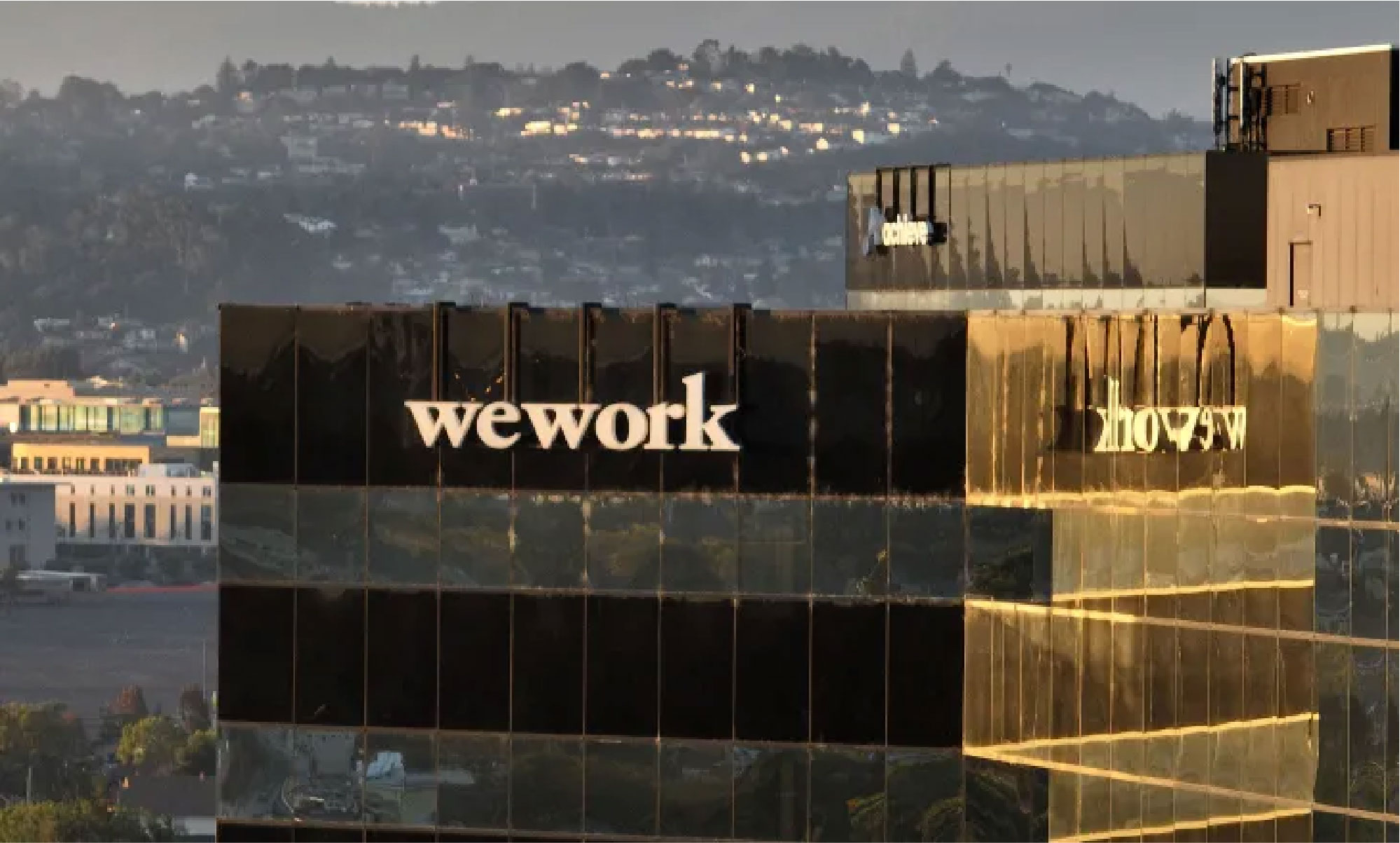
Office-sharing company WeWork filed for Chapter 11 bankruptcy protection in New Jersey federal court Monday, saying that it had entered into agreements with the vast majority of its secured note holders and that it intended to trim “non-operational” leases.
WeWork has specified that its bankruptcy filing only pertains to its locations in the United States and Canada. According to the bankruptcy filing, the company has reported liabilities ranging from $10 billion to $50 billion.
In response to the filing, WeWork CEO David Tolley expressed gratitude for the support of the company’s financial stakeholders and highlighted the commitment to invest in products, services, and the workforce to support their community.
WeWork’s trajectory over the past few years represents one of the most remarkable corporate collapses in recent U.S. history. Valued at $47 billion in 2019 in a round led by SoftBank, WeWork’s attempt to go public five years ago was unsuccessful. New Jersey federal
The pandemic exacerbated WeWork’s challenges as many companies terminated their leases abruptly, and the subsequent economic downturn caused more clients to close their businesses. WeWork had indicated bankruptcy as a potential concern in an August regulatory filing.
Despite a debut through a special purpose acquisition company in 2021, WeWork’s value has since plummeted by about 98%. In mid-August, the company announced a 1-for-40 reverse stock split to raise its shares above $1, a requirement for maintaining its New York Stock Exchange listing. Prior to being halted, WeWork shares had fallen to as low as about 10 cents and were trading at approximately 83 cents.
Former CEO and co-founder Adam Neumann expressed his disappointment regarding the filing, stating that he had found it challenging to watch from the sidelines since 2019. He believes that, with the right strategy and team, a reorganization can lead to a successful outcome for WeWork.
As recently as September, the company had indicated its active efforts to renegotiate leases and emphasized its commitment to remain in operation. WeWork had long-term lease obligations of nearly $16 billion, as reported in securities filings.
The company leases office space in 777 locations worldwide, according to regulatory filings.
WeWork has enlisted the services of Kirkland & Ellis and Cole Schotz as its legal advisors, with PJT Partners serving as its investment bank and support from C Street Advisory Group and Alvarez & Marsal.