

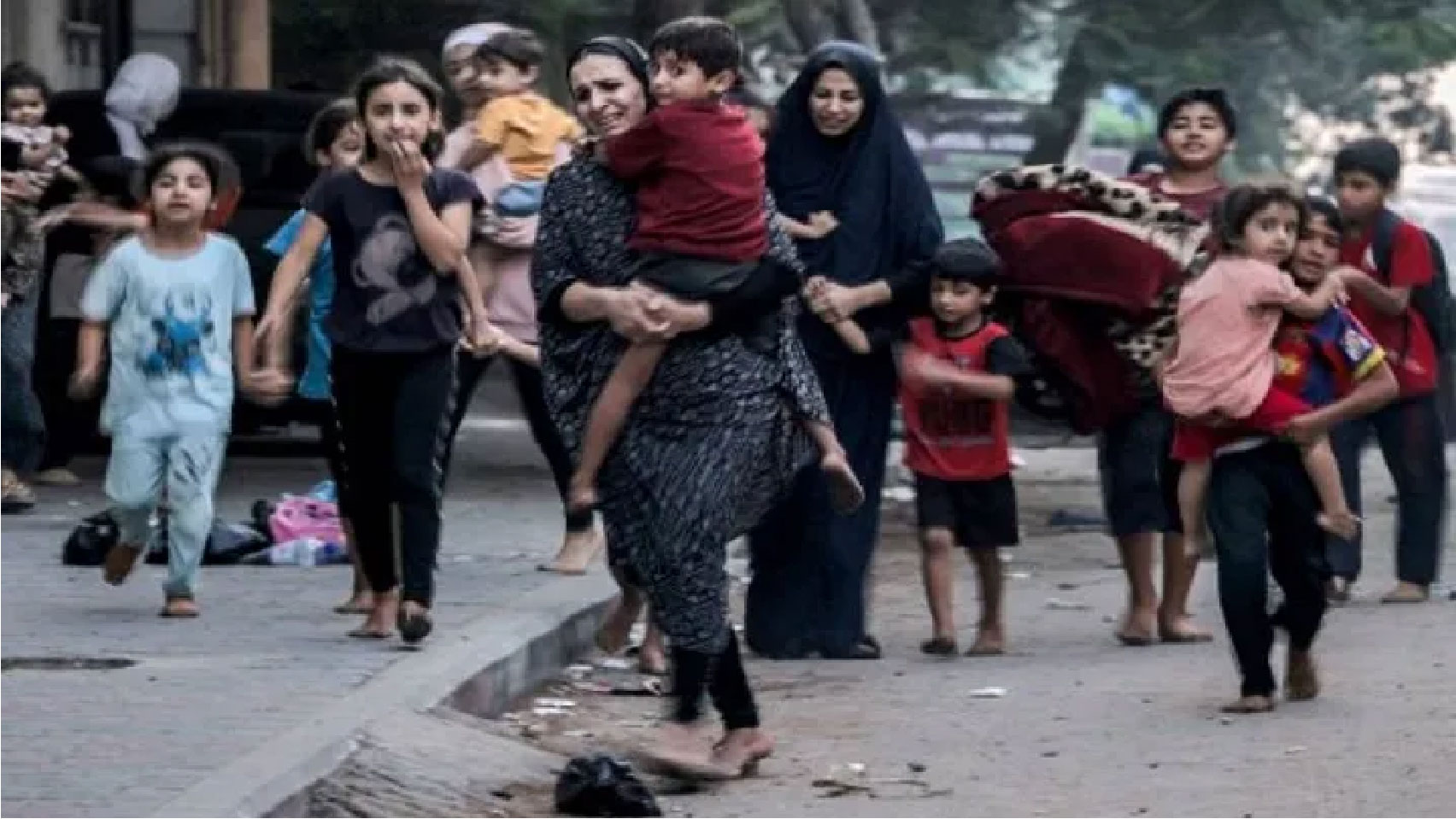
The United Nations issued a stark warning, indicating that signs of “civil order breaking down” have emerged in Gaza. They reported that thousands of desperate Palestinians have resorted to taking essential items such as flour and hygiene supplies from warehouses as Israel intensified its operations in the region.
During a news conference, UN Secretary-General Antonio Guterres expressed deep concern about the deteriorating situation in Gaza, stating that it was “growing more desperate by the hour.”
The already dire conditions in Gaza worsened when telecommunication lines went offline on Friday evening. This development exacerbated the challenges faced by medical services and left aid agencies unable to communicate with their personnel on the ground in this densely populated territory, home to over 2 million people.
The United Nations World Food Program (WFP) also acknowledged that some of its aid supplies had been taken, raising alarm about the “growing hunger.”
Samer AbdelJaber, the WFP Representative and country director for Palestine, remarked, “This is a sign of people losing hope and becoming more desperate by the minute. They are hungry, isolated, and have been enduring violence and immense distress for three weeks.”
According to the Palestinian Red Crescent, 94 aid trucks have entered Gaza via the Rafah crossing with Egypt, with 10 trucks containing food and medical supplies arriving in the enclave on Sunday.
In a video posted on Sunday via the official social media channels of the Israel Defense Forces (IDF), spokesperson Rear Adm. Daniel Hagari announced that “humanitarian efforts to Gaza, led by Egypt and the United States will be expanding” on Monday. However, no further details were provided regarding this expansion. The United Nations
Despite a growing chorus of aid agencies issuing dire warnings about shortages of food, water, and medicine in Gaza, the Israeli military has denied the existence of such shortages. The United Nations has called for a humanitarian ceasefire to enable a “necessary massive scale-up” in the delivery of much-needed aid to the people in the region.
The reports of supplies being taken from warehouses are viewed as concerning indications that civil order is beginning to deteriorate after three weeks of war and a tight siege on Gaza. Thomas White, the director of affairs in Gaza for the UN Relief and Works Agency for Palestine Refugees in the Near East (UNRWA), expressed, “People are scared, frustrated, and desperate.”
The mass displacement of people from northern Gaza to the south is placing tremendous strain on communities and already fragile public services. White further emphasized, “The needs of the communities are immense, if only for basic survival, while the aid we receive is meager and inconsistent.”