

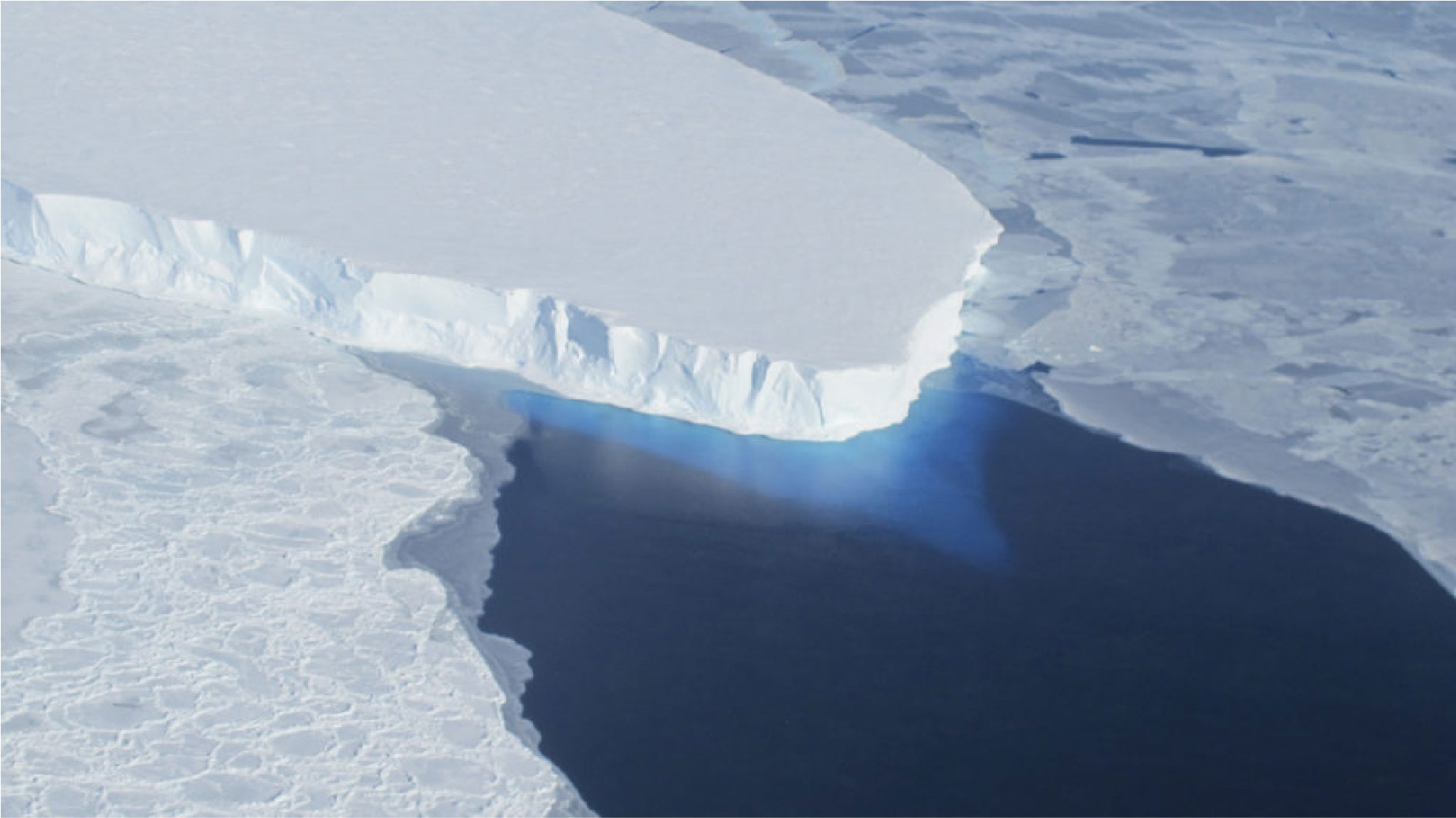
Accelerated ice melt in west Antarctica is inevitable for the rest of the century no matter how much carbon emissions are cut, research indicates. The implications for sea level rise are “dire”, scientists say, and mean some coastal cities may have to be abandoned.
The ice sheet in West Antarctica poses a substantial threat, as its complete loss would result in a staggering 5-meter rise in sea levels. While previous research had suggested that the ice sheet’s collapse might take centuries, a new study indicates that even drastic cuts in greenhouse gas emissions over the next few decades will not suffice to slow down this melting.
The analysis paints a grim picture, indicating that the rate of melting for the floating ice shelves in the Amundsen Sea is projected to be three times faster in this century compared to the previous one. This concerning trend holds true even if the world successfully achieves the most ambitious target of the Paris Agreement, which aims to limit global warming to 1.5 degrees Celsius above pre-industrial levels.
When these floating ice shelves disintegrate, it paves the way for the glacial ice sheets on land to accelerate their flow into the ocean. This has significant implications for coastal cities worldwide, where millions of people are at risk due to rising sea levels, including major cities like New York, Mumbai, and Shanghai. Remarkably, over a third of the global population resides within 100 kilometers of a coastline.
The climate crisis is the driving force behind sea-level rise, caused by the melting of ice sheets and glaciers and the thermal expansion of seawater. Researchers highlight that Antarctica is the primary source of uncertainty when predicting future sea-level rise, making adaptation planning particularly challenging. Urgently, experts emphasize the need to translate these new findings on ice melting into concrete estimates of sea-level rise. Accelerated ice melt
Dr. Kaitlin Naughten, who led the study at the British Antarctic Survey, noted the severity of the situation, stating, “Our study is not great news – we may have lost control of West Antarctic ice shelf melting over the 21st century.” She added that adapting to this impending change is becoming a necessity for coastal communities, some of which may need to construct defenses or, in the worst cases, be abandoned.
While acknowledging the grim outlook, Naughten emphasized that taking action against climate change remains crucial, as it can still make a significant difference in preventing further Antarctic ice melting in the centuries to come. However, she noted that this impact might not be observable within our lifetimes and will mostly affect future generations.