

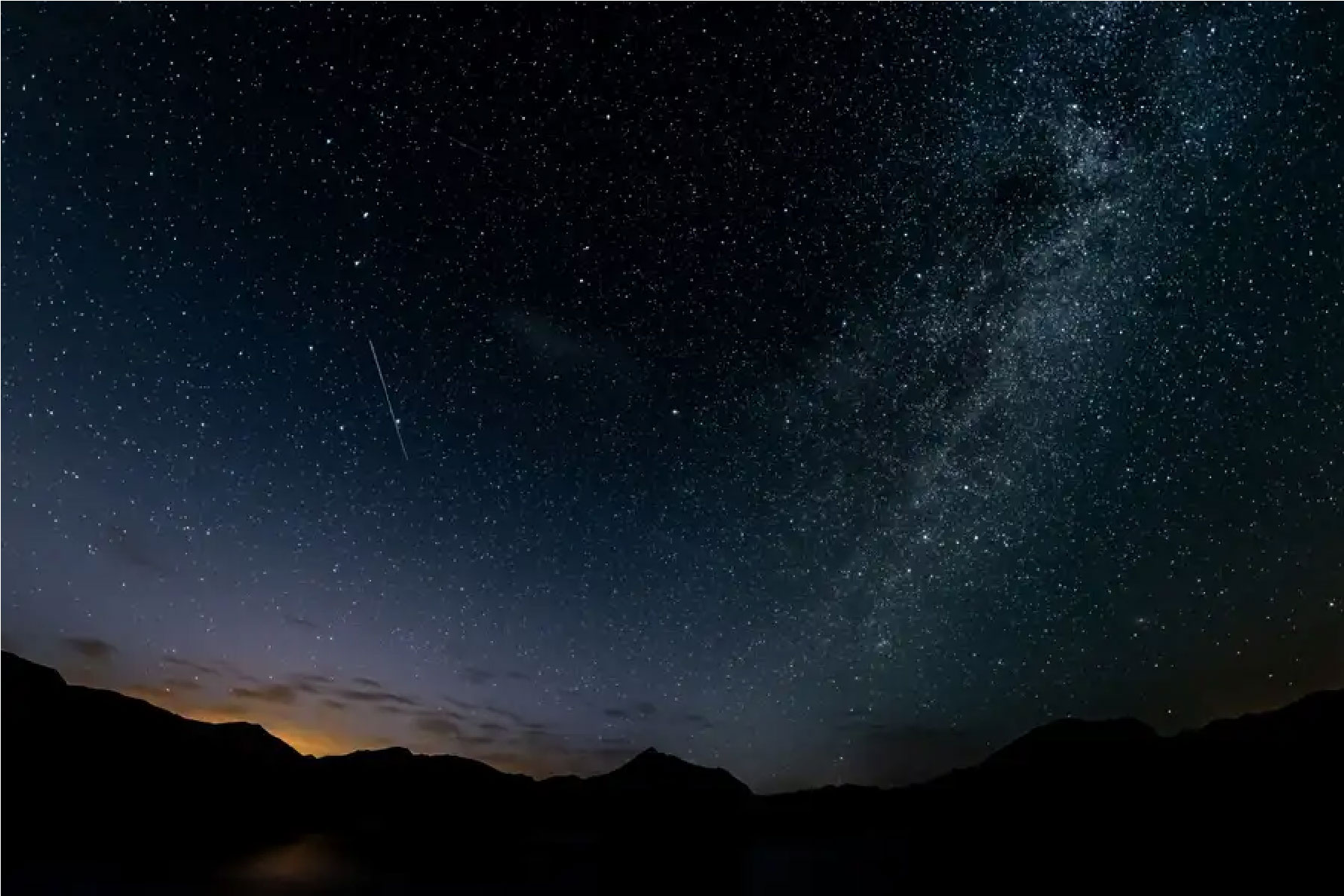
A remarkable meteor shower that has been illuminating the night skies for two months is set to reach its peak this Saturday.
The Orionid meteor shower began its celestial display on October 2nd and will continue to grace our skies until November 7th.
Unfortunately, in the UK, the rainy weather accompanying Storm Babet may obscure views of this spectacular event. However, elsewhere on our planet, fortunate stargazers may have the opportunity to witness these streaks of light.
The origins of this meteor shower can be traced back to the remnants of Halley’s comet, one of the most iconic comets in history. As Halley’s comet orbits the Sun, it sheds tiny fragments, creating a trail of dust and ice debris in its wake.
This trail of debris hurtles into Earth’s atmosphere at an astonishing speed of around 41 miles (66 km) per second. The particles incinerate due to the friction with the air, resulting in the mesmerizing streaks of light we observe during meteor showers.
Halley’s comet visits Earth only once every 75-76 years, and the next time it will grace our skies won’t be until 2061. However, the Orionid meteor shower is an annual event, offering skywatchers a regular opportunity to enjoy this celestial spectacle.
Dr. Minjae Kim, a physicist at the University of Warwick, notes, “This meteor shower holds a special place in the annual calendar of celestial events… if you missed the ‘once-in-a-lifetime event’ of Halley’s Comet, don’t worry, this annual Orionid meteor shower offers a unique opportunity providing some compensation.” A remarkable meteor
Meteor showers are typically named after the constellation from which the meteors appear to originate. In this case, the Orionid shower appears to radiate from the direction of the Orion constellation.
For those eager to catch the Orionid meteor shower in its full glory, the best time will be on Saturday, October 21st, between midnight and sunrise. The shower is visible from both the northern and southern hemispheres, but viewing conditions are optimal under clear skies.
Observing the meteor shower requires little more than your naked eye. It’s essential to allow your eyes to adjust to the darkness, so find the darkest outdoor location available, with minimal interference from streetlights and nearby homes.
The meteors will streak across the entire sky, so select a spacious, open area that allows you to scan the heavens with ease. As meteor showers don’t adhere to a specific schedule, patience is key. Consider bringing refreshments as you wait for this breathtaking natural display.
If you happen to miss the peak on the weekend, there’s still an opportunity to witness the Orionid meteor shower at its ‘maximum’ phase until around October 28th.