

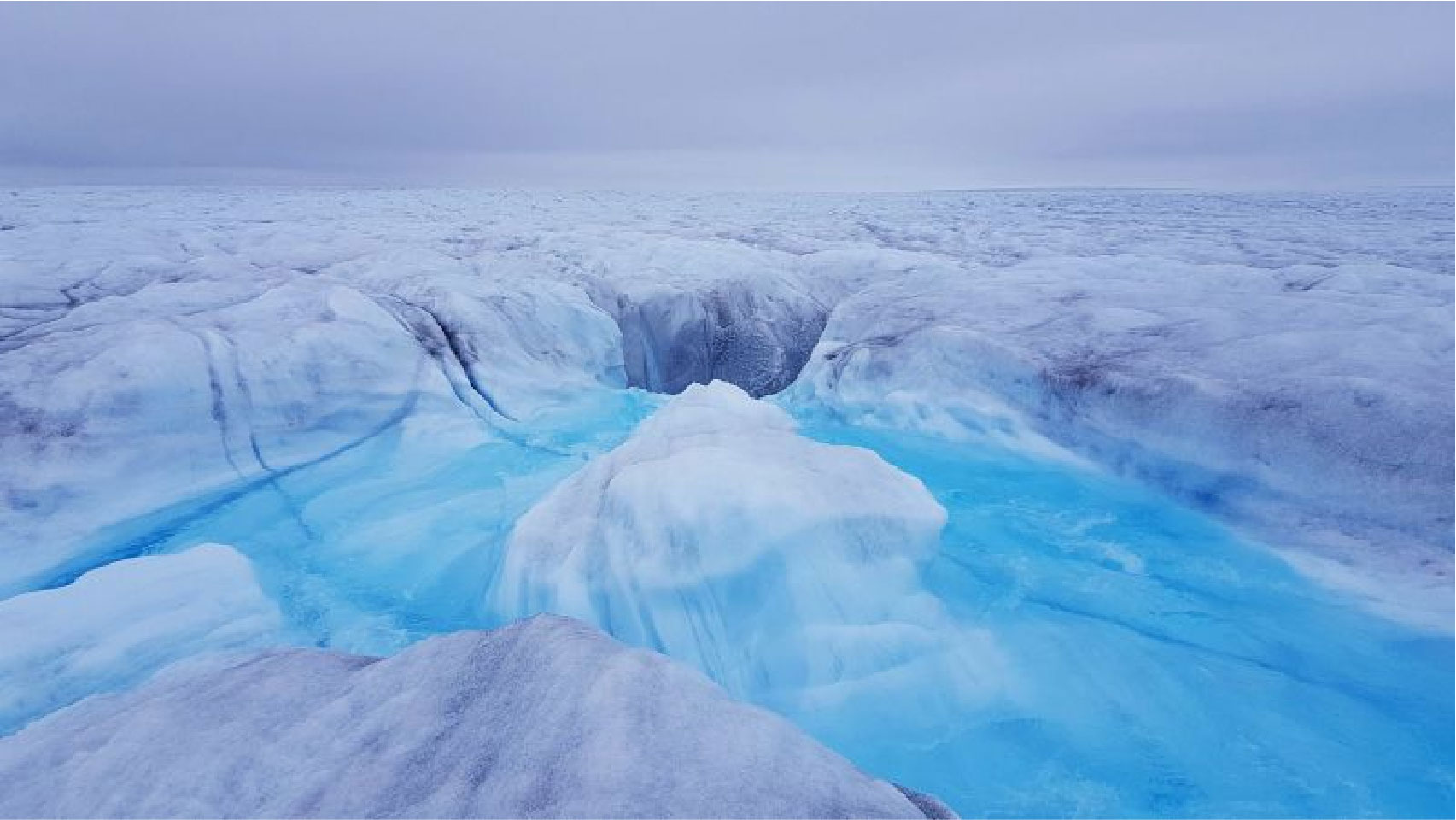
New research published on Wednesday suggests that exceeding the global warming limits set in the world’s climate goals could lead to the Greenland ice sheet contributing over a meter to rising sea levels. However, the study conducted by an international team of researchers also offers hope that the ice sheet’s collapse can be averted if warming is reversed and brought back to safer levels.
Greenland’s ice sheet, the second-largest in the world after Antarctica, has been responsible for more than 20% of observed sea level rise since 2002. Rising sea levels pose a significant threat, increasing the risk of coastal and island communities flooding, affecting hundreds of millions of people and potentially submerging entire island nations and coastal cities.
The study, published in the journal Nature, used two models to simulate how Greenland’s ice sheet would respond to future temperature increases over timescales ranging from hundreds to thousands of years. Researchers identified a range of 1.7C-2.3C above pre-industrial levels as a potential trigger for abrupt ice sheet losses, leading to a “tipping point” and extensive melting of the Greenland ice sheet over centuries or millennia, ultimately raising sea levels by seven meters (23 feet).
The research also highlighted the importance of returning temperatures to the Paris Agreement’s 1.5C limit promptly by reducing greenhouse gas emissions or implementing technologies for carbon capture and storage. Doing so could help avoid the worst-case scenario.
The study’s co-author, Niklas Boers from the Potsdam Institute for Climate Impact Research, emphasized the importance of acting now: “We found that the ice sheet reacts so slowly to human-made warming that reversing the current warming trend by cutting greenhouse gas emissions within centuries may prevent it from tipping. Yet, also just temporarily overshooting the temperature thresholds can still lead to a peak in sea level rise of more than a meter in our simulations.” New research published
The researchers noted that other tipping points in the Earth’s system, such as rainforests and ocean current systems, may be breached sooner than the Greenland ice sheet. They underscored the difficulty of returning temperatures to a safe range for the ice sheet once exceeded, emphasizing the need to act proactively to stay within safe temperature limits. World leaders will gather in Dubai from November 30 for crucial UN talks on reducing greenhouse gas emissions and addressing climate change impacts.